

Refusing Censorship: An Interview With Chile’s VOIKOT
By Staff | January 6, 2026
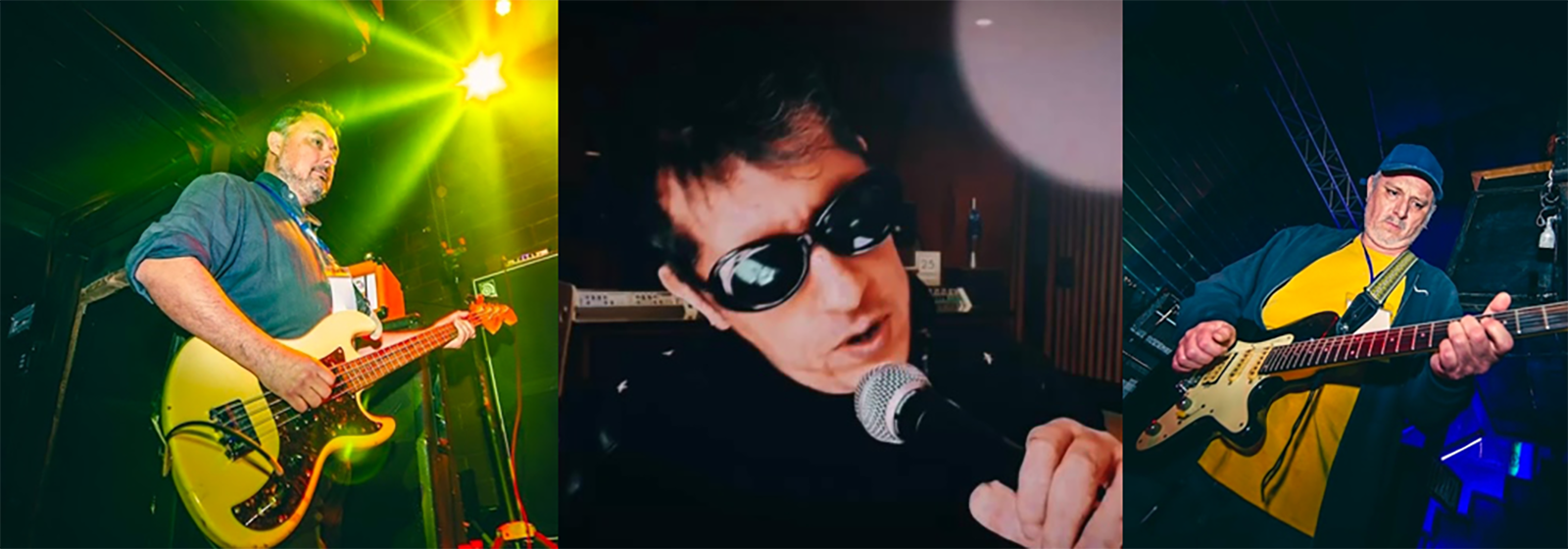
The punk band VOIKOT was born from a unique fusion of international experience and local resistance in 1988. Following their arrival in Concepción from Romania and Germany, brothers Romilio and Rene Bascur brought firsthand insights from the Eastern European and GDR punk scenes, where they had witnessed both Stasi repression and the fall of the Berlin Wall. This background found a natural home in the industrial spirit of Talcahuano, where they connected with local stalwarts like Arka Epiléptica and Machuca. Alongside musicians Luis González and Ariel Alegría, VOIKOT became a cornerstone of the underground movement, performing high-energy, skillful sets at legendary venues like Bilbao 101—the "CBGB of Chile"—and the Ecuador Park folk fair.
Despite their influence as pioneers of the Concepción scene, the band faced severe censorship and physical violence from the military regime, which forced them into a world of clandestine, anti-dictatorship performances. These harsh conditions and limited resources prevented the band from professionally recording their music during their original 1988–1992 run. However, on November 30, 2024, VOIKOT finally released their debut album, capturing the raw, socio-political fury of their youth. This release serves as a vital historical document, preserving the defiant, old-school punk spirit that helped navigate Chile's dark transition from dictatorship to democracy.
Romilio and Rene, you witnessed the punk scene in Eastern Europe and the GDR. What was the most shocking similarity—and the most striking difference—between the scene you saw in Europe and what you encountered upon arriving in Concepción?
Romilio Bascur, vocals: The main similarity was the energy and motivation to do things in order to express and show discontent with what was happening around them, and of course, the constant military repression felt everywhere, especially at events where young people gathered and where agents of the secret police, like the Stasi, were always lurking.
Rene Bascur, guitar: And the youth of the movements, most of us were around 15 or 16 years old. And that same youthful energy of confronting repression through punk music was repeated, with rage and discontent as the main focus.
Romilio: As for the ideological difference, there wasn't that much, which is what caught my attention the most because both situations were politically equally harsh. What could be stronger than a military dictatorship or the division of a country?
Rene: It wasn't the same in England, where punk was more about a social movement, but there was no dictatorship and people didn't risk their lives. Although their discontent and demands were just as valid. But punk was more of a social movement to break the established order.
Romilio: Another big difference was the lack of instruments in Chile. There really was nothing, no festivals with a large following like JAROCIN in Poland, no labels releasing music. There really wasn't an industry, but what was strong was the DIY spirit and all its energy, so instruments were shared among bands, and productions were done with contributions from various people who felt motivated to do it. Another more logical difference was the musical influences of punk. We came from listening more to fast punk like SCHLEIM KEIM or BLUTTAT. In Chile, there was more influence from Spanish punk, and American hardcore and crossover also started to arrive on vinyl records that were copied. Furthermore, Thrash Metal was just arriving in Chile, and the precarious economic situation meant that many concerts were organized jointly by punks and metal fans, unlike in Europe where punk was a separate movement. Here, there was more collaboration between different styles to help each other put on shows.
People often call Bilbao 101 the "CBGB of Talcahuano." Can you describe the atmosphere of a VOIKOT show there in the early 90s? How did it feel to play in a place that felt like a sanctuary amidst the street violence?
Rene: This place was an annex of Patricio Henriquez's house, who sadly passed away recently. He was a local punk singer whose goal was to create a space where punk bands of the time could meet, and he kindly invited us, and we played a few shows there. But it wasn't for commercial purposes; it was more about creating a place for punk bands to play and a meeting point for anyone who wanted to enjoy the music.
Romilio: As for the energy that being part of these shows generated for VOIKOT, it was about facing a reality where there was no real amplification system, there was a lot of precariousness, and everything was organized by hand. We had to make do with whatever we had, and the most important thing was to express ourselves. The audience was truly incredible. It started small with just friends, and little by little, everything grew, and more bands appeared. I remember we wanted to play as fast as possible, one song after another quickly, and it was fun to be there.
Rene: But the lesson was that even with limited resources, shows and productions could be created, since the organizers put a lot of energy into the production of each concert. And also, to give up the comfort of a stage equipped with all the technical aspects, like what exists today where bands collapse if there isn't a good monitoring system. Back then, you just had to play however you could.
You formed quick alliances with bands like Arka Epiléptica and Machuca. Was there a sense of competition, or was the "underground punk movement" purely a matter of survival and mutual protection?
Romilio: There was no competition; there were so few bands that it was absurd to compete. The enemy was someone else: the dictator Pinochet with his censorship and repression. The first bands we met when we arrived in Concepción were Arka Epileptica, as well as Zacarias and Machuca when they were called Crisis, and Emociones Clandestinas with their singer Carmen Gloria Narváez, who was the first Singer female punk. Those were our first experiences with punk bands when we arrived. Later, we met other bands from Talcahuano.
But I remember there was a lot of mutual support at our first shows in Concepción, in neighborhoods like Cerro La Pólvora, Aguita La Perdiz, Pedro de Valdivia, and at the University of Concepción's various faculties, since almost everything cultural revolved around the university in the city. It was precisely there that we met the Infante brothers (Claudio and Felipe) from Machuca and the Moreno brothers, who were active punks in Concepción, and there was always a great deal of support and camaraderie with them.
René: Especially Iván Moreno from Arka Epileptica, who saw us at a concert and invited us to play and get to know the scene in Talcahuano. There we discovered another punk scene and saw that other people were doing things. But he was a driving force of the movement in the city, and it was nice to run into him at different events in Concepción and to have his support. So there was absolutely no competition.
Romilio: Besides, his band had a powerful live sound; it reminded us a lot of Kotzreiz and Danzig.
You played shows with strong anti-military themes during a time of heavy censorship. What was your protocol for organizing a clandestine show without getting caught or shut down by the authorities?
Romilio: We worked on the production in conjunction with neighborhood associations such as "AGUITA LA PERDIZ," "CERRO LA POLVORA," "CORONEL," and "LOTA." They secured the venue. We worked with university organizations, and we provided the sound system. The ultimate goal was for attendees to bring food donations during the show to support families in the affected areas who were going hungry due to a lack of resources and support.
Rene: The band had a social purpose more than punk in the beginning, because there wasn't a movement as such, or at least we weren't aware of it. But we did want to contribute to the communities, and everything was planned with targeted and clandestine promotion. We even managed to play a surprise show at the University Auditorium without the authorities finding out. Or during the university faculty strikes; we played there several times.
Romilio: They were short shows with clandestine promotion because there were a lot of informants for the dictatorship back then. We had many connections with anti-dictatorship student groups and community leaders in the neighborhoods where we mainly played before entering the city's punk scene. Besides, we were a trio, so it was easier.
Rene: Anyway, several shows were shut down because the police found out beforehand and threatened us.
Romilio: They even smashed the drumheads of a friend's band.
Rene: Or they'd harass you for wearing earrings or having long or dyed hair. The dictatorship didn't like punk at all, or anything it stood for.
VOIKOT was active from 1988 to 1992—the exact bridge between the dictatorship and the transition. Did you feel the "freedom" of the early 90s was genuine, or did your lyrics continue to reflect the same anger as before?
Romilio: The truth is that VOIKOT had already formed in '86 with Tammy Brill on drums from Germany, but in Concepción in '87, we witnessed a period of harsh repression, economic recession, street violence, and immense social discontent. And during that time, everyone felt the need to voice their discontent, whether in youth groups, cultural circles, or workers' organizations. The supposed freedom of the '90s became a complete farce, because all those active during the dictatorship were relegated to the sidelines, and space on stages and in events was given to bands or groups that had returned from exile, some of whom were politically active. This led to a return to the old ways of culture, which was more focused on fusion rock, mestizo music, and indigenous instruments. For the authorities, punk became something noisy, annoying, and completely foreign to Chile.
Rene: Besides, they wanted to show a happier and freer country, like the "Destape Epañol o La movida" in Spain a kind style of Almodobar , but controlled.
Given your background, how did your lyrics attempt to educate or awaken the local youth in Concepción who hadn't seen what was happening in other parts of the world?
Romilio: While the main reason was to angrily express our discontent with Pinochet, who was already a world-famous dictator at that point, we also tried to convey with our message that democracy and the political elite are just as corrupt and shameless as a dictator, and that promises shouldn't be blindly believed.
Rene: Besides not staying silent and daring to forcefully express your discontent.
Luis González, bass: Well, we grew up in a dictatorship that was a real nightmare, a shit... nobody could say anything because everyone was listening and they could betray you.... our music fought against that and wherever it happens again (which unfortunately can happen), it's totally valid!
What was the specific "spark" that made you decide, after more than three decades, that these songs had to be recorded and released in 2024?
Romilio: Mainly, we're tired of a passive world where people are no longer critical of what's happening around them and where others ultimately decide their own lives. We thought it was a good time to record those songs we couldn't before, both because of a lack of resources and because of military repression. Listening to some old recordings one day, we realized it was a good time for those songs to be heard in this new, equally relevant context.
Besides, it's easier to distribute them independently, without a label and the censorship that could impose.
One of the risks of recording old-school punk with modern technology is that it can sound too "clean." How did you ensure that the 2024 album maintained the frenetic and direct energy of 1988?
Romilio: Mainly because a very detailed preliminary sound study was done, in which it was decided to use instruments and amplifiers from that era, in addition to, for example, a distortion pedal like the Boss Metal Zone, which was used in the '80s.
Rene: In the recording, everything was done in the first takes so that it wouldn't be so polished and to capture the imperfections of the era as a sonic element.
Romilio: For the mixing, an EMI TG12345 console, very common in the '80s, was used.
Rene: Everything was recorded simply and raw, avoiding those snobbish notions of recording in a bathroom to capture reverb, which ultimately gives you no control over the sound and turns into an activity just to take a picture for Instagram. We avoided all that nonsense; we recorded loud and direct to the ears.
Luis and Ariel were already part of the local scene when you joined forces. How did their local perspective influence the songs that were finally captured on this record?
Romilio: The songs were already written, dating back to Tammy Brill's time in the band (1986-1987), but when we met Luis, we were hooked by his incredible talent on bass, his professionalism, and his openness to listening to bands of different styles.
Rene: Plus his Corrosion of Conformity t-shirt, painted by himself.
Romilio: Hahaha, yeah, that too. And Luis added bass arrangements, and they kept improving because he's a very confident bassist with an enviable touch.
Ariel joined the band later, after Tammy returned to Germany. He came from the punk scene in Talcahuano, and a friend suggested him to us. He fit right in with the band.
How has the new generation of Chilean punks reacted to the album? Do you feel they see these songs as museum pieces or as messages that are still relevant to Chile’s current social issues?
Romilio: I think it's been both ways, because we've had a great response and almost 4,000 followers in a short time, along with many messages of support and invitations, which was surprising for us, since our only goal was to record the album and release it.
Rene: Anyway, we changed the lyrics to a couple of songs to address more current issues, such as dependence on the digital age, to update the content a bit, since some of the songs were outdated, and to strike a balance between older and younger generations.
Luis: well, I can't answer for new generations.. but talking with my son (18 y.o.) I could say that our lyrics, subjects and fights, are totally relevant and valids, specially considering last events locally (with a fascist winning the presidencenhere).
Does releasing this album feel like a form of historical justice? Like finally giving a voice to a version of yourself that was silenced by lack of resources and political repression 36 years ago?
Romilio: Absolutely, it seemed unfair to us that we had been part of a movement and activities with different organizations in the city of Concepción and that there was no record for new generations to learn about what was being done before, in the context of a dictatorship.
René: And to finally have something tangible on a record that would remain as a historical document. Now it depends on each person whether they like it or not, but they should give VOIKOT a chance on streaming platforms.
Luis: Yes indeed,.. we were punks, anarkist, anti-Pinochet system, and very very young ... in that time, alternative music industry didn't exist in Chile, less in out city (Concepcion), so, we did as much noise as we could, bur never recorded.. so, yes, this feels like a historical justice!
Now that the "debt" of the first album is paid, what next for VOIKOT?
Romilio: Now this continues, and we're finishing our second album, which will be released in March 2026. Everything really flowed smoothly, both in terms of ideological and musical inspiration, because of everything that's happening in the world right now. It allowed us to address different current topics through the anger and discontent of punk. Furthermore, the result is a powerful new album, well-executed and full of surprises, thanks to Luis's great talent on bass and the return of Tammy Brill on drums, who helped us with the recording.
Rene: We also have plans to do some live shows to showcase the new album in as many places and as far away as possible. We're open to serious invitations.
Anyone you'd like to thank?
Romilio: To you at knifetwister records, to everyone who reads this, and to everyone who writes to us, supports us, buys the album, or listens to our music. We hope to see you at a show sometime in 2026.
Luis: Visit our Instagram: @voikot_banda and our Spotify channel, VOIKOT, to listen to us.
Rene: And stay tuned for the new album.
Romilio Bascur: Vocals
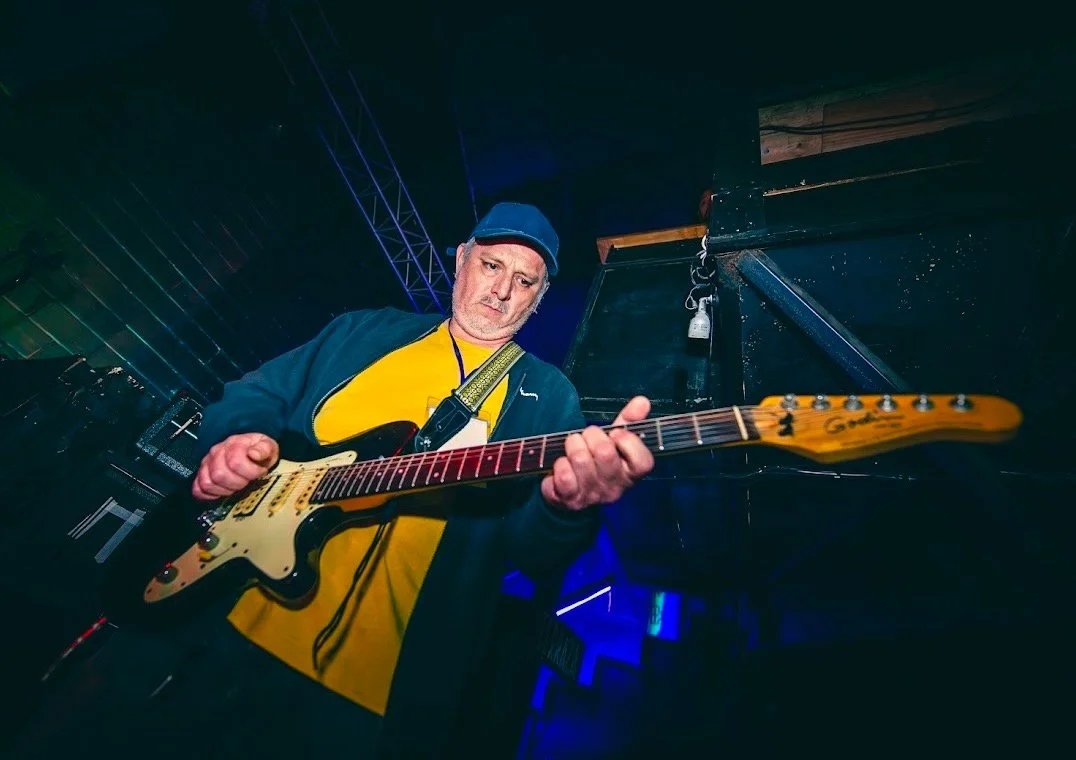
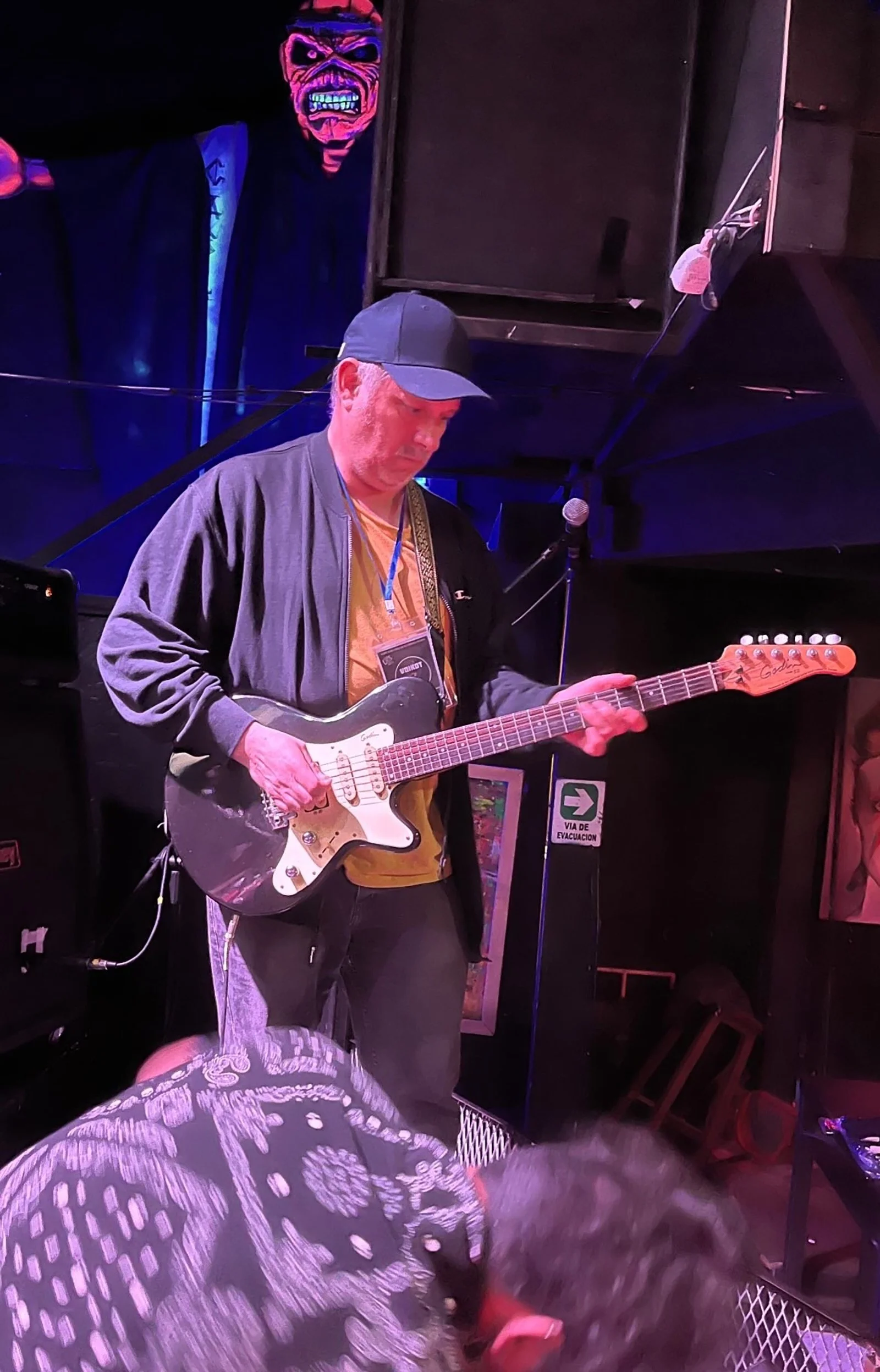
Rene Bascur: Guitar
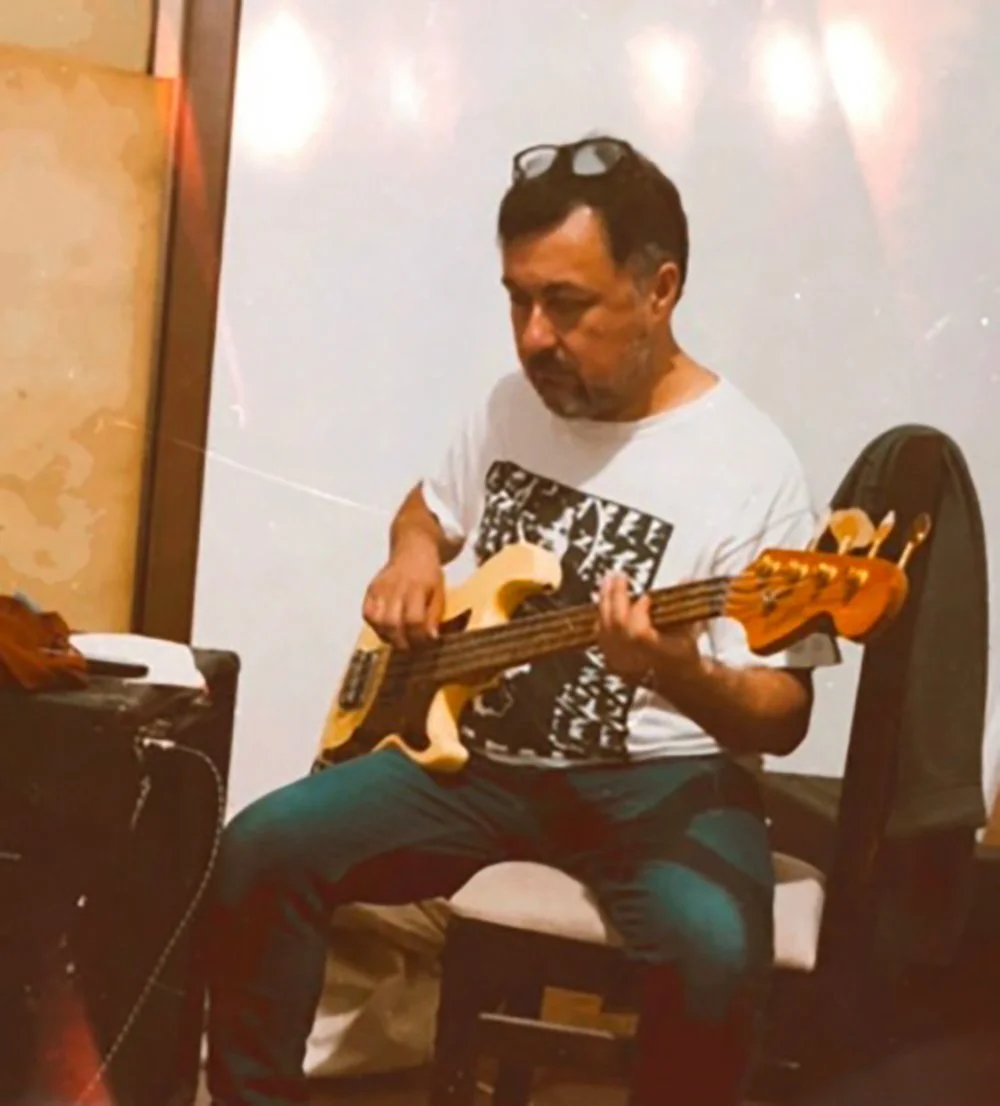
Luis González: Bass
Links
Instagram: https://www.instagram.com/voikot_banda/
Spotify: https://open.spotify.com/album/6RAoUgGvydIb6tf5tmHu3C?si=re5Dn6ifS4ykX1rOvFvbzg