

Shine As Bright As You Want To: An Interview With Artist and Photographer Jess Humphrey
By Staff | January 4, 2026
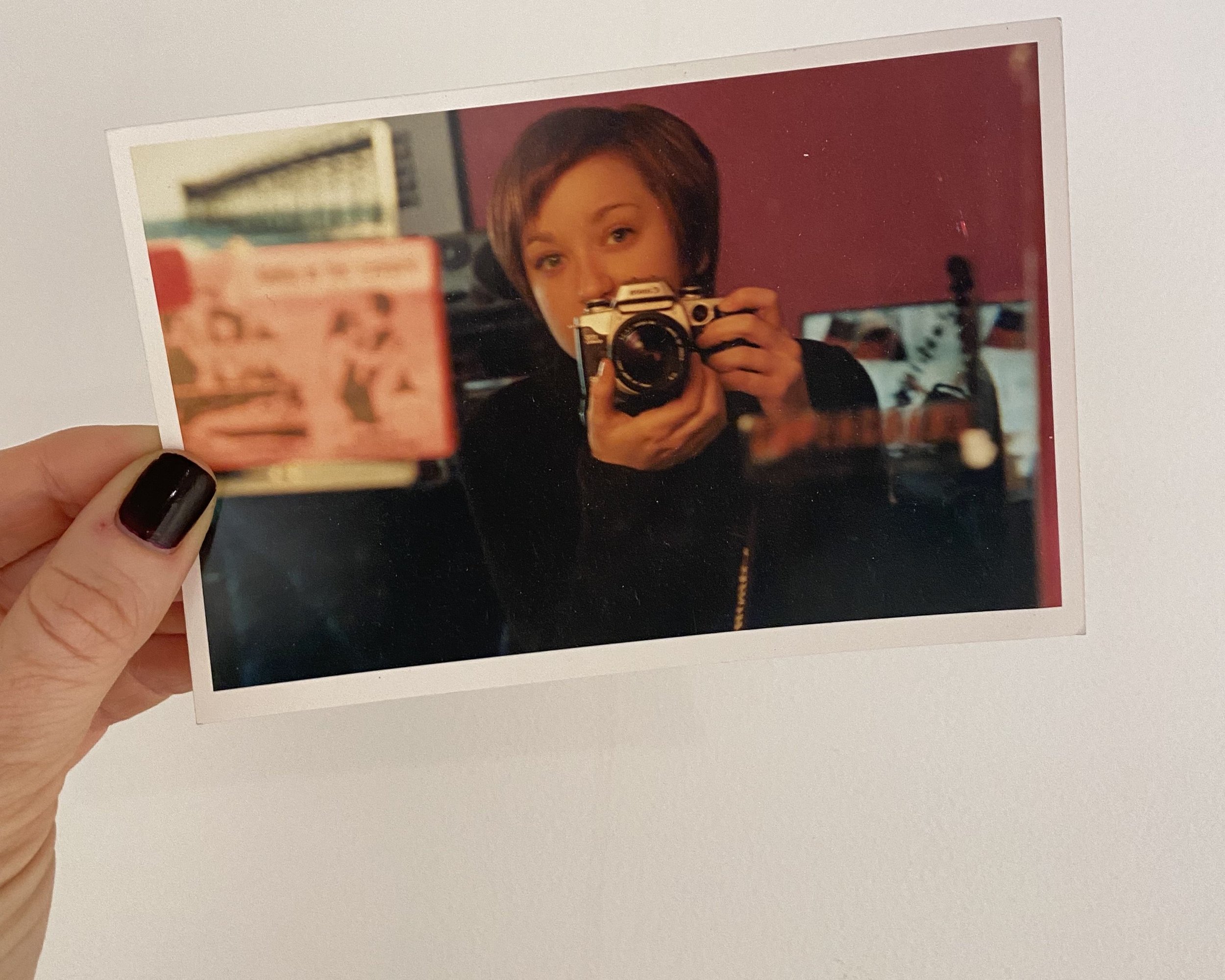
Jess Humphrey, circa 2001
Jess Humphrey is an artist and photographer whose creative roots trace back to the 1990s and early 2000s hardcore punk scene, where she documented bands, tours, and the intimate, chaotic spaces that defined a generation of DIY music culture. As a teenager and young adult, Humphrey lived on the road and in venues, using photography as both a tool for connection and a way to understand identity, belonging, and freedom within a scene built on intensity, community, and resistance. Her images from this period capture not just performances, but the emotional undercurrent of the era: friendships, girlhood, devotion, and the raw beauty of life lived loudly and without permission.
After stepping away from music photography, Humphrey went on to build a successful career in fashion design and creative direction, where her eye for composition, color, and storytelling continued to evolve. She eventually returned to art full-time, now working primarily in glass, collage, and sculpture. Her current practice explores many of the same themes that first drew her to the hardcore scene: visibility, vulnerability, strength, and self-definition, translated through material, form, and color. Based in Corning, New York, Humphrey’s work bridges subcultural history and contemporary art, carrying forward the DIY ethos that shaped her early creative life.
Welcome Jess! You spent your formative years documenting the 1990s/2000s hardcore scene. At that age, did you feel like an observer capturing a movement, or was the camera simply an extension of your own participation in it?
It was a little bit of both. I think at first it was my way of participating. I was a shy, introverted kid, and having a camera felt kind of like a safety blanket. It allowed me to be right up front or at the side of the stage, with a full vantage point of everything that was happening at the show, without needing to be in a band or drawing any attention to myself. Later on, I bought Glenn E Friedman’s “Fuck You Heros.” Only until then did I start taking my work as a photographer seriously. It showed me that images could carry the weight of a movement, and that perspective shaped how I began to take my own work seriously.
Your photography captures "life lived without permission." Looking back at those archives now, what do you see in those young women and musicians that you didn’t realize you were capturing at the time?
I didn’t know it at the time, but it was the very last generation before the digital era. The scene thrived without the internet, cell phones, GPS, social media. We found out about shows via word of mouth, a flyer from the record shop or at the last show. We drove across state lines without GPS or cell phones or even places to crash. We were free in the world. We were the last generation of wild youth.
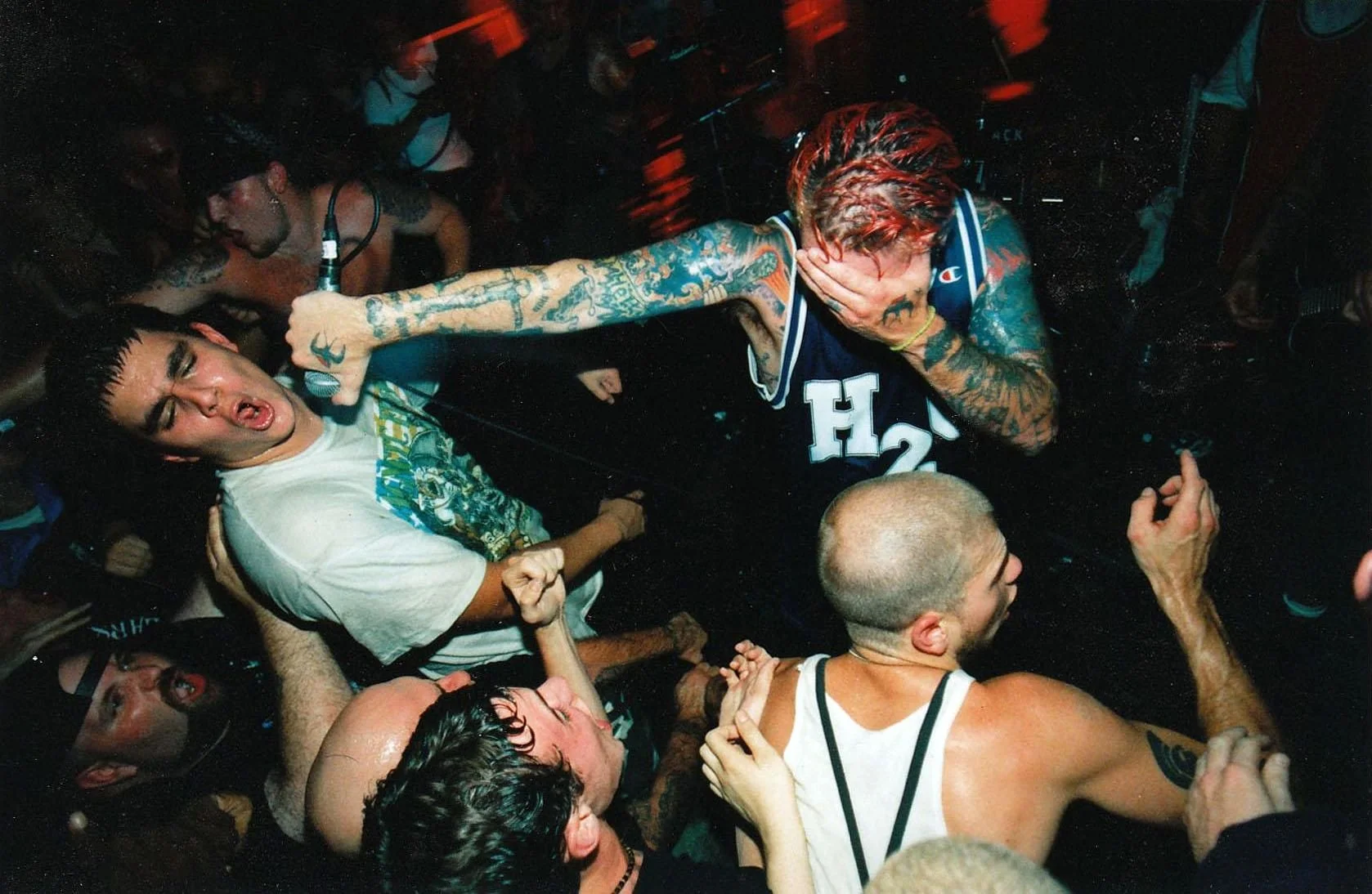
Agnostic Front, Maxwells, Hoboken, NJ 1997. Photo by Jess.
Hardcore is often associated with hyper-masculinity, yet your work highlights girlhood and intimacy. How did being a woman behind the lens shape the way you navigated those chaotic, male-dominated spaces?
At the time, I could never have admitted this to myself, but it wasn’t easy. I found the scene because I felt like an outlier amongst my peers in school. I was attracted to the rebellious spirit, the fuck you attitude, the sentiment of anti-establishment. I called myself a tom-boy and I rejected any idea that as a girl, I was inferior. I felt empowered to stand up on stage with my camera and get pushed into, jumped onto and moshed onto … just like one of the boys. But really, I never really fit it. I had to wear a tough skin and buried my discomfort with a smile. I had to listen to teenage boys talk about blow jobs in the parking lot … copping a feel on that girl who did a stage dive … calling girls groupies … listening to how much they want to fuck that girl singer of that band … that kind of thing. There weren’t many girls in the scene at the time, but when we did find each other, we stuck together.
You moved from the grit of DIY venues into the structured world of fashion design and creative direction. What did the punk ethos look like when applied to a commercial industry, and did that transition feel like a departure or an evolution?
I had a hard time with corporate fashion. You’re expected to give everything to the machine while knowing you’re ultimately disposable, and the scale of production is often grossly destructive to the planet, which I really had a hard time with. That contradiction wore on me. After years working for massive brands like Ralph Lauren and Converse, I eventually started my own company as a way to reclaim some agency. There’s one moment that always sticks with me, when those two worlds collided head-on. I was a design director at Converse, owned by Nike at the time, and we were pulled into a company-wide meeting about intellectual property. Sitting at a long conference table, I watched the CMO pull up a Nike basketball T-shirt that read “MAJOR THREAT,” clearly referencing Minor Threat’s Out of Step artwork. He referred to the band as “a small indie group” and explained that they got off easy by donating basketballs to DC public schools. I was sitting there cheering under my breath, probably the only person in the room who knew exactly who Minor Threat was. That moment clarified everything for me. Sitting there, I realized how far those values can drift once they’re removed from the people and places that gave them meaning. Starting my own company felt less like a departure and more like an evolution back toward something honest.
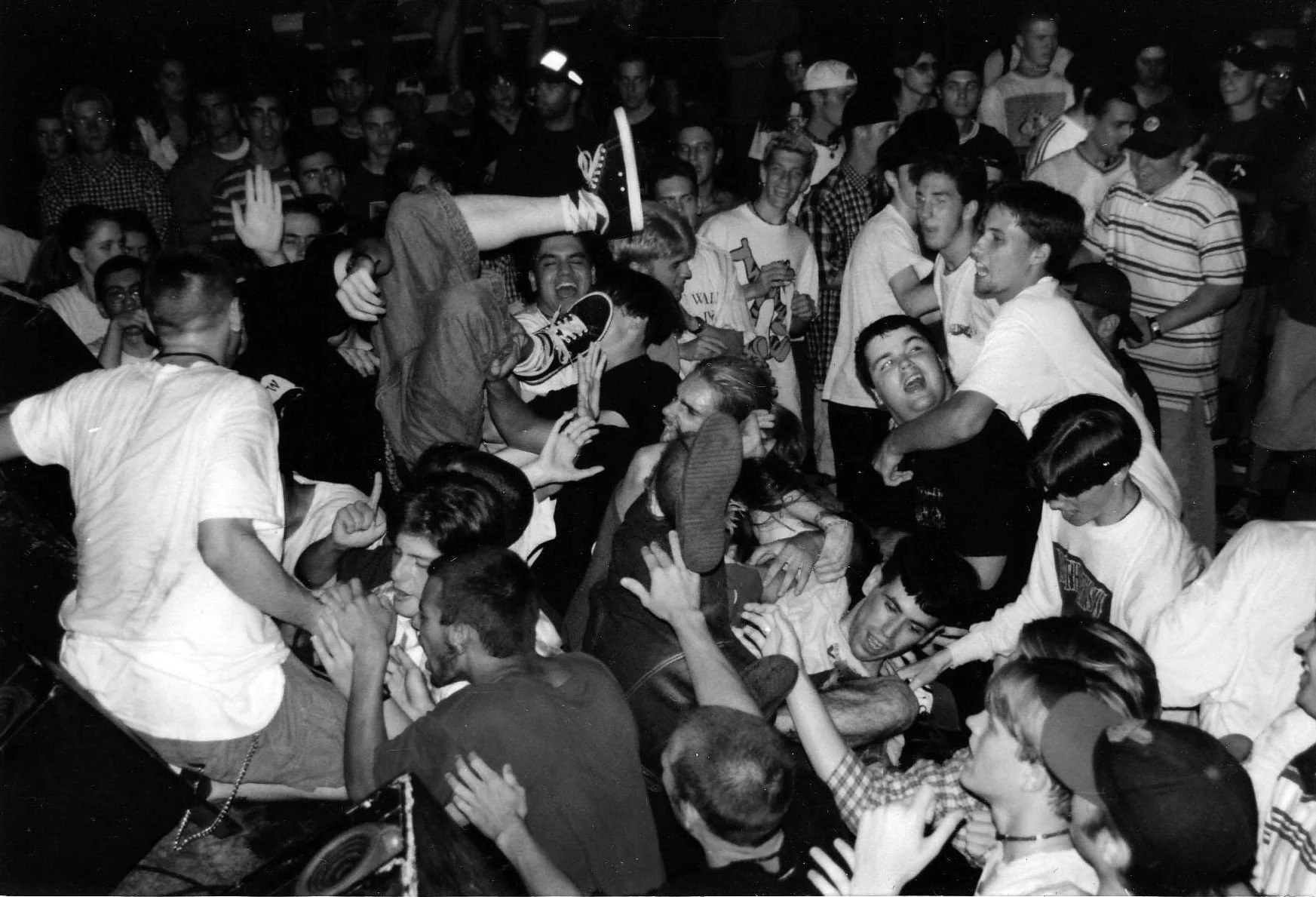
Mouthpiece, City Garden, Trenton, NJ 1994. Photo by Jess.
How did your years of framing shots through a viewfinder influence the way you began to think about the human form and garment construction in your fashion career?
Photography trained me to look closely at people and my surroundings. I grew up deeply immersed in youth subcultures … punk, skate, hardcore, goth, mod … each scene with its own distinct visual language. Style was self-expression and a signal to the world to which tribe you belonged. That way of seeing carried directly into my fashion work. When I launched Victory Press in 2009, the line was deeply informed by skate and hardcore culture, not as a trend, but as something I had lived inside. I approached concept design with the same instincts I used behind the camera: attention to composition, movement, and energy. Clothing, like photography, is a way tell a story about who someone is and where they belong.
Glass is a medium defined by heat, fragility, and transformation. Does working with molten glass satisfy that same need for intensity that originally drew you to the hardcore scene?
Absolutely. I hadn’t thought about it in those terms before, but the intensity and chaos of working with molten glass creates the same sense of calm I used to feel at a show. It satisfies a deep need for release. After every blow slot, much like after every show, there’s this moment of holy shit, I made it out alive. The work demands total presence, and that’s where I slip into a flow state, where fear, adrenaline, and focus all collapse into one. And if I’m honest, there’s something deeply satisfying about knowing I’m tough enough to do it, and surviving that intensity and then seeing it transformed into something beautiful.
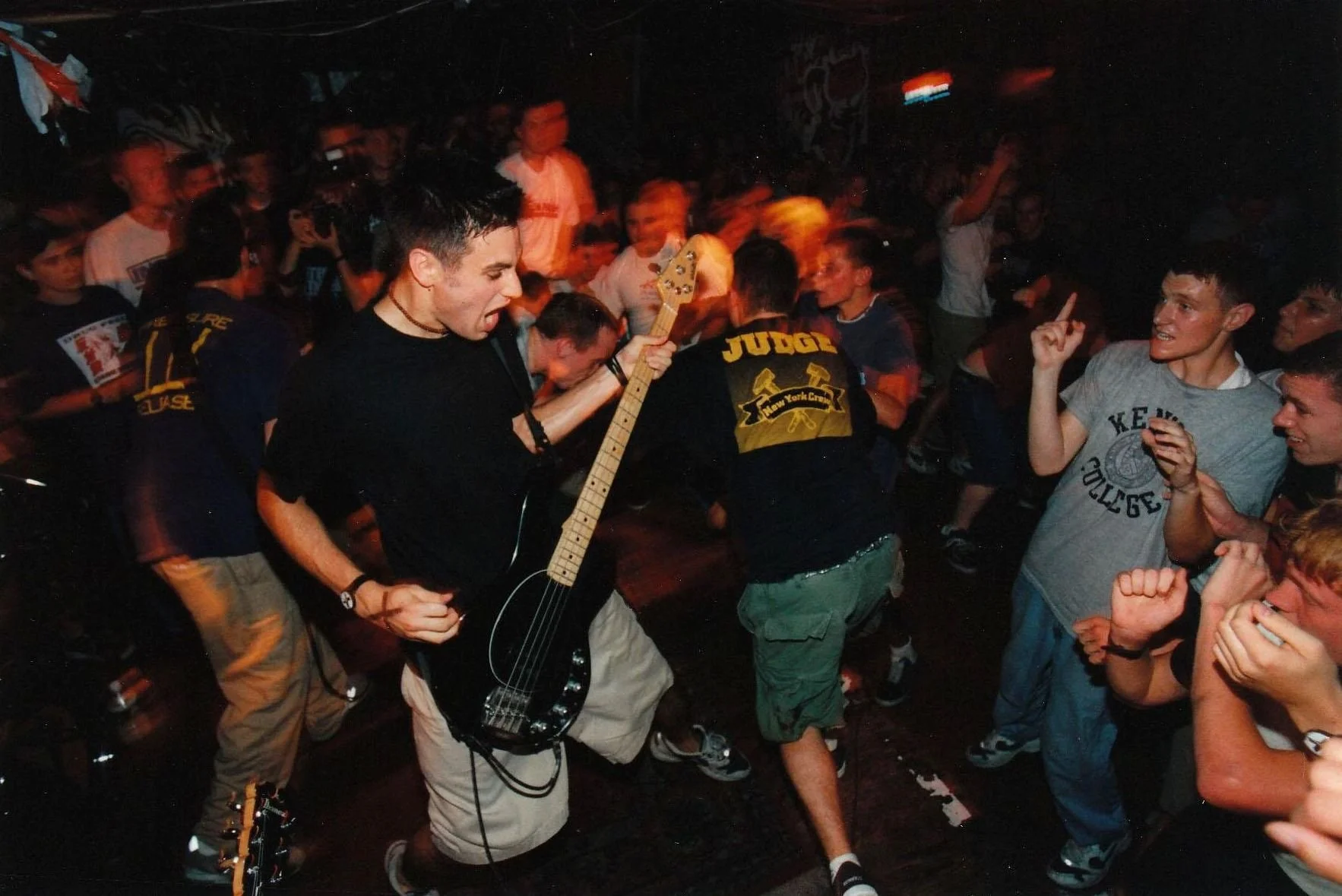
In My Eyes, The Rat, Boston, 1997. Photo by Jess.
Coming from photography—a medium that freezes a moment—how has it felt to move into sculpture and glass, where the viewer’s perspective changes as they move around the physical object?
In both mediums, I’m ultimately trying to capture a feeling and carry that feeling to the viewer. That’s my job as an artist. While the viewer’s experience changes, the act of making the work feels similar. At most shows, I had one, maybe two rolls of film, so every frame had to count. I’d shoot the roll and then wait days or weeks to see the results, hoping I’d get at least one good image. Sometimes the film was overexposed, my flash didn’t fire, or my shutter speed was off. So, sometimes, after a really, really good show, I’d get a bunch of shit back from the film lab. Working with glass feels much the same. I’m usually in the shop for four or five hours at a time, and the work then goes into the annealer, slowly cooling from over 2,000 degrees so it doesn’t crack. The next day, you find out what you actually made. Sometimes it’s great, and sometimes it isn’t. In both practices, the work is really about being fully present in the moment and learning to stay somewhat detached from the outcome.
Much of your current work explores visibility and vulnerability. In the punk scene, visibility is often loud and performative. How are you exploring those same themes now through quiet, static materials like glass and collage, if at all?
During my time in the hardcore scene, I was navigating through an extremely visceral, raw, and emotionally difficult adolescence quietly, hiding behind an oversized band T-shirt and a camera. Visibility in that space was loud and performative, but my relationship to it was more internal. A lot of my work now continues that same negotiation. Through glass and collage, I’m exploring masking, restraint, and creating order out of chaos. The materials may be quiet and static, but they hold tension, fragility, and emotional weight.
Self-definition is a recurring theme in your life. How has your definition of freedom changed from your days living on the road to your life as a full-time studio artist today?
I’ve always felt like happiness comes from doing what you want to do, when you want to do it. As long as you strive to stay inspired, driven and have an ounce of discipline, you can shine as bright as you want to.
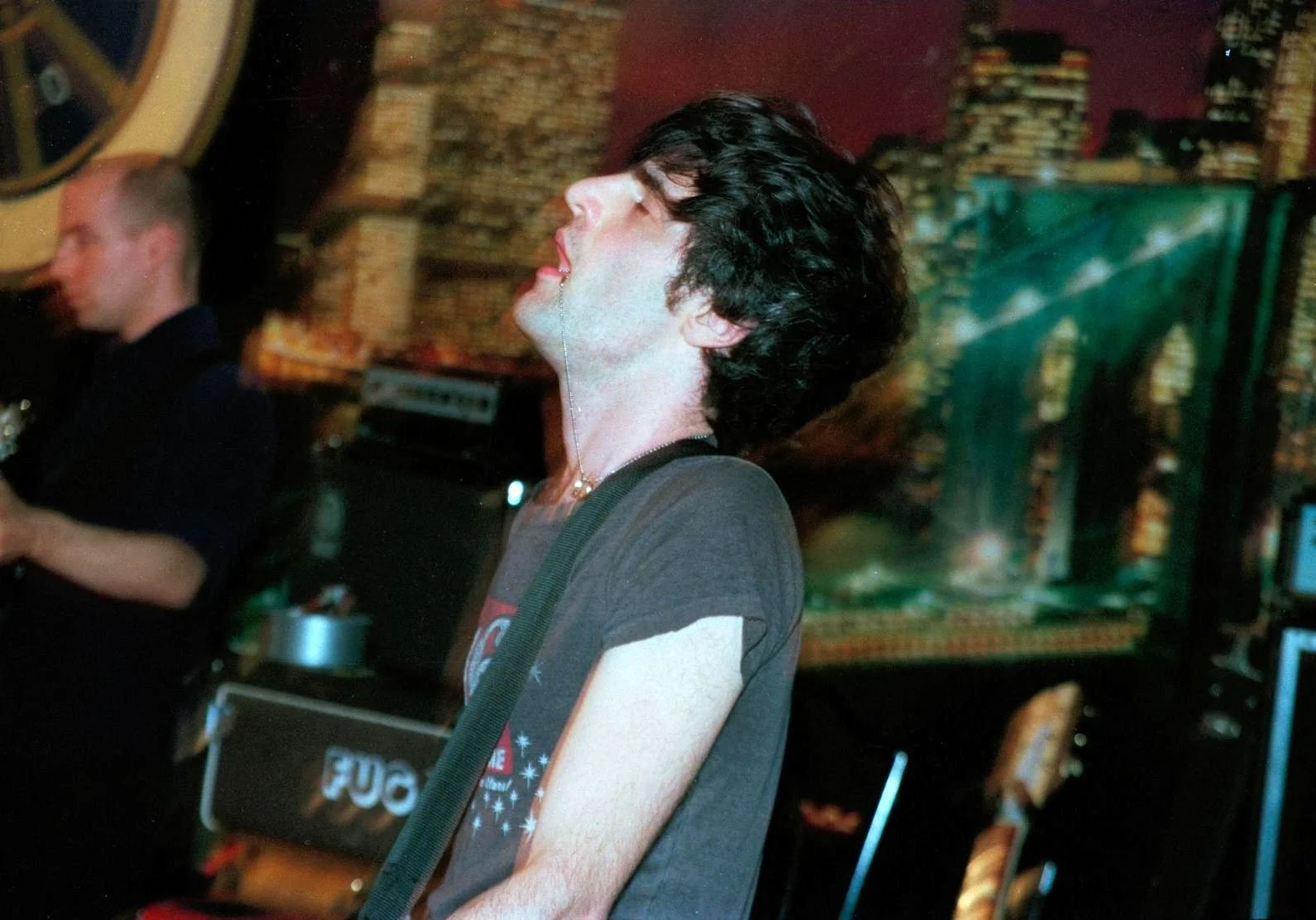
Fugazi, Union Teamsters Hall, Baltimore, MD 1997. Photo by Jess.
If you could place one of your contemporary glass sculptures in the middle of a DIY basement show from your youth, what conversation do you think those two worlds would have with each other?
I have no idea why, but this question makes me think of bands like Anal Cunt and Deadguy. I really loved how they threw things at the audience and how you were always a little scared to go to their shows. It was hyper-violence. A release of inner rage in a safe space. Maybe this is something I should explore more in my own work. Lol
I love upstate New York, having gone to high school near Albany and college in Binghamton. What upstate city or area (other than Corning) would you consider a hidden gem?
Rochester is cool! My boyfriend and I recently went to see Llarraji play a show for his tour with Ambient Church on my birthday. I bought a cool Liquid Liquid record at Needle Drop Records. It seems like the underground music scene is pretty happening in Rochester! There is a very cool used book shop called Small World Books with a cat named Rex that I always look forward to seeing. And the Lamberton Conservatory, a very cool botanical garden with an amazing collection of trees is definitely a highlight.
Anyone you'd like to thank?
I’m thankful for the friends who came along for the long rides, and for the other women in the scene who helped me feel like I belonged. I’m also deeply grateful to photographers like Glenn E. Friedman, whose work helped me see that what I was doing mattered, even before I fully understood it myself. And to my mom, who had no idea I was driving all over the East Coast chasing shows with a camera.
Links
Instagram: @holyshitiloveyou @i_used_to_be_a_hardcore_girl
Website: www.jesshumphreystudio.com