

Organic and Real: An Interview with Less Than Perfect
By Annie Prezzano | January 6, 2026
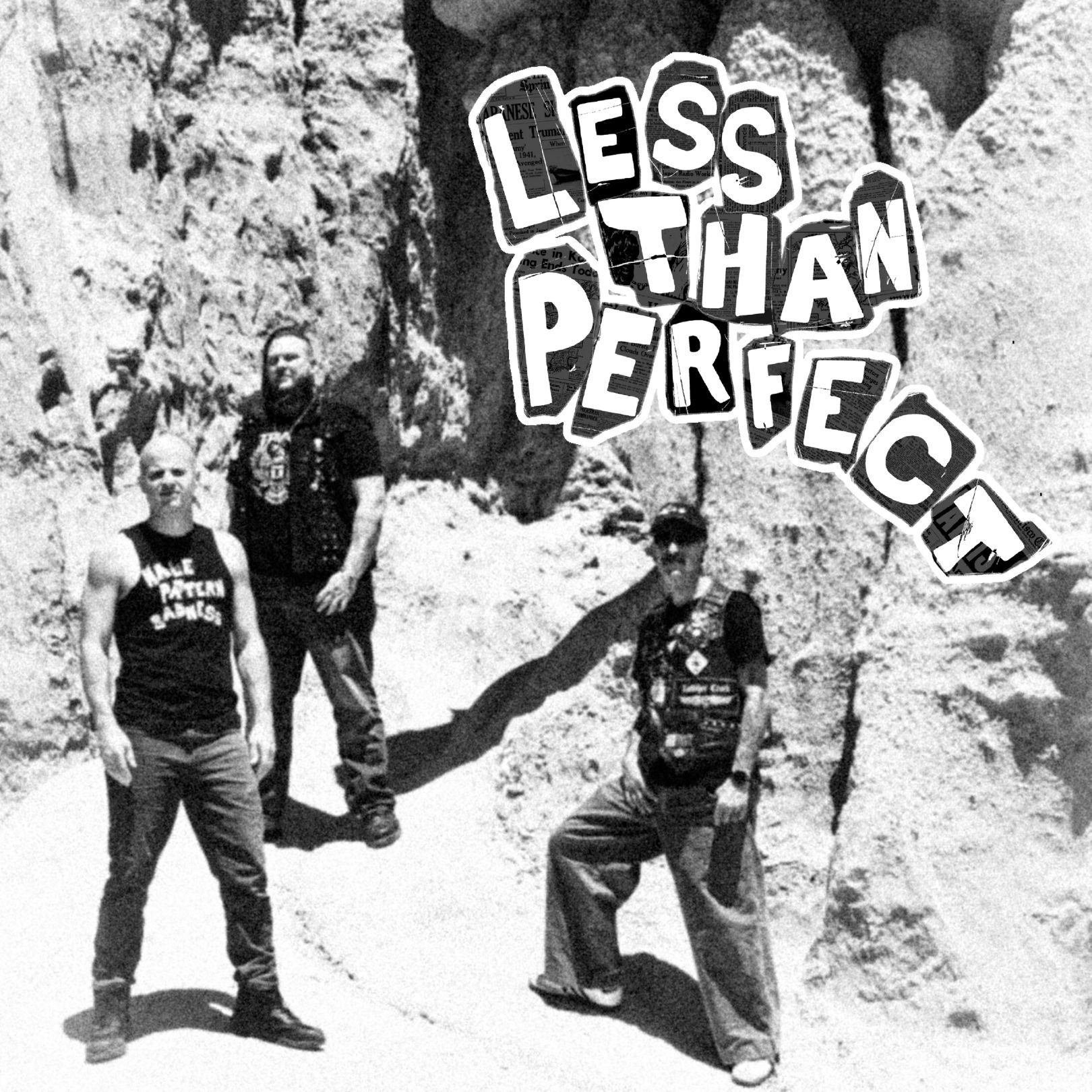
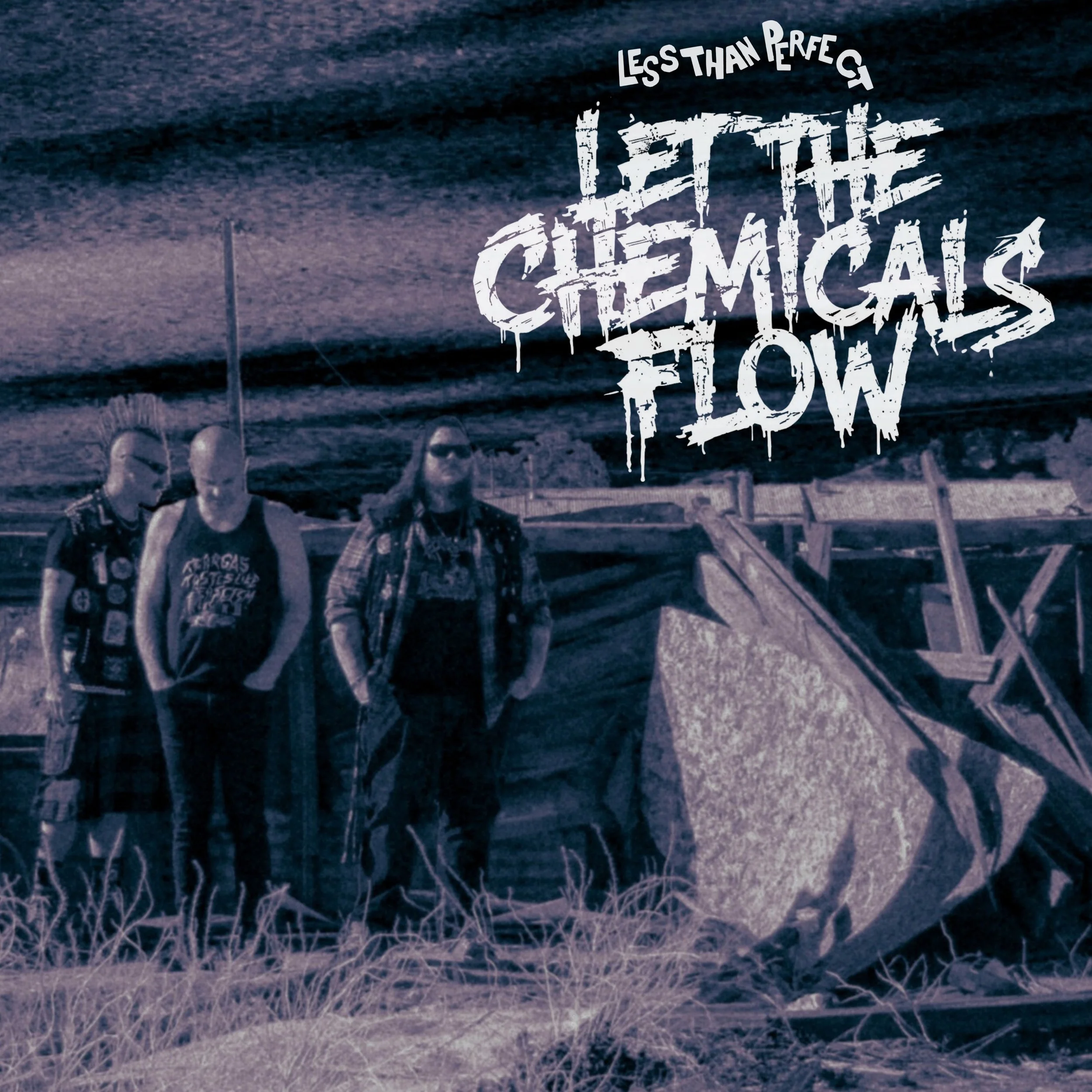
Less Than Perfect is a punk band based in Southern California, performing regularly in Los Angeles, Orange County, Las Vegas, and elsewhere. Founded in 2022, Less Than Perfect's music combines muscular riffs, punk rock ferocity, and provocative songwriting. The band's albums are self-produced at their studio space in Ridgecrest, California. The band's new full-length album, LET THE CHEMICALS FLOW, will be released in January 2026. Less Than Perfect has supported numerous international touring acts in Southern California, and has gained a devoted following in the process. The band's intense and energetic live performances never fail to get the crowd moving.
In the documentary, Less Than Perfect - THE MOVIE, Kyle mentioned the band name came from his civil engineering professor who graded students in two ways: less than perfect (LTP) and passing. How has this connection affected the band’s philosophy?
Kyle Cox (drums): Originally, I thought it was a dig on the idea that if you're not perfect, you fail. But my thoughts have changed lately. I heard the phrase punk is not perfect in an interview with one of my favorite songwriters, Mike Burkett. I feel this thought is what our band emanates now. We're not perfect punk, or perfect people and neither are you. Let's start a pit!!!!
Eric Lawrence (guitar/vocals): I don't like music that sounds perfect. I like music that sounds organic and real. The imperfections make it human. They make it beautiful. I never wanted the name to sound self-deprecating. We take what we are doing very seriously and we play really well. But all of my favorite records have imperfections, and I love them more for it. When I listen to a great record, I don't just hear songs...I hear moments in time that have been captured and preserved forever. When you hear our records or see us perform, I want you to see what three fully committed musicians can do in the moment, creating something real and alive, and sharing it with our audience. Perfection is not the goal because, to me, perfection is not very interesting.
Southern California has produced every subgenre of punk. What part of that lineage do you actually feel connected to—and where do you feel like you don’t fit?
Chris Glenn (bass/vocals): We have explored a few different subgenres as we have progressed as a band with some of our older songs fitting into more of the skater punk or pop punk subgenres and our more recent songs aligning more with the hardcore and anarchy punk subgenres. I feel like we really found our sound with the current direction of our music but I see it all as a spectrum that can vary from song to song.
Kyle: I feel LTP is connected to heavier punk sounds from California like Adolescents or Circle Jerks. We also all really enjoy the music that comes out of the NYHC scene like Cro-Mags and Agnostic Front. All that influence coupled with deep and sometimes comical lyrics that root deeply in California make LTP a band that sticks in your memory.
Do you find that categorizing your music is useful to you at all, or does it feel limiting?
Eric: It certainly helps when you are communicating with promoters and venues and you want to give them some idea what to expect. But at the end of the day, we are three musicians writing and composing the music that we want to play. I don't care too much how people want to categorize us. I don't think we let categories or genres limit what we are trying to do.
Kyle: Do you? The classification of music was just a tool for the failed record industry to capitalize on the public. If it sounds good, support it. Seems simple to me.
Chris: I don't know that I have ever really felt like it's crucial to categorize our music. The most important thing for me has always been that we write and play what we feel no matter what genre it fits in. The most important part is that we stay true to who we are.
Less Than Perfect started in 2022, but all of you have clearly been
doing this much longer. What carried over from your earlier bands, and what did you deliberately leave behind?
Eric: Chris and I played in a number of different bands together before creating LTP. We've built a tremendous amount of trust and musical chemistry. It takes lots of time on stage to get really comfortable with the process, and a few hundred shows together fit the bill. What did we leave behind? We learned that we don't usually enjoy playing covers, and we don't like to play excessively long sets. 30-40 minutes of high energy, asskicking rock n' roll is more entertaining than drawing things out for the whole evening.
Chris: Each band experience has helped us to develop our individual styles and grow as musicians. I don't know that there is anything that I have necessarily left behind because it's all important and useful even if it's not something I am currently using. You never know what could be useful in the future. It's like building a tool box that you can pull from. That being said, one of the most important lessons I've learned about being in a band is cohesion. It doesn't work to just throw some people together. You have to trust your bandmates and be able to work together.
In a number of your posts you use the hashtag #oldmanstrength and you have a song titled “Male Pattern Badness”. How do those ideas about aging masculinity play into your relationship with punk culture, which often glorifies youth?
Chris: This is a great question and I think it speaks to part of what we present as a band. Age is not everything and as men in our 40s who grew up n the punk, rock, and metal scenes, we want to show the world that just because you grow up and get a little older it doesn't mean that you have to stop rocking. Punk is a state of mind, an ideology, and a part of our identities that we don't have to give up and deny just because we get older.
Kyle: I don't know if it glorifies youth these days. When I get into the pit at 45 I'm knocking elbows with ages 18 - 60. Punk didn't die, but many of us are getting older and none of us have turned our back. I feel our lyrics hit a celebrated and necessary spot amongst a large part of the punk scene.
You describe your music as having “muscular riffs” and “provocative songwriting.” Which comes first, the melodies or the lyrics?
Eric: I always start with the melodies and guitar parts. My first goal is always to come up with riffs that can energize a room and get people in the pit. Once I have the riffs, I'll figure out the vocal melody and harmonies. The lyrics are usually the last thing I come up with. I always keep notes on various ideas I'd like to write about. Once the melodies are done, it's usually obvious which lyrical concept is the best match for the riffs we've created.
Self-producing in Ridgecrest puts you far from industry pressure and far from a traditional studio ecosystem. When there’s no outside voice in the room, how do you know when something is finished?
Eric: We have a few trusted voices outside of the band. And we certainly listen to feedback from our friends and fans. At the end of the day, however, this band is our creation and we like having control over it.
Chris: I think it has added some extra challenges because we don't have a traditional recording experience, but it also helps us stay more connected to the music and to collaborate as a band. We know that the song is done when we as a group feel that we have done our best. That being said, sometimes the song evolves as it goes.
There’s a sense of intention behind how Less Than Perfect operates: self-produced and unapologetic. What’s one principle you refuse to compromise on, even if it costs you momentum?
Kyle: The whole “pay to play” capitalism that has engulfed many of the “old school venues” here in Los Angeles, is a principle we have to think about. We don't mind bringing in ticket sales for the right lineup, but many of the promoters doing this are more interested in the pay part and not so much in the play part.
Eric: We don't pay to play, and the music we create comes from the three members of the band, and that's that. We don't use other songwriters, and we sure as hell won't use AI to come up with our music.
Chris: I feel like staying true to ourselves and our music is the most important thing. If we comprised our music in any way just to get more shows, it wouldn't be our music anymore.
What kind of music did you guys listen to growing up? Who are artists that have influenced Less Than Perfect that would surprise listeners?
Eric: I was a metal guy growing up. My favorites were always Sabbath and Slayer, as well as some of the old school death metal acts like Dismember, Carcass, and Autopsy. I always loved going to metal and extreme music festivals, and in the late 90's and early 00's, more hardcore bands started making their way on to those shows. I remember seeing Madball at some metal festival, and it really opened my eyes up to the hardcore scene. I obviously liked the aggressiveness hardcore, but was also fascinated with how politically motivated and socially aware it often was. That continues to be how I operate today. I want to write aggressive music with a purpose, and bands like Discharge, Napalm Death, and Suicidal Tendencies were all huge influences in that regard. As for a few artists that might surprise listeners? Bruce Springsteen has had a tremendous influence on how I carry myself on stage. Jimi Hendrix is a huge influence on my guitar playing. And Bob Marley is another big influence on my songwriting.
Kyle: Not a surprise, but my main influences are local CA bands like NOFX, Adolescents, Circle Jerks, Lagwagon, Pennywise, 98 Mute, Descendants, Social Distortion, Sublime, Mad Caddies, Bad Cop Bad Cop, Bombpops, Agent Orange, Suicidal Tendencies… as well as band from other cities like Bollweevils, Guns n Wankers, SNFU, Moterhead, Nekromantics, Screeching Weasel, Dropkick Murphys… I could go on for days.
Chris: As a kid I grew up on old school legends like Judas Priest, Black Sabbath, Metallica, and Iron Maiden. In my freshman year of high school, my best friend showed me punk bands like Bad Religion, Less than Jake, and Anti-Flag which opened my eyes to a whole new landscape of music.
The band has been picking up traction and playing more gigs than anticipated. What direction do you envision the band taking?
Kyle: To the moon baby!! Bigger shows, cooler venues, and amazing fans are why we're here. I think we are going to keep moving up.
Eric: We've already accomplished more than I ever expected. We will keep pushing. We know we put on a good show...now we just want to get in front of as many people as we can.
Chris: When we started this band, we had no idea what we wanted to do with it or how far it could go. I know for me, I am still surprised everyday with how far we have come. But I love how far the band has gone and I want to take it as far it can go. I'd love to be headlining a sold out show with a number 1 hit song one day, but it's not all about the ending. It's about the journey and our journey as a band has been, and continues to be, an amazing experience that I am proud to be a part of.
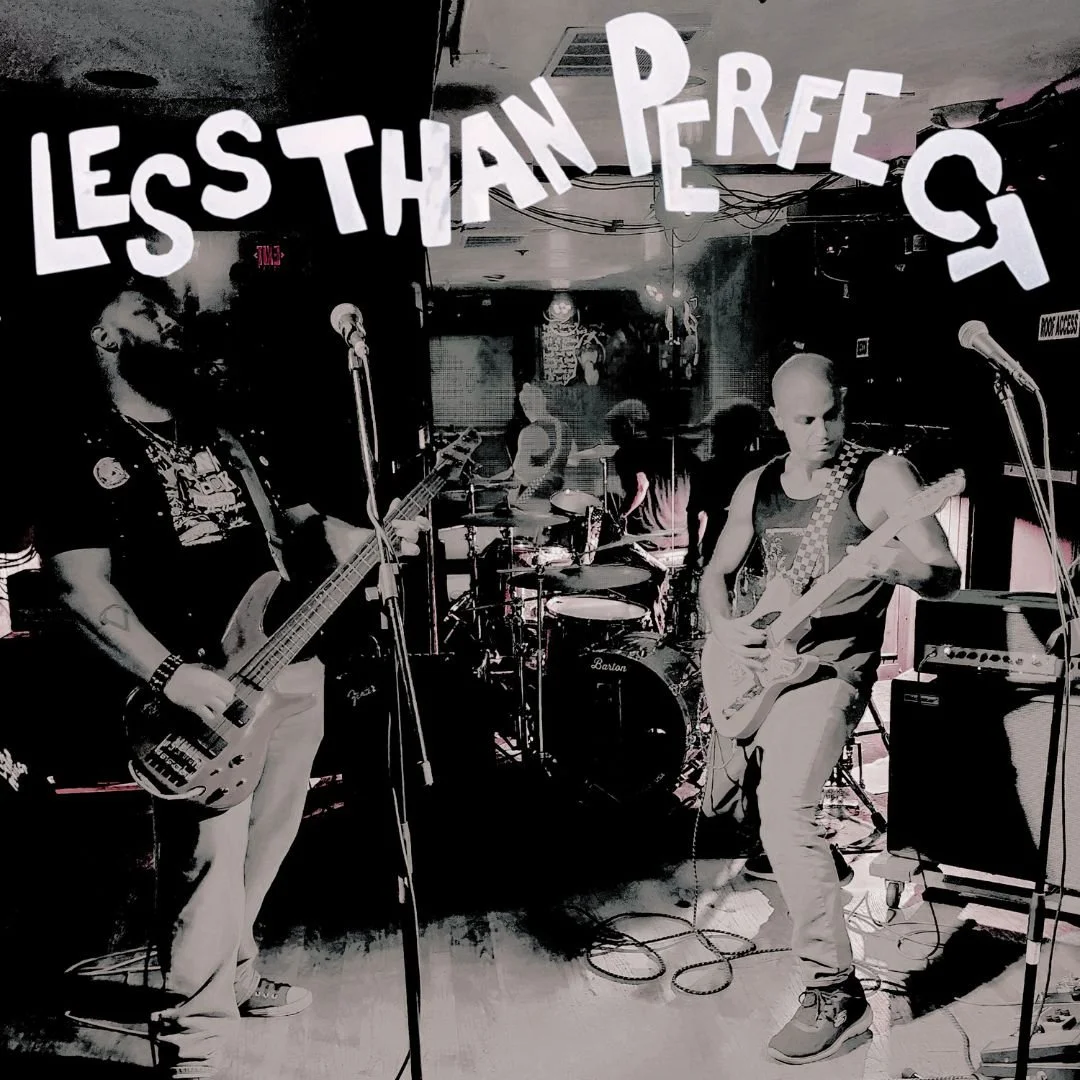
You’ve described your shows as “intense and energetic.” When people leave your shows, what do you want them to take with them?
Kyle: A little less aggression and contempt for the world.
Eric: Live music has always given me the escape I need from the stresses of everyday life. Especially with genres like metal and hardcore, it provides a way to cut loose and release your energy in a positive environment. It means so much to me to be able to provide that to someone else. I talked to a kid after one of our recent shows, and he told me that our show was his first mosh pit. That's what it's all about!
Chris: We want people to have an experience and to feel like they are part of the event. When we put on a show we don't want people to feel like they are there to watch and listen to us but to participate and leave feeling pumped up.
Anyone you'd like to thank?
Eric: I'd like to thank my wife, Holly, and my two boys, Grayson and Bodhi. They have all been so supportive of my musical efforts. I couldn't do this without them. Of course I'd also like to thank everyone else that has supported us as a band, including the venues and promoters, fans and friends, and all of the other great bands we've shared the stage with. I love creating music, and I'd enjoy doing this even if nobody was listening. But the fact that so many people have supported us and enjoyed what we are doing makes it so much better.
Chris: I want to thank my fiance Rana for always being at our shows and supporting my dream as a musician, my kids Jade, Breena, and Trevor for supporting me as I am on the road performing or in a garage practicing and recording, my mom for introducing me to music, for inspiring me to become a musician, and for teaching me bass as a kid and ultimately setting me on this path. And of course I want to thank all the musicians that came before us and paved the way for us and every other amazing musician out there.
Kyle: Your Mom!
Links
'I Don't Need Therapy' Music Video: https://youtu.be/qmg22eO5uWc