

Have You Seen This Band? An Interview With Baltimore’s Consumer Culture
By Staff | December 1, 2025
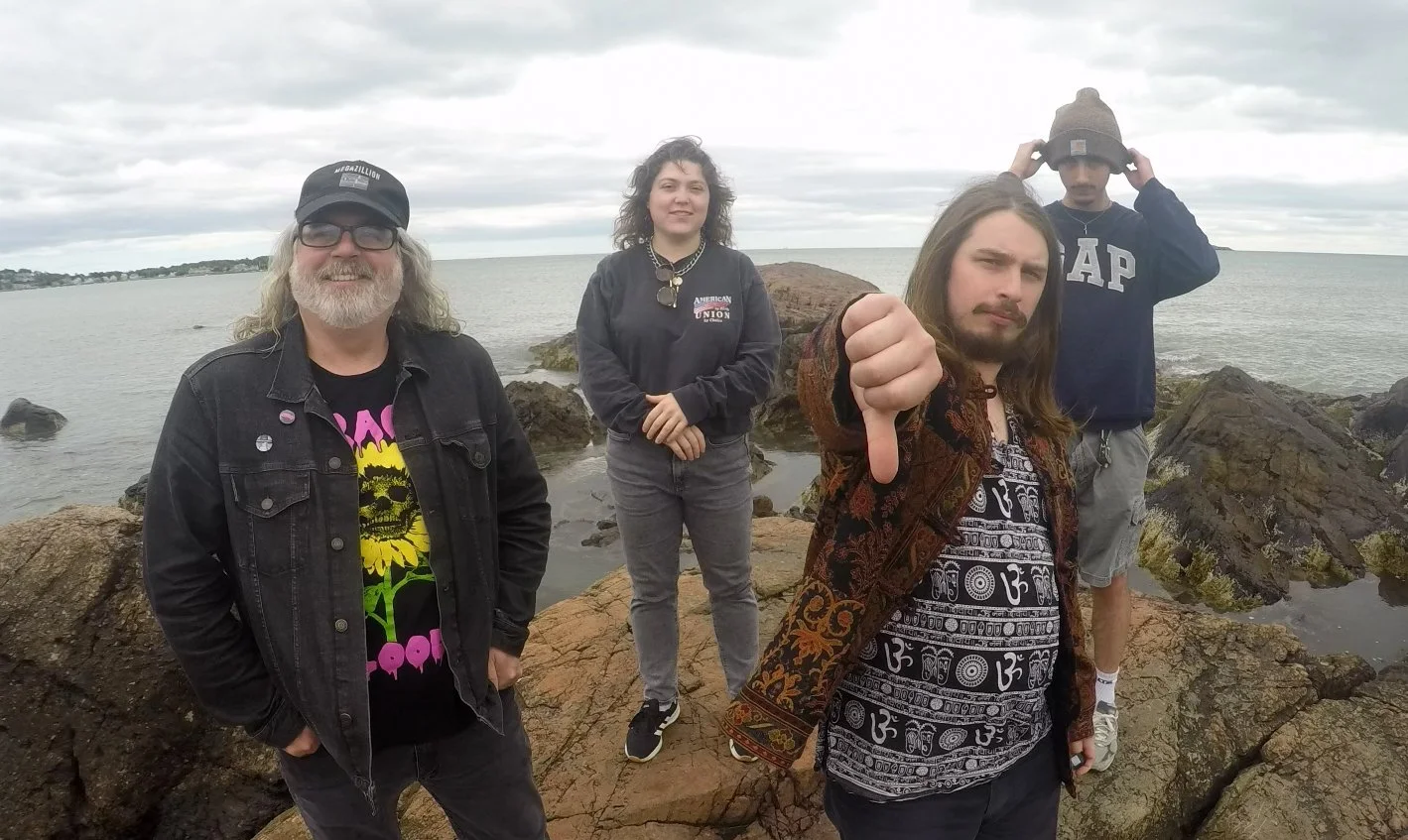
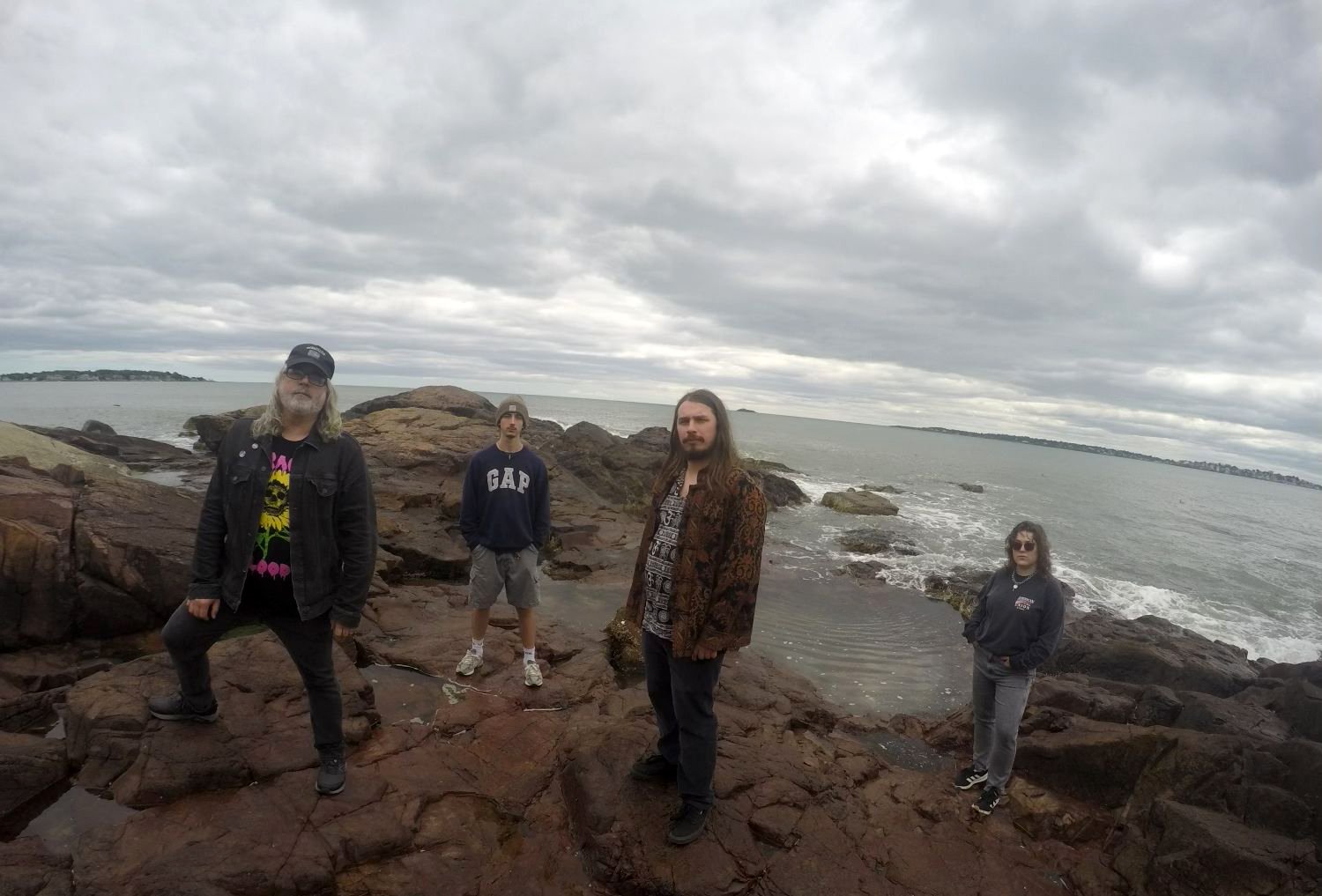
The off-kilter and noisy post-hardcore that Consumer Culture play has been developing through the anti-capitalist ideology and creative vision of vocalist Marshall Veth since 2018, and hit a new level with the entrance of guitarist Paul Joyce in 2019. Joyce quickly fell into the project’s style with crushingly dissonant playing that ultimately proved to pair best with the drumming of his own son, Paulie, who was quickly becoming a formidable player when the pair started playing Consumer Culture songs together. When the band was ready to play again in 2022, Paulie had joined Consumer Culture full time. Bassist Annie Bailey joined in 2024 after having a long-term interest in the project, setting the Baltimore quartet on their present trajectory of consistent performance and releasing new material.
To date, Consumer Culture has toured from New England to the Carolinas, released two LPs, an EP, a split with Powerwasher, and multiple singles. As artists for arts sake, Consumer Culture wears all of their intentions plainly, representing themselves as, “Anti-capitalist, represented in the effects it has on us as individuals while also making songs that break down the tactics used by capitalism to turn society against itself.”
Citing Melvins, Queens of the Stone Age, Sonic Youth, and Mr. Bungle as influences helps contextualize the band’s sound, but their irreverent live presence and uncompromising heaviness distinctly feels akin to that of David Yow and The Jesus Lizard. In 2022, Consumer Culture played their first show out of quarantine, where Veth broke his leg as a result of an ill-fated stagedive, fortunately or unfortunately making it into a recording of the performance being now available on their Bandcamp site. Additionally, Consumer Culture has a well traveled clip of Veth’s antics during a show that has gotten over 4M views on Instagram and almost another million on Tik Tok with a repost from none other than Fred Durst. A still photograph of that video serves as the art for their single “Have You Seen This Man?”, which was released October 3rd on The Ghost Is Clear Records.
Marshall, your vision for Consumer Culture began in 2018. How has the core anti-capitalist ideology shaped the musical style from the very beginning?
Marshall Veth (vocals): 2018 seems a different lifetime at this point. I think the politics of the beginning of the project were a lot more naive, but the premise is still the same. The band name and message is one of how we live in a world that is designed by capitalists to keep the masses divided and pacified. Back then I didn’t know much about actual politics (and to be honest I still probably don’t) but the band's concept has grown and filled in the details as time goes on and the band name becomes more relevant every year that passes now.
Paul, you quickly fell into the project's style after joining in 2019. What about Marshall's initial vision or the early music clicked with your 'crushingly dissonant playing?'
Paul Joyce (guitar): When I first heard the music I felt a strong connection to many of the riffs because they felt like they were influenced by things that I was also influenced by. Particularly something like “SkyEater” or "Instigate” from the first album. It was very much a kind of music that I found relatable and felt comfortable with. We first played a show together in 2017 when Consumer Culture was under the name GrassRoots. I thought it was cool then and really enjoyed the energy Marshall brought to the stage. When Marshall asked me to join I didn’t think twice.
Paul and Paulie, your father-son dynamic in the rhythm section is quite unique. What was the moment or song where you realized your playing styles paired together best for Consumer Culture?
Paul: I think we both found learning and performing the song “Untitled” to be a real challenge and as Paulie became more comfortable being the young one in the band he started bringing in his own rhythmically challenging ideas. I find it fun and interesting to work with his wild ideas. It’s actually made me write things differently than I have in the past. Coming up with the music for the newer song “Monkey in the Middle” was kind of a bench mark as it was the first time Paulie actually wrote rather than just adapting an arrangement. That song kicks my butt regularly and I feel lucky to be pushed as a guitar player. I have a lot of experience playing complex music so it’s really nice to be put in a position where I’m going outside my comfort zone. It’s great to be in a band where challenges come from multiple sources.
Paulie Joyce (drums): I definitely agree that Untitled was the song that showed we can play more complex rhythms together and it significantly raised the ceiling for what type of music we can create together. As someone who’s a fan of more complex and rhythmically challenging music, it showed me that I can really push myself to write and play more difficult parts.
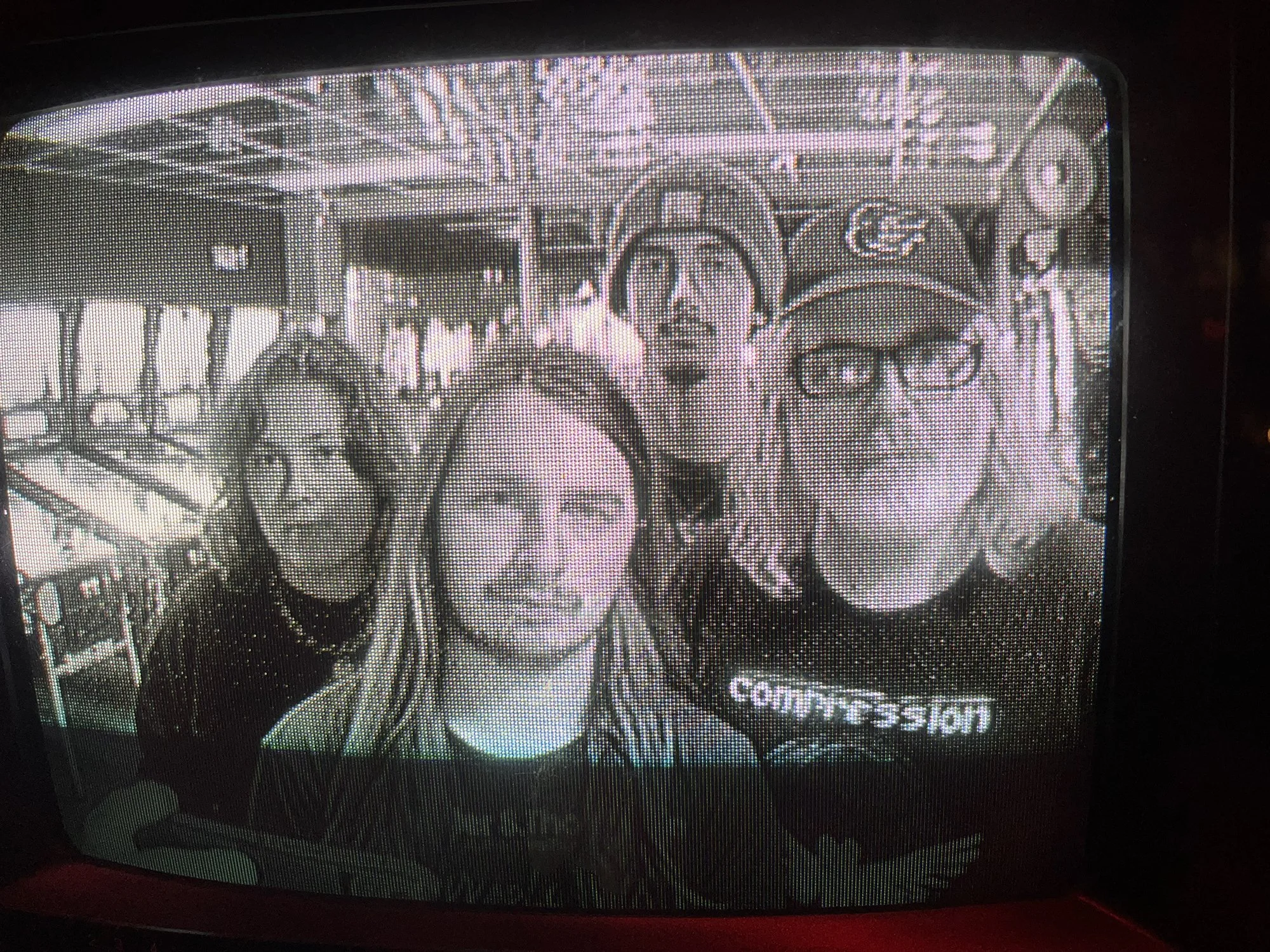
Annie, you had a long-term interest in the project before joining in 2024. What finally convinced you to jump into the 'off-kilter and noisy post-hardcore' of Consumer Culture?
Annie Bailey (bass): It mainly came down to timing. The band was in a transition period in early 2024 and needed a new bassist, but there were still a lot of shows coming up on the calendar. Marshall asked if I could learn the set, and a week later we were out playing shows in DC, PA & Ohio. Prior to that I had seen Consumer Culture play in venues around Baltimore, and knew Paul and Marshall through various music scene connections. When Marshall asked me to join & learn “The Future Is A Pile of Bodies” album to play live, there was no hesitation, I loved the songs & was stoked to play those riffs.
Marshall: Annie is a real one, we asked her to play a show with us that was about a month or so away, and after the first rehearsal we all knew she was ready right then and we asked if she would be down to start playing the shows we had lineup for just a week or two out. They all went perfect.
With the current lineup solidified since 2024, how has the band's collaborative creative process changed compared to the earlier stages?
Marshall: The lineup has always changed but something about the current lineup feels like a new era for sure. Mostly because the upcoming releases featuring Annie on bass are the most collaborative songs yet. For a while it was me as the primary songwriter, but now the band is a lot more open in the songwriting process, I think it has led to a more cohesive sound and everyone gets to play their strengths. It feels more organic to me.
Your sound is described as off-kilter and noisy post-hardcore. What is the biggest challenge in translating that complex, dissonant sound from the practice room to the stage?
Marshall: I’d say the biggest challenge for me is my vocal effects, I could nerd-out on the gear I use but sometimes getting the balance right can be tricky. Sometimes you show up to a basement and you have to accommodate.
Annie: I think the challenge will grow a bit with some of the new music coming out. The good thing is it seems to scale up a bit with each release, comparing “The Future is a Pile of Bodies” with the upcoming album, there’s a bigger variety in tones & effects, and there’s another secret lineup of songs that’s even more complicated. We’ve talked about maybe bringing out Marshall’s guitar in the future, or having a synth with us onstage.
Paulie: What’s interesting about playing some of these songs the first time is that I find people react to different parts of the song than I would expect. It changes how you view the dynamics of the songs and what parts you should really be emphasizing live. I’ve never really noticed this type of thing until we started playing these songs live, but it makes me shift my studio playing from my live playing and I’ve found it challenging finding a balance.
You cite Melvins, Sonic Youth, and Mr. Bungle. Which specific element—whether it's structure, texture, or attitude—do you feel is the most direct throughline from those bands to your own?
Paul: I would say the Melvins because of the heaviness and the “it’s metal but it’s not” kinda crossover sound. With Sonic Youth it’s the wall of sound and the dissonance with those melodic aspects that I really connect with. With Bungle it's the attitude where anything might happen. The dark humor that’s not in your face but present and sometimes unsettling. Bungle always has that aspect of confusion and I love confusion as a music or entertainment device. I don’t mean that as a “oh it’s so complex musically it’s confusing” but in a “wait, what?” kinda thing. Might not be for everyone obviously but to me it keeps things very interesting. Marshall and I share a desire to push the sonic and composition boundaries of the band like the way Bungle has. Right now we have to travel mean and lean which is great and it’s working but we do talk about what it would be like if we had bigger transportation lol.
Marshall: I think right now we are closest to Melvins, but as the band’s sound changes more over time, I hope to say Mr. Bungle in the future. Once we have the means to bring whatever we want to a live show it’s over.
The Jesus Lizard is brought up in connection with your 'irreverent live presence and uncompromising heaviness.' Is that comparison a conscious goal, or does it stem naturally from the energy you bring?
Marshall: For me it's just always been what a good frontman should do. After breaking my leg I certainly toned it down a bit with the antics and jumping around, but I still think every good show needs at least one “WTF Moment” that everyone will remember.
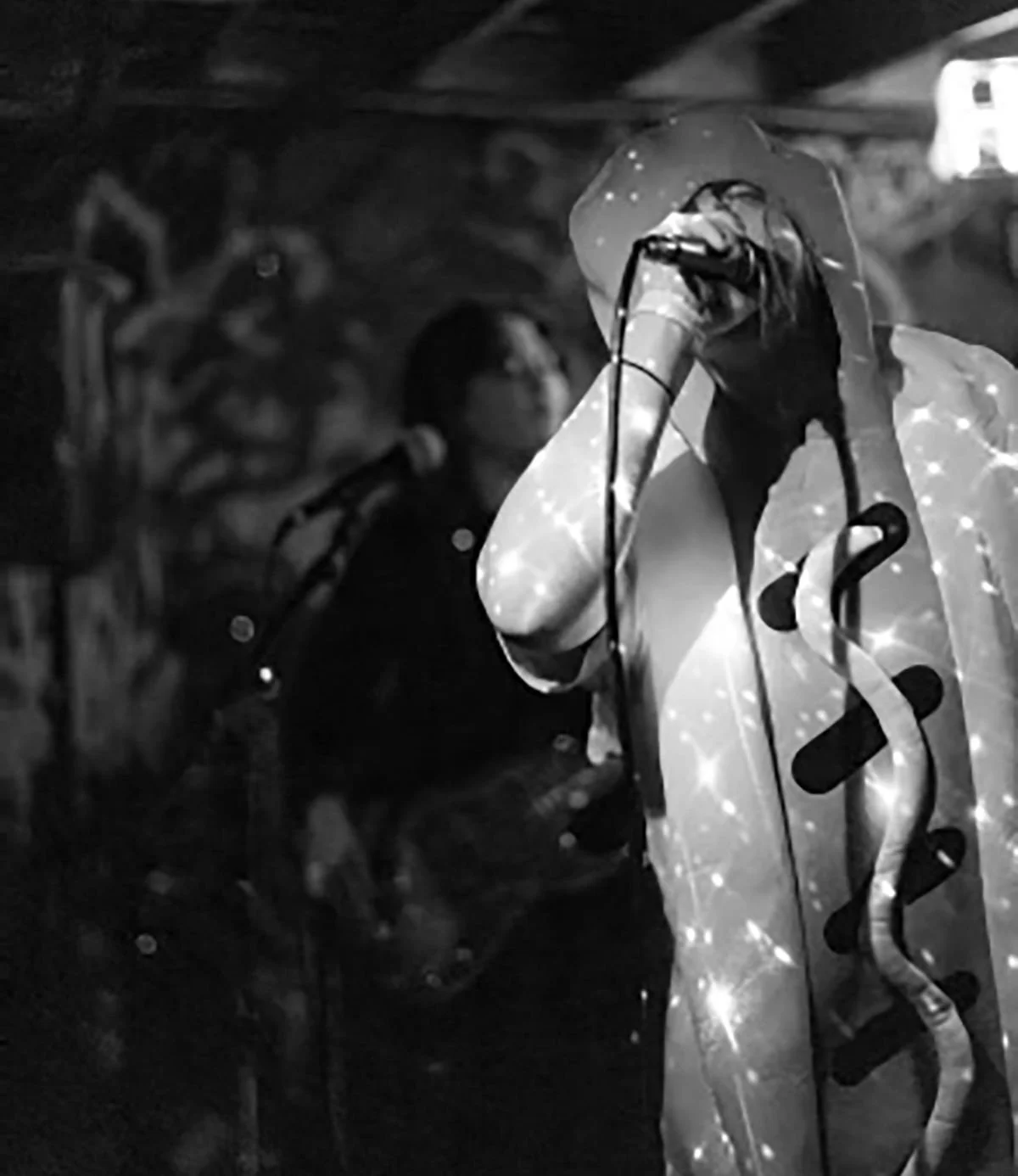
After two LPs, an EP, and various singles, how do you approach keeping your sound fresh while maintaining the consistency of your core style?
Marshall: To me, all my favorite bands evolved album by album and I think that as long as the project exists, there will always be a throughline regardless of how different the music may sound. That throughline may be explicit or unspoken, but it becomes “The Sound”.
Paulie: I find that as much as the instrumentals change, Marshall’s voice and style hold everything together and it really is what keeps our sound consistent. Though honestly our sound has just changed a lot and I think we like to embrace it as we like many different types of music and we don’t want to feel limited to one sound.
Your split with Powerwasher - what did that collaboration bring out in Consumer Culture's music or writing that was different from your other releases?
Marshall: That was a fun time, the main difference I would say is that we recorded that ourselves and you can tell. I stand by it, but it's definitely some DIY stuff.
As 'artists for arts sake,' how does that ideal manifest in the non-musical aspects of the band, such as merchandise, pricing, or promotion?
Marshall: Regardless of what our ideals are, our reality is we live in a capitalist society, we all have bills to pay and touring can be expensive. We love to travel and meet other bands so we basically put all the money the band makes back into the band fund. It all goes into trying to grow the project so we can keep doing it and provide a quality show for everyone we get to perform for. As far as merch that's the only real way to make it affordable but we don’t want to be greedy either so we just try to be reasonable with how we price stuff. Promotion we just shitpost on the internet and post live clips. It's annoying to stay on top of the online promo sometimes, but it's a necessary thing if you are trying to reach new people.
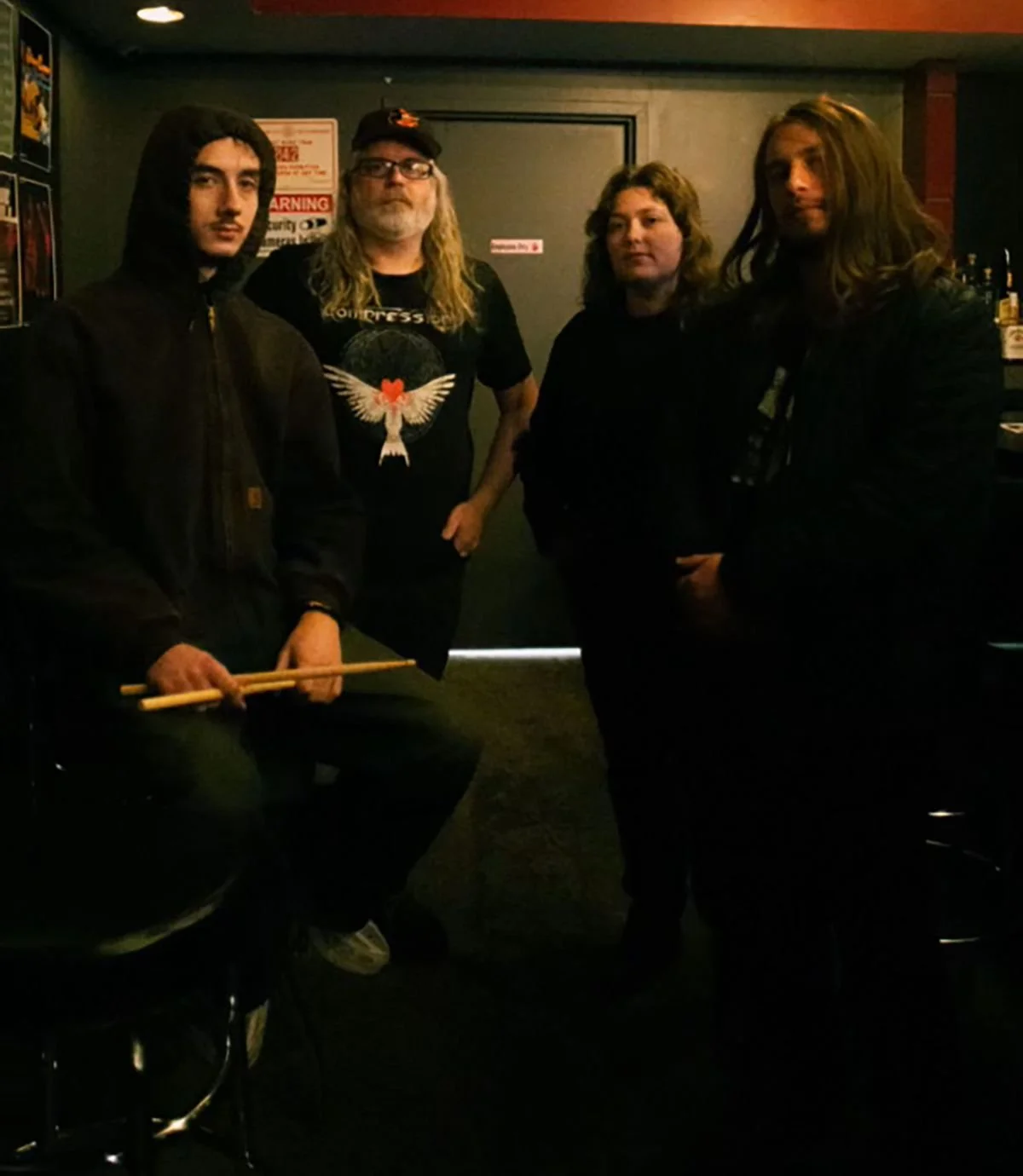
Do you feel your message is better received through the abrasive, noisy nature of your music, or through the lyrics/vocals, and why?
Marshall: I’d say the lyrics but the words need a delivery and the band is what gives the words its real weight. It all comes together to give the message and the attitude.
Annie: To give it an image: I think Marshall’s lyrics are the fist that hits you, but the music is the body behind it.
Given the current cultural and political climate, what is the most important idea you hope a new listener takes away after spending time with your music?
Paul: The way things are right now with all this ugliness on high in our shared world I hope we can do what we love and share it to other folks and spread some good vibes, feel connected outside of the information super highway and that we are all still here regardless of the hand trying to makes us feel hopeless. It’s kinda hysterical to play such dissonant, aggressive music with Marshall’s lyrics that cover many dark topics we must deal with as a community BUT want it to be a joyful experience. We say what we say and do what we do but we are all in this and we just use art as a way to express all this and play some cool music that we find satisfying. I hope it translates.
Marshall: I just hope it gives people a moment to reflect on what's happening around us, all we can do is express how we feel and the way the art is interpreted is out of our hands. I just write about what's important to me and how I see the world. It's something I feel compelled to do and I love it.
Annie: I think the live show is a super important part. There’s a huge community of people who feel the pressure and confusion of 2020s America, so putting on a show & linking up with other bands we love seems like the best way we can express our thoughts & stay connected.
Marshall: Following up on what Annie said, the network of weirdo rock bands we have met up and down the East Coast is amazing and it really feels good to have that community whether its 8 hours away or right down the street at local shows.
Marshall, you broke your leg in in 2022 in an ill-fated stagedive that made it onto the Bandcamp recording. What was going through your mind in that moment, and how did you finish the set?
Marshall: So I tried to jump off the stage and do a flip during the last song and I broke my right tibia and fibula. I had so much adrenaline going that it actually didn't hurt that much. I only had like one more chorus in the song so I just laid there and did it laying on the ground. I do remember lifting my leg up and seeing it dangle…I just thought “Yeah that’s broken”...
Your clip of Veth's stage antics went viral, getting over 4M views and a repost from Fred Durst. What was your reaction to that unexpected mainstream attention, especially considering your anti-capitalist stance?
Paul: It’s funny we have another band called Megazillion and we were in Detroit in August and some people recognized us from that clip. It’s weird to be an artist when content is king and a tiny little clip like that with no context can attract new interest. At the end of the day we gotta live in this time and we are artists, we are gonna survive the best we can in it while making the stuff we need to make. Fred Durst reposting it was insane, lol. No comment otherwise.
Marshall: We do a bunch of goofy stuff on Instagram for fun and some of it is just the live antics cut into clips. We had a few clips get decent views but that one blew up! Its funny how we put all this effort into our art but the biggest success we have seen is a 12 second clip of us playing “peekaboo”. Really makes ya think…I don’t give it that much weight, but in the clout-chasing ecosystem that is the music industry we kind of use the clip as an “infinite money glitch”. We just post it every couple of months and it goes viral again. We just think it's funny and it keeps getting us new fans.
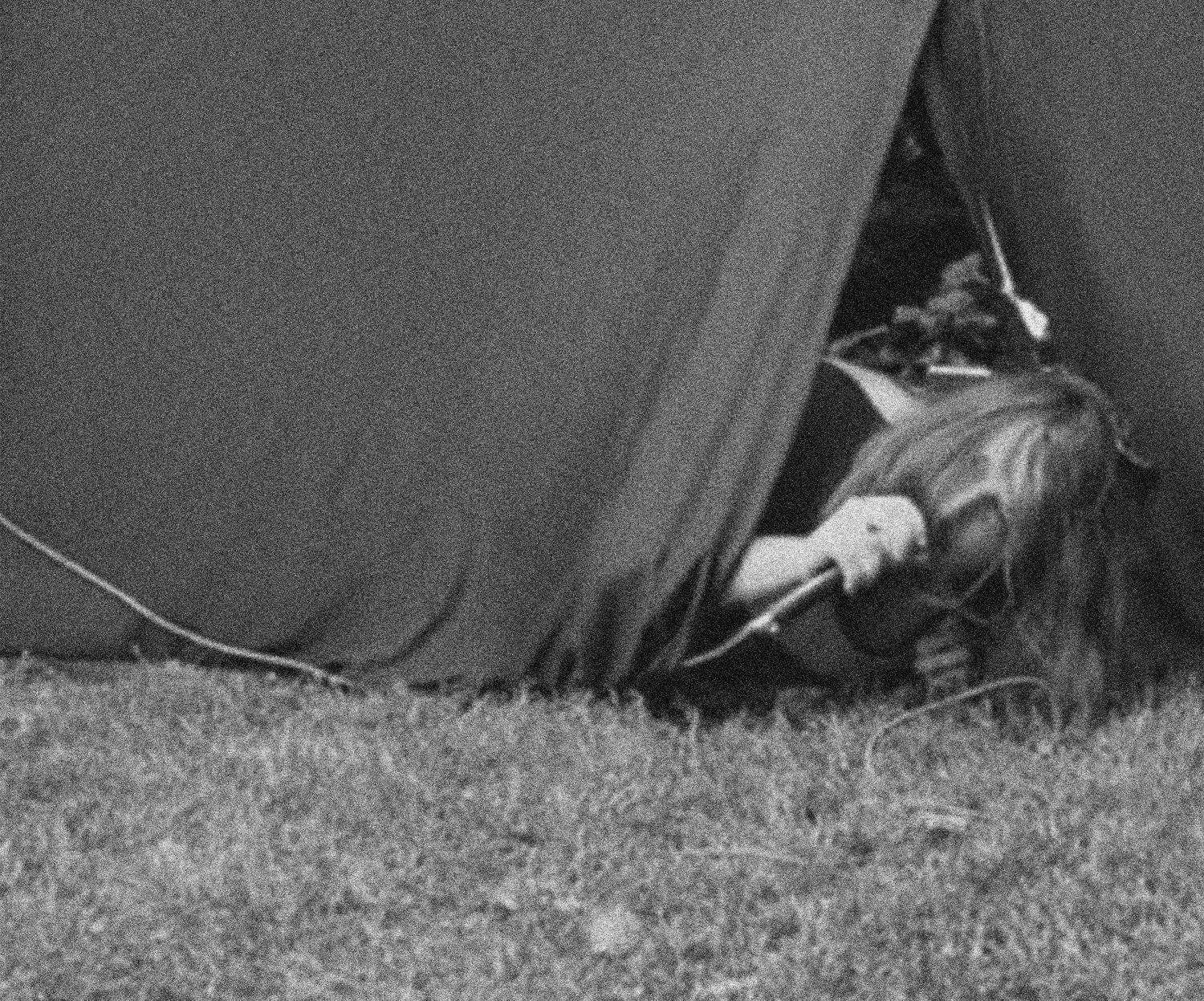
Tell us the story behind the single "Have You Seen This Man?", whose art is the photograph from the viral video. Was the song written before or after the incident, and how does it relate to the photograph?
Marshall: The album art is just a snapshot from the viral clip, we wanted to put the song out ASAP once we had the master. We figured why not just use that picture and maybe someone who saw the meme last year will find it. The clip was of us performing the song's breakdown.
You've toured from New England to the Carolinas. What's the biggest difference you've noticed in how the audience receives your specific brand of noisy post-hardcore in the various regions?
Marshall: Up north I feel like we find more bands that sound like us and everyone is really cool that we have met so far. They have a nice network of Noise Rock/Screamo/weird heavy stuff up there. Going down south we play with a more wide range of bands but we have no problem with that. Charlotte is our favorite place to play, especially the Milestone. The crowd is always so high-energy, they make it a lot of fun.
What is the most 'irreverent' or unscripted moment that has defined one of your live shows, other than the broken leg incident?
Marshall: We have a song called “Divide Us” that always has some changing routine for the bridge. For a long stretch we would bring random percussion instruments to pass out in the crowd and turn the song into a chaotic jam session.
Paul: I don’t know if it’s better than the leg incident but we’ve had some really interesting crowd reaction moments. One of my favorites is when a bunch of folks started doing push ups in the pit at the Milestone in Charlotte. As mentioned, “Divide Us” has had a lot of really funny moments. We have a wish list of shenanigans we haven’t done yet. Sometimes we just laugh in the van making up these elaborate stunts.It’s gotta be organic though at the same time or it’s in danger of being a gimmick. Fine line. One Halloween Marshall dressed up as a hot dog and was wiggling around like a manic. It was hard not to laugh.
Annie: We once had the audience do Musical Chairs during Divide Us, and I think we need to bring that back as an advanced form of a circle pit.
What's the next big goal for Consumer Culture? Are you focusing on another major tour, or heading back into the studio for the next full-length record?
Paul: Keep pushing what we are capable of musically and touring reach wise.
Marshall: We want to tour more of the US and go to Canada at least. We would love to get to Europe or South America.
Describe your thoughts on Mr. Bungle’s Squeeze Me Macaroni in three words.
Marshall: “Ruined. My. Life.”
Paul: (rejecting your request to use three words): That whole album like so many was a major influence on me. The musical freedom they indulged on it is still inspiring. The slap bass section during the bridge of SMM is outrageous. That song is silly, raunchy, musically crazy af and overwhelming.
Anyone you’d like to thank?
Paul: Anyone who enjoys what we do and all the good folks who have helped us on the road. It’s beautiful ngl. We got some good folks that give a shit and it means the world
Marshall: There are way too many people, I guess I will just say anyone who has ever supported us whether that is booking us, having us stay the night on the road, bought merch, sharing us online etc. We appreciate you all so much and this doesn't work without a little help from our friends. Also Thank YOU for doing this interview, this is a first for us!
Editor’s note: Our pleasure
Links
https://consumerculture.bandcamp.com/
https://www.youtube.com/@consumerculturemusic
https://open.spotify.com/artist/4RVUcmkxXi5UYdIz72lXbI