

Common Cause: An Interview with Michigan’s Crying At Work
By Staff | December 16, 2025
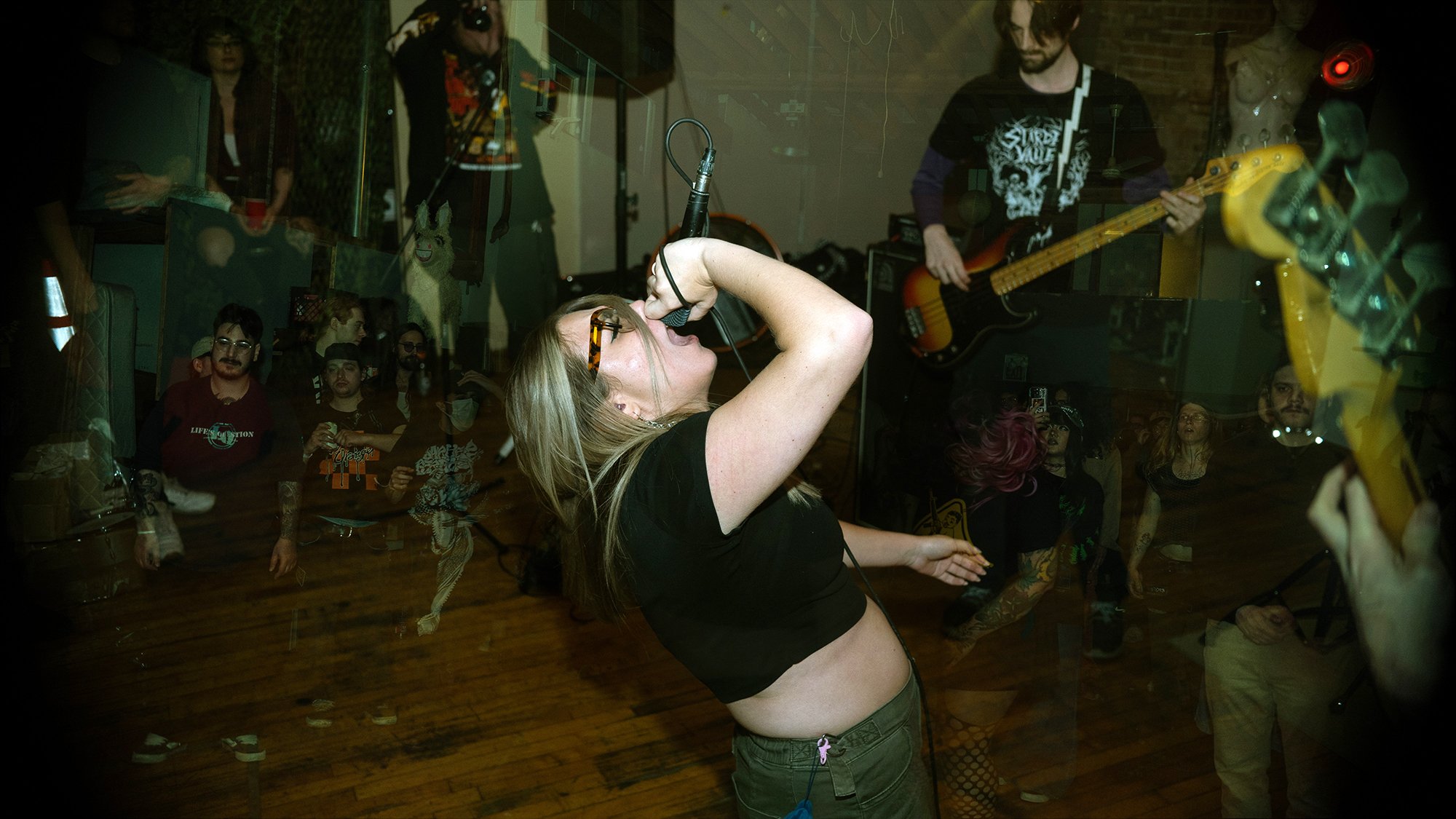
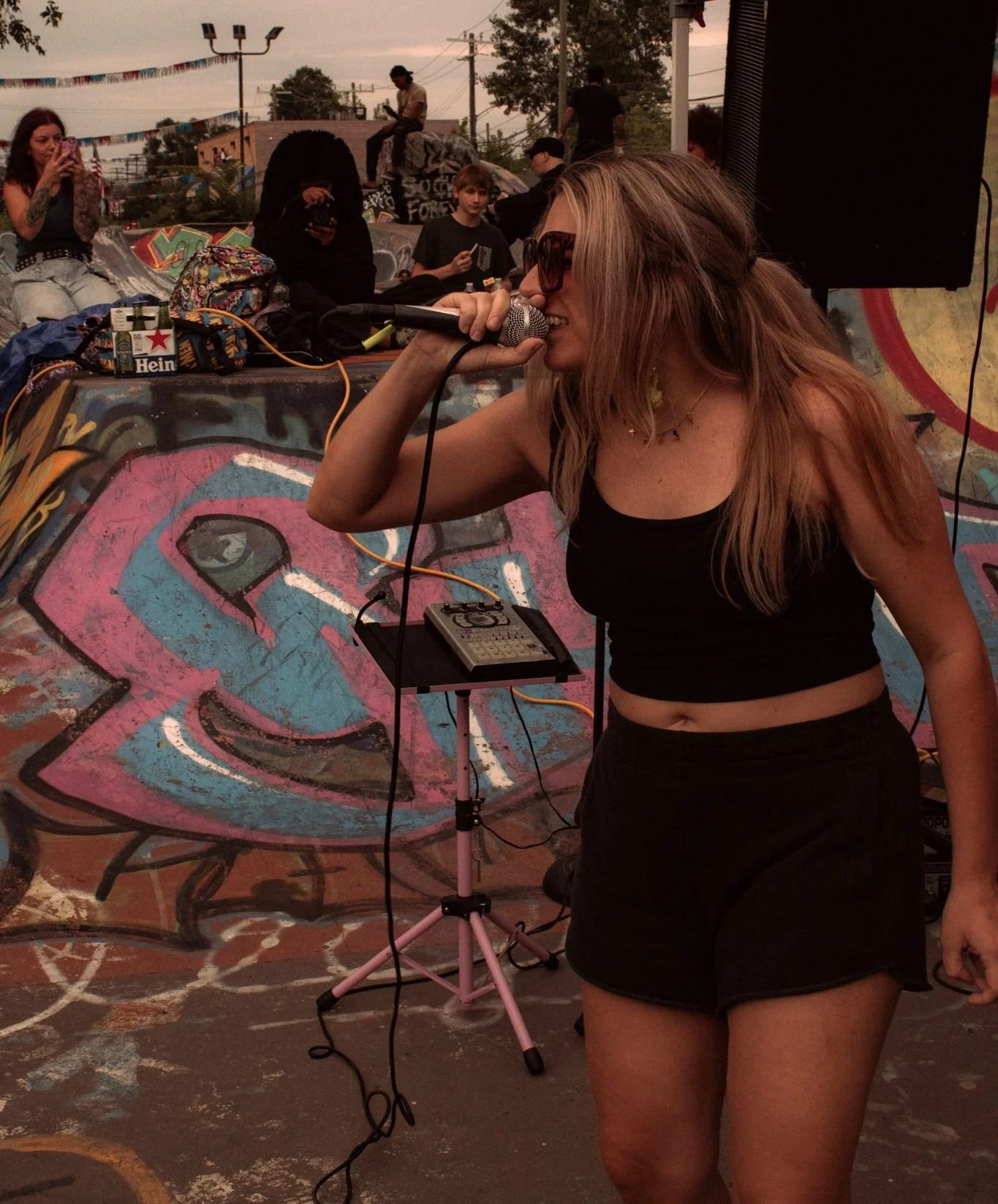
Photo credit: Adrian
Crying At Work isn’t just a hardcore band - they collectively hold a deeply rooted commitment to social justice and inclusivity, driven by the personal and political convictions of its members. The band's current lineup solidified when vocalist Lacey reached out to guitarist Cale after his previous project broke up. Sharing similar moral and creative goals, Cale brought in drummer Ellie, and bassist Jackson joined as they were using his house for practice. CAW sets itself apart in the Michigan scene not only with its diverse makeup, but also through its unique sound, which incorporates non-traditional samples from genres like rap and nightcore. Their philosophy, "existence is resistance," is a driving force, especially for members who lack the privilege of safety in every space. The band actively translates this message into action by organizing and playing benefit shows for causes ranging from aid to families in Gaza to supporting those impacted by ICE. Through unapologetic music and community-focused advocacy, Crying At Work strives to dismantle oppression and create a safe space for marginalized groups
How did the current lineup of Crying At Work come together, and what was the initial spark that made you realize, "this is the band we need to be?"
Lacey, vocals: The current line up of Crying At Work came together when I reached out to our guitarist, Cale, after his band Ask broke up. He posted an instagram story asking “who wants to start a project?” I replied to it, sent him some demos of mine and here we are. He was also already writing and jamming with our drummer, Ellie. The practice space was at our bassist, Jackson’s house and that's how he ended up joining the band and here we are. I guess the initial spark was we were all on the same page politically and morally, which is important. And shared similar ideas of what direction we wanted to go in creatively. Cale was also familiar with Ellie and Jackon’s old band Low Lives in High Places, and that was how he knew to reach out to her for drums.
The name Crying At Work is pretty unique. What's the story or feeling behind the name, and what does the abbreviation CAW mean to the band?
Cale, guitar: It seemed relatable and quickly understood. It's also a little funny.
Lacey: The abbreviation is like a “cherry on top” for me. I'm an animal lover, and I love birds. Also since Cale and I have lore behind why we like the movie The Crow, it was the unintentionally perfect abbreviation.
You’ve stated that "existence is resistance." For a punk band, what does this philosophy look like in your daily lives, beyond the stage?
Lacey: Id say our literal identities is where existence is resistance comes in. Ellie and I can’t change who we are, or what we look like, inside and outside of the punk scene. White men have the privilege of being safe in every space they are in, Ellie and I do not have that privilege. So on the stage, and off, simply existing in this world is a form of resistance. We also actively boycott and try to raise awareness on the importance of community, organized action such as boycotting and benefit shows, and class consciousness. I am also a sociologist/social worker so everything I experience on a personal and professional level fuels this mantra on the stage and off.
Jackson, bass: While we love fun and goofy stuff, it is also incredibly important to lead by example and be serious about our moral convictions. For some people, existence is resistance but for our more privileged comrades it is not enough to just exist, we must purposefully, in acts large and small, work against capitalism if we are to see humanity thrive. Class consciousness is dismal in this country so educating and agitating people to realize that capitalism is untenable is very important right now.
You make it a priority to organize and play benefit shows. Could you share an experience or a cause that felt particularly important or impactful for the band?
Lacey: First thing that comes to mind is our benefit show we organized over the summer at Ride It Sculpture Park in Detroit. We did a split between donating to families in Gaza and families impacted by ICE. Ellie and I are immigrants or have immigrant family members. I have been very loud in my pro Palestine activism and someone called me “an anti semite and a coward” but I am literally Semitic and was told “it doesn’t count” for being part Arab. For every hateful, ignorant person, I wanted to react to that through action and raising funds for those impacted by this hate and ignorance. Ellie and I share a common cause because my brother in law is from Costa Rica and she is from Mexico, so it felt right to us to organize for these two identities and cultures being impacted.
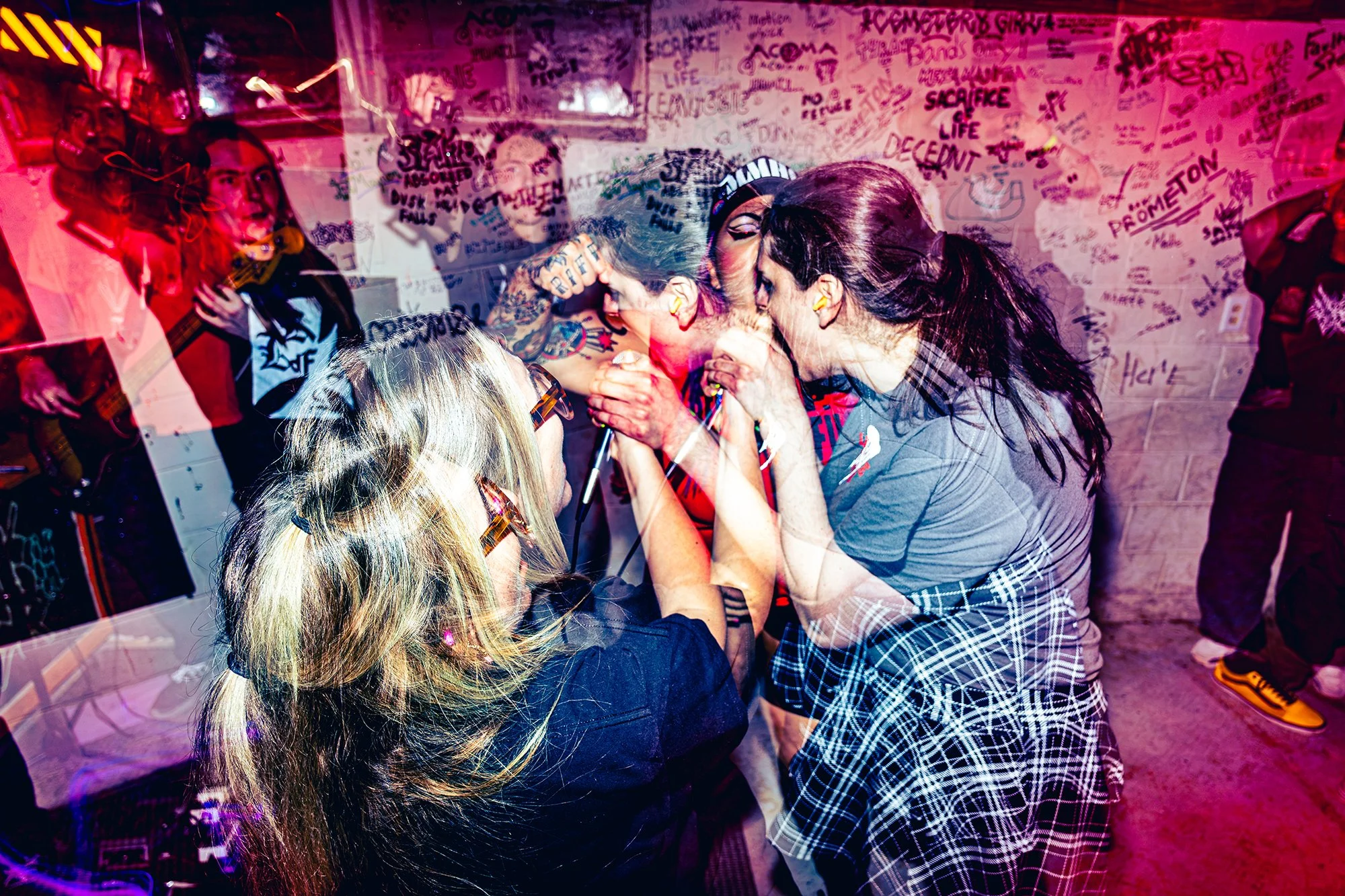
Photo credit: Bret Backus
Michigan has a rich punk history, especially the 80’s Lansing scene. How does the current punk scene in Michigan, and CAW specifically, honor or depart from that legacy?
Cale: We have non men in the band.
Jackson: I don’t know how we honor it per se, but we definitely depart from it. I think our ethos is not to only draw inspiration from within the genre but also from outside too, and then infuse that back into the genre as a fun, possibly refreshing experience. Our diverse and inclusive goal for the scene can be reflected by our diverse set of inspirations.
Your use of diverse samples—from rap to nightcore—is unique. How do you integrate these non-traditional elements into your punk sound without losing the raw energy of the genre?
Lacey: Just making sure we don’t deviate instrumentally, which is why the use of samples is so fun. You can still stay consistent to the genre while also paying homage to other genres. For me, I've always been a part of many different scenes besides hardcore. Michigan had a huge chiptune scene, which isn’t really around anymore. I love techno and D&B, and I go to Tied Down as well as Movement every year. I have wanted to plan some multi genre bills since there is a lot of intersectionality with techno and hardcore from a Michigan perspective imo, and I know some incredible local DJs. I think it's important to identify other genres with similar themes morally and politically, there is strength in that. Over the summer, we were the only hardcore band who participated in a Boiler Room boycott a local DJ was organizing. Solidarity and paying homage is important and punk. But on a fun note, I love to just have a little break in between songs where everyone dances and then as soon as the sample ends everyone goes back to moshing.
The Crow is a major influence and source of samples. What themes or aspects of the film resonate with the band, and how do those samples enhance the mood of your songs?
Lacey: Justice. The late Brandon Lee said in his last interview regarding The Crow that he felt this film really resonated with him and that the violence was justified. I feel that way with so many things the band stands for. Cale got married on Halloween because of the quote from the film “Who the fuck gets married on Halloween?” I too would love to get married on Devil’s night or Halloween one day. I could say so much about this film and what it means to us, but simply put: justice for the oppressed, justice for women. The samples enhance the mood of our songs alot. We have a short track we play at the end of the set called “Quick Impression.” We use a sample from the Crow and its PERFECT because its when Top Dollar walks into the church and says “Quick impression for ya….CAW CAW BANG FUCK IM DEAD.” Then afterwards, I say “bang” right before the breakdown. We have been playing this for over a year now, and now the crowd screams along to the sample or the lyrics. It's very powerful for a lot of reasons, because to keep in theme with “justice” the lyrics are also "your safe space is full of snakes.”
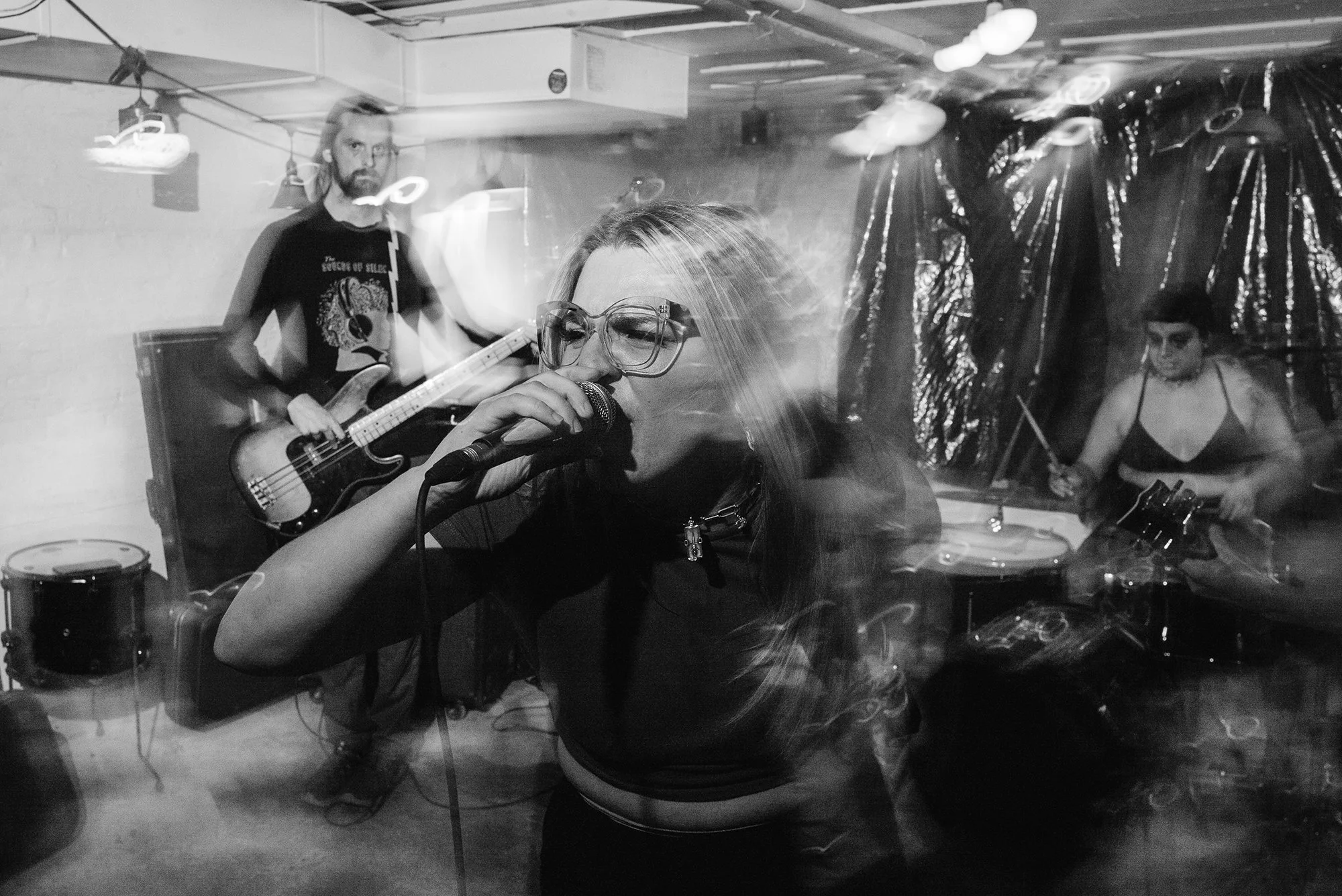
Photo credit: Steve Koss
What’s the most unconventional or surprising sample you’ve ever used in a song, and how did the audience react to it?
Lacey: Probably the nightcore ones. Particularly Die Young by Lil Texas. The audience loved it, especially because I love to dance around since I genuinely love the songs we sample. Nerd moment, but not a lot of people know there's two genres called hardcore so I like to say “Were sampling hardcore” but then it ends up being Lil Texas lol.
Which usually comes first for Crying At Work the riff, the sample, or the message? Describe how a typical CAW song is built.
Lacey: It's often an intro sample, we try not to use the same samples over and over to keep it fun and fresh so we have opened to a variety of songs such as Throw Some D’s by Rich Boy, Looking For The Hoes by Sexyy Red and some Cumbia tracks as well. The message comes with the lyrics and energy itself I think. For our song Gusano, we also play a sample in the middle of the song. We stop the song right before the breakdown, play a sample, then it comes back in. We always time it and match it to the BPM of the song so it ends up being really cool, same with our song For Frodo. The things Ellie and I speak about during breaks are usually spontaneous, but the message is always about community and accountability. A typical CAW song has a lot of fun riffs and then I end up asking the band to make it heavier haha, and they always deliver.
For someone who has never seen you live, how would you describe the atmosphere and energy of a CAW show?
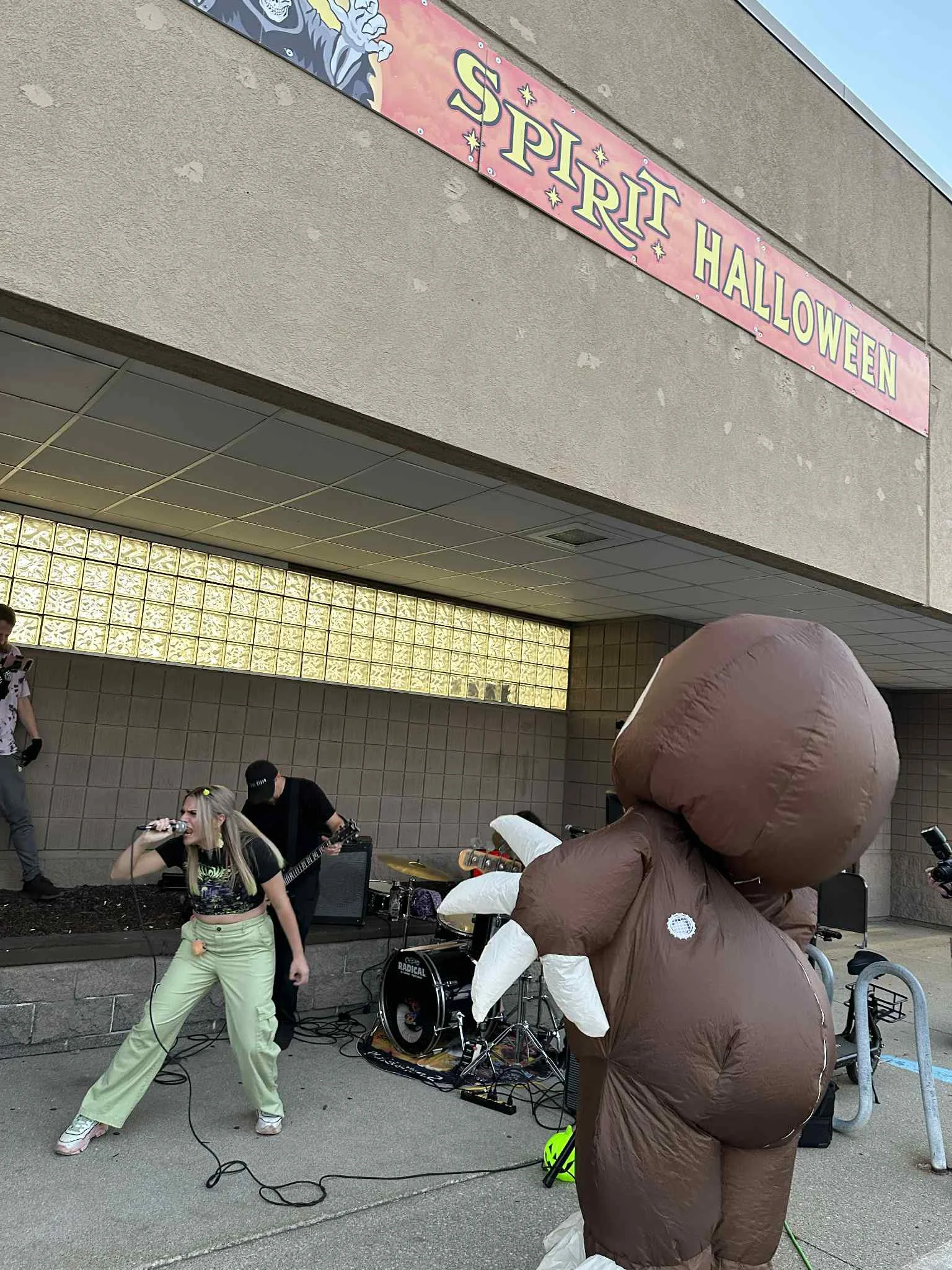
Lacey: I’d say the atmosphere is very organic and fun. Nothing is scripted or pre-planned besides the samples and set obviously, so everything comes naturally. I just say what comes to mind, and often take the crowd’s lead. I love watching people in the pit and I often start laughing or smiling during a song. I’d say our shows are unique, no one really uses samples the way we do and we’ve even used fog machines for our Halloween shows. I really love the performance aspect of it all, and to keep it engaging and memorable.
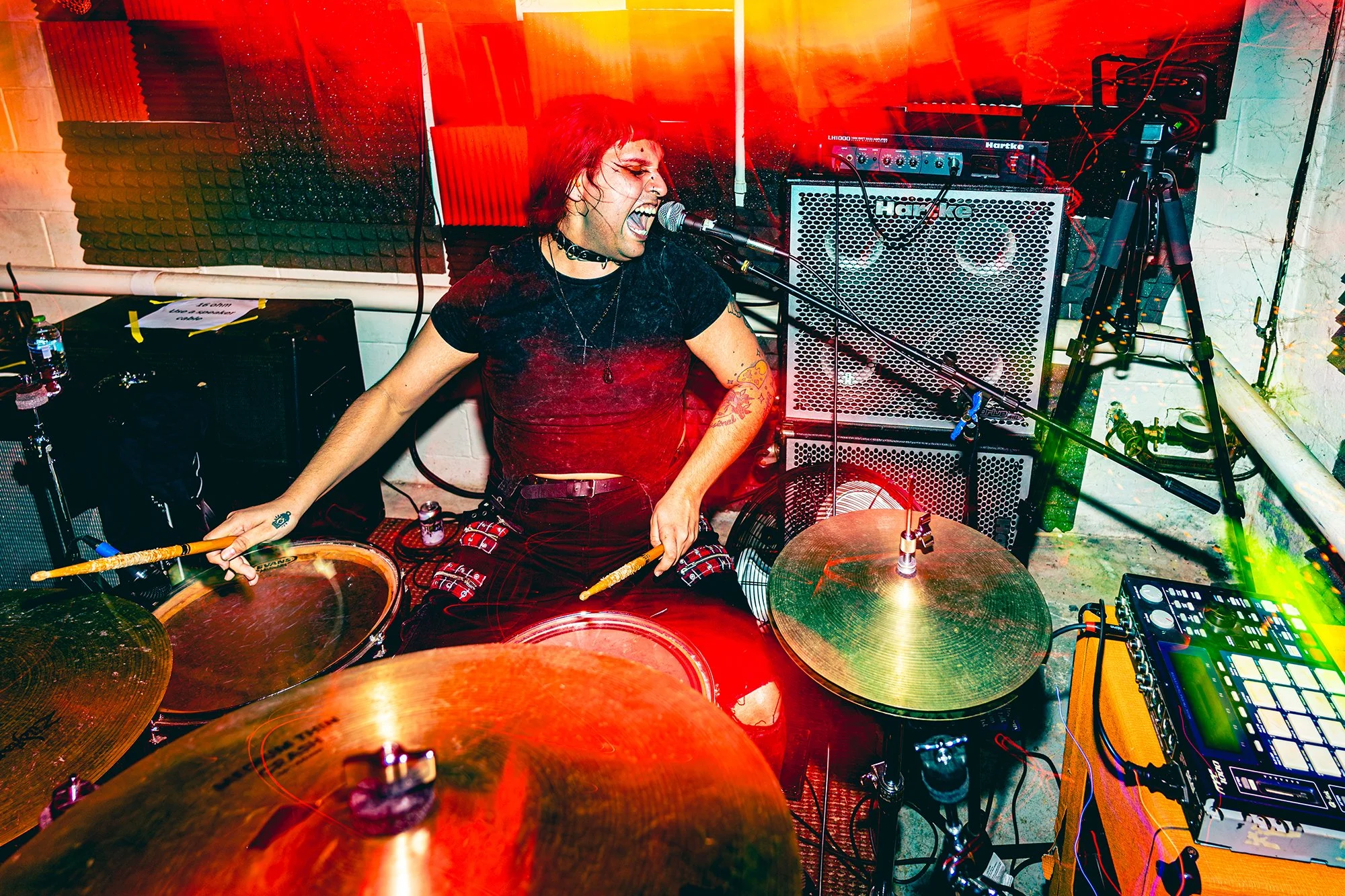
Photo credit: Bret Backus
As a band with a trans member, what is one of the most significant challenges or acts of solidarity you've experienced in the music industry or the punk scene specifically?
Ellie, drums/vocals: Thankfully, we haven't ran into any challenges or discrimination. Through our experiences, every hardcore circle we've encountered has embraced us and our trans sisters. A lot of queer musicians, and queer attendees, have helped create a safe and empowering environment to both thrive and enjoy themselves in. It definitely didn't happen overnight, but we are grateful to see where queer representation, and safety, currently is in our scene.
Given the constant wave of anti-trans legislation across the U.S., which specific policy area (e.g., healthcare, education) is the most urgent focus for your advocacy efforts right now?
Ellie: Making sure we are there for trans youth and trans lives close to home in whatever capacity we can take on. Whether it's pointing them in the direction of affordable Healthcare or finding information or resources for DIY transitioning. Anything we can do. But trans lives are on fire all over the states right now. With a lot of trans ban laws being passed in the south, one of the priorities right now is to send as much aid to organizations offering protection for trans and non gender conforming individuals. Campaign for Southern Equality is a good one, for example.
What are a few concrete, actionable ways you would advise your fans and fellow musicians to be effective allies for the trans community, both locally and nationally?
Ellie: There is an insane amount of misinformation being spread about trans lives and trans Healthcare from our current administration and ignorant and bigot-filled minds are falling for it left and right. Sadly, some of this hatred is beyond help at this point, yet I do think we have some responsibility to try to educate ignorant minds on the lies they are being fed. But more so, I think we need to make sure the trans youth are unharmed and allowed to live the lives they know they deserve. In our own backyards and wherever else we can try to help. Don't single anyone out and don't gatekeep based on gender or sexuality. Even with us not facing any discrimination within our scene since our start, we aren't oblivious that it exists. Again, we've been lucky to see a lot of safe spaces, but we all grew up in the era where there were less and less of them. Queer people and femmes were not welcomed in pits or on a stage. So don't be a part of the old problems. Rock and hardcore have never had a gender and they never will. Let people express themselves freely just as you have been in your normie or non-normie life. Haha
Jackson: It is very important to familiarize yourself with local politics. Join your local Socialist organizations, of which there are sure to be many queer people involved, and experience how grassroots advocacy works. Attend City Council meetings and see who and what our leaders and enforcers are talking about. Part of being an effective ally for the trans community is to be an effective ally for all marginalized and oppressed communities as well. To be effective one must be as informed as possible.
Half of the band is vegan. How does this personal ethical choice connect with or inform the band's larger message of social justice?
Lacey: I often say during breaks “All forms of oppression are connected.” And there is an immense amount of propaganda to make us ignore the importance of intersectionality. A lot of animal rights directly correlate with human rights, and environmental protections. Veganism directly intersects with feminism, immigrant rights, indigenous rights and so much more. The meat lobby is backed by a lot of republicans, and a lot of lobbying that goes into factory farms also goes into anti LGBTQ+ efforts. Many immigrants are exploited and underpaid in the factory farm industry, and they develop PTSD due to how the animals are killed. The dairy industry is exploitation of the female body, animal and human alike whether it's the cow or the worker. Dairy being a part of the food pyramid is a result of lobbying. The list is endless, unfortunately. Our message is this, the world doesn’t need perfect vegans or for everyone to be vegan but make conscious choices and do what you can in whatever capacity you can. I notice a lot of leftists and punks who are so against AI but the meat industry is worse. We need to care about both. Violent resistance is crucial but so is boycotting, and doing your best matters. It takes a community. We also have pamphlets from The Food Empowerment Project at our merch table that highlights the intersections of colonization, racism and sexism with veganism and what you can do about it. Animal liberation is social justice.
Having members from minority and immigrant backgrounds, how do those lived experiences influence the lyrical themes and the overall perspective you bring to the punk scene?
Lacey: A simple example is our first EP is called “Gusano” and a track from that EP is also called Gusano, which means “Worm.” And then sampling Cumbia. I feel our lived experiences influence our lyrical themes by talking about tone policing- which often happens to minorities and women because of internalized white supremacy and misogyny. And just being loud, angry and unapologetic. Our ancestors have gone through immeasurable suffering, and I’d like to think in a way we are “weaponizing” generational trauma. Break the cycle, kind of thing. Women like me were literally burned alive for being educated and loud, so I'm going to be loud and educated. We are still suffering from colonization, so let's dismantle it.
As a band rooted in advocacy, what role do you see the punk community playing in creating safe and inclusive spaces for marginalized groups?
Lacey: I feel the best way to answer this is sharing a personal experience of how far the scene has come. When I was 15, a local band stopped their set to say “no clit in the pit” because I was moshing. Now I am 31, and I haven’t experienced anything remotely close to this and have felt so loved and supported. I think we really need to thank the younger generation for this, I grew up around a lot of complacency and I feel the “older” crowd still carries a lot of this complacency which is where punk goes to die. I am so proud of the Michigan punk and hardcore scene, but I think it's important for cis white men in hardcore to understand that if they actually want to be an ally they must actively work on uninternalizing misogyny. Other than that, I feel our scene is a very safe and inclusive space.
Jackson: To create those safe spaces their architects must be of those groups. I want to see a punk community that embraces those marginalized groups and facilitates their role as leaders.
Besides playing benefit shows, what other forms of direct action or community involvement do members of CAW engage in?
Lacey: Like I mentioned, outside of the scene I am a sociologist/social worker so that in itself is direct action and community involvement. I know Jackson, our bassist, has attended city meetings regarding causes important to him. I mentioned this in one of the other questions, but we all actively boycott as well to the best of our ability. Two of us being vegan coincides with that too.
What is the next major project for Crying At Work? Are you working on a new album, a specific benefit campaign, or perhaps a regional tour?
Lacey: We are currently wrapping up a demo we plan to release in March 2026. I want to keep some of it a surprise, but a song on the demo is going to be a testament to something we deeply care about, which is community. We also will be doing a little run with our sister band Cruel Bloom in March of next year. As for benefits, there's always something to organize for but we want to wrap up our demo first.
When fans look back on the music and mission of Crying At Work ten years from now, what is the single most important thing you hope they remember about the band?
Lacey: That we advocated for them and made them feel safe.
Anyone you’d like to thank?
Lacey: One of my best friends, Felicia. She lives nearly 3 hours away and for our first show she drove out to support me and then drove home after. I’d like to thank Self Absorbed, they supported us day 1 and I will never forget that because I feel it's hard to get traction when bands first start out. I also want to thank Bella’s Beatdown Bunker. I said this during our 3rd show at one of their locations but they made the scene fun again. But not only fun, but inclusive. I also want to thank Body Farm because I feel it's easy for “bigger bands” to “cool guy” the smaller bands that are starting out. We did a poll last year saying “who do you want us to play with in 2025?” Someone replied “Body Farm.” We posted the answer and tagged them. Body Farm said they had a Detroit show planned for 2025, and asked us to be on it. We ended up playing it with them. I cannot understate how important that kind of community and support is, especially when the system literally wants us dead. I'd like to shout out Luca for the same reasons, they have been incredible to us and I loved every show we have played with them. So many more people I could thank but that's a good start haha. Oh, and Brandon Lee.
Jackson: Karl Marx, Bong Joon Ho, and Brian Eno. Also, my parents, my wonderful friends, and all the dope people in the scene.
Ellie: Anyone whos listened or came to a show. Anyone who supports the local scene. Spirit Halloween, Bellas Beatdown Bunker, Robin Williams, and Bruce Willis.
Cale: Jesus and Jackson’s parents
Lacey: We are not a religious band lol
Links
Linktree: https://linktr.ee/cryingatwork
Bandcamp: https://cawcryingatwork.bandcamp.com/
Instagram: @caw_hc