

Collective Voice: An Interview With Olympia’s Storm Boy
By Staff | January 13, 2026
Phptp credit: @ftpradaa
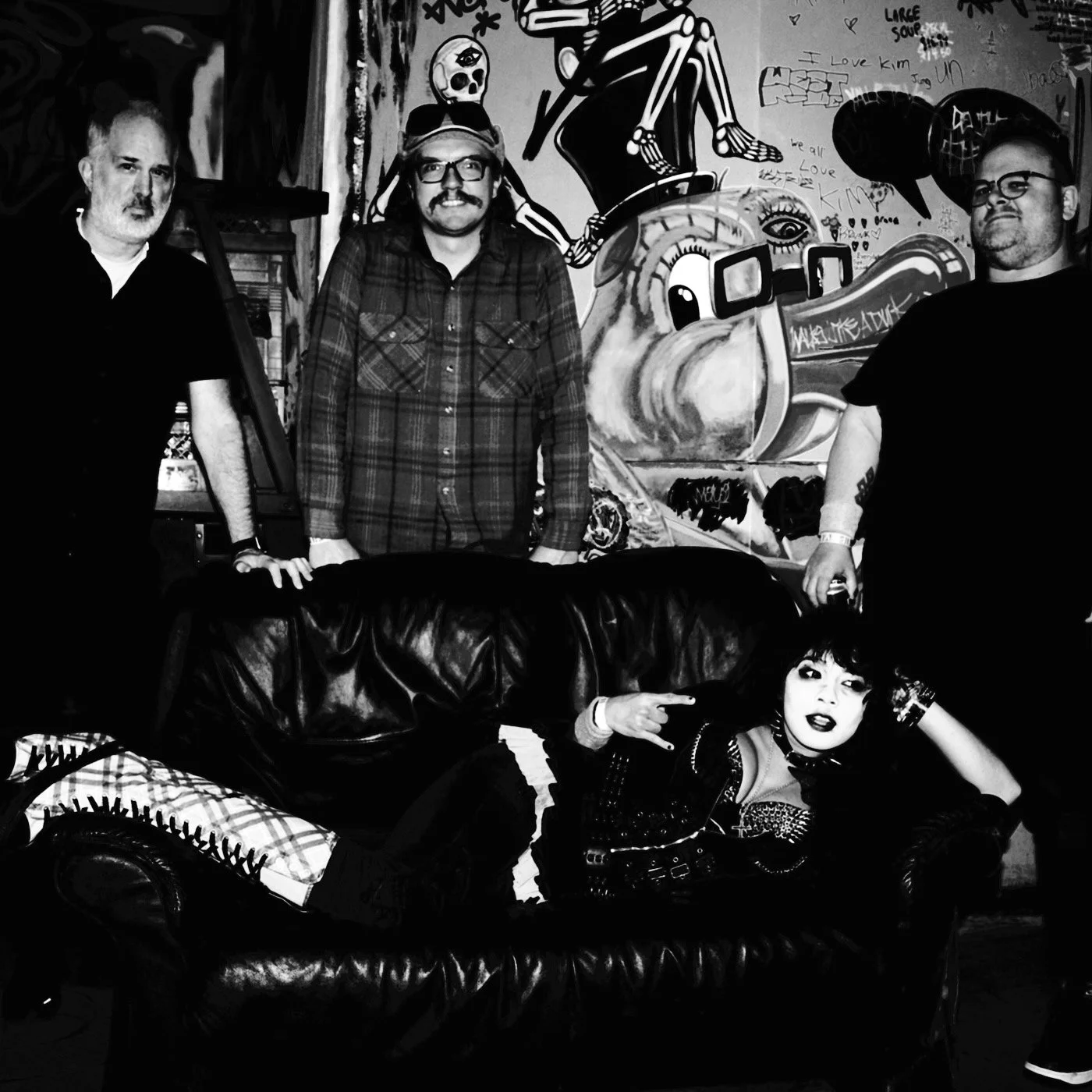
Hailing from Olympia, Washington, Storm Boy is a post-hardcore collective that fuses the raw angst of the pandemic era with a fierce, joyful energy designed for both the picket line and the dance floor. Originally formed as a solo outlet for songwriter Chas Roberts, the group solidified into a powerhouse quartet featuring drummer Jeremy Anderson, bassist Kuba Bednarek, and guitarist Charli Beaumont, known for their high-energy performances in unconventional venues. After their 2024 EP, SUPERPOSITION!, earned critical acclaim and comparisons to legends like Fugazi and IDLES for its "brilliantly different" approach, the band is set to release their debut LP, Beast Machine Theory, this week. This new album encapsulates the band’s evolution from garage-born roots to a polished, multi-dimensional force, a milestone they will celebrate with an upcoming tour across the Northeast.
Storm Boy was originally envisioned as a fully formed project bursting out of lockdown, but the lineup actually coalesced over time in some very unconventional places. How did the energy of the band change as it shifted from a solo vehicle into this collective voice?
Chas Roberts, guitar/vocals: So I’ve been performing and playing in bands as far back as I can remember … including spending time in theater, cabaret, and pro wrestling. So I’m driven to perform for people and being able to present a full experience to an audience as a solo performer wasn’t something I was worried about. But one thing that’s key to all of those mediums is that they’re team efforts; they’re all part of a collective experience. There’s a saying I think about a lot that goes “if you want to go fast, go alone. If you want to go far, go together.” And yes, I was moving quickly, but there was always something missing ... a few things actually. There wasn’t much growth, there wasn’t much evolution, and when we don’t have people to share experiences with do they carry value? So, having people to share all of those experiences with and help it evolve was integral. Jeremy was always choice one for drums, but bass and guitar were harder to find. I have a big personality and high energy on stage- never stop moving and bring it to the people are both key to the way I approach, so people that shared those priorities were necessary. As people started to play with us, there would be some of that, but it never felt like they were fully invested (which makes sense, we’re adults and life gets in the way). From practice one with Charli, it was clear her fire didn’t just match but it elevated. The first practice with Kuba … same thing. We even just canceled jams with other prospectives in both cases because it was so clear that these people were of the same cloth. So in terms of how it changed, I think it was good before. It was fun before … but it was a novelty- the big guy flopping around alone playing guitar with a backing track. Now, it’s 4 kinds of fire lighting up a room. 4 bodies that never stop moving and bring the audience along. Four hearts that put it all in the create something together.
Jeremy: Yeah, the lineup has evolved over time, almost like having slightly different bands with a common throughline. The songwriting has also evolved over time, from more "fist in the air, fuck-yeah!" songs to songs with a little bit deeper or heavier subject matter. Our current lineup definitely has the most energy and has gelled through a lot of road time, practices, and shows. This two-guitar, bass, drums and three vocals lineup gives great texture and interest to the songs. And the energy on stage really just shows how much we like playing together, and that hopefully translates to a fun and memorable show for anyone who comes out to see us play.
Phptp credit: @ftpradaa
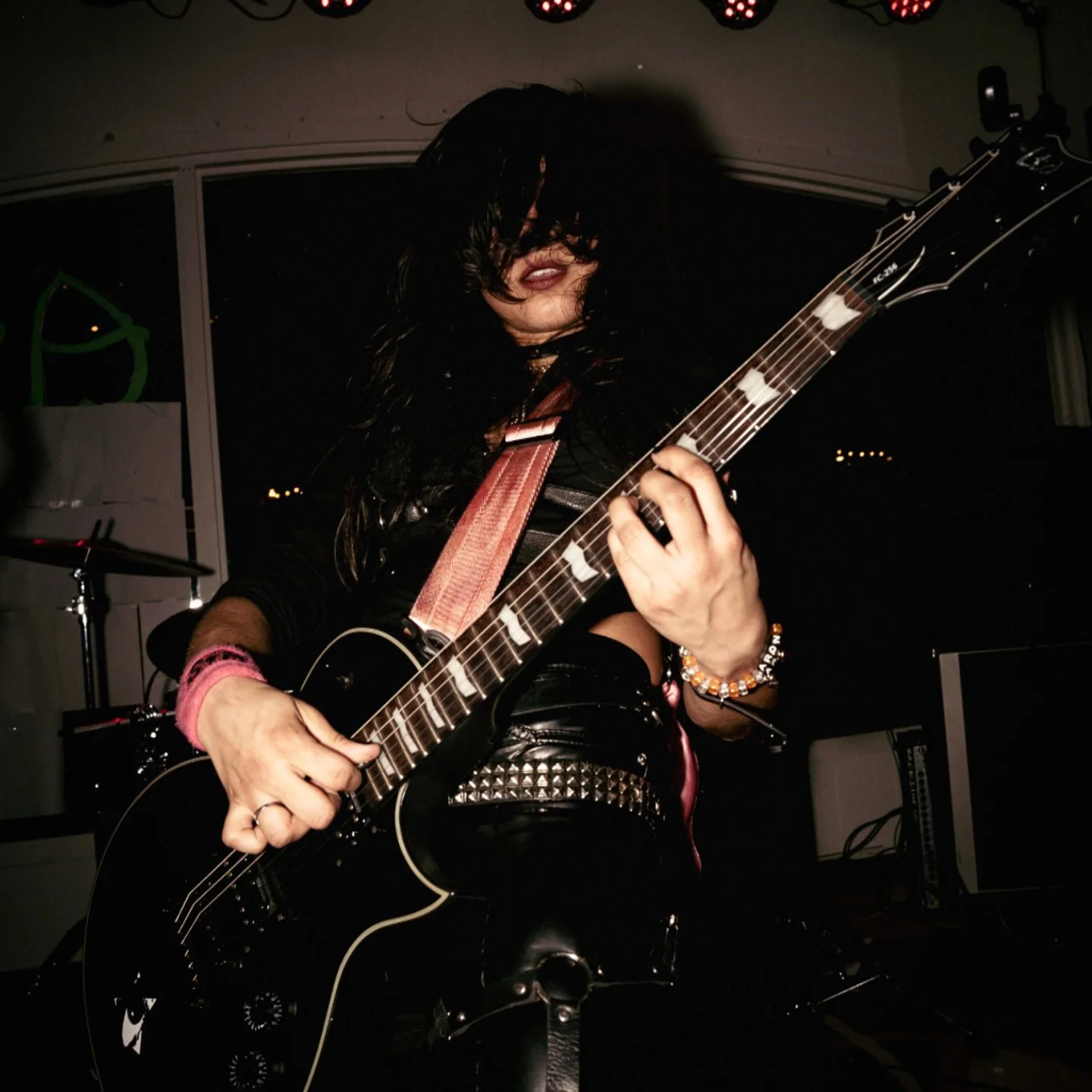
The story of Charli joining the band after winning a blood wrestling tournament is legendary. How does the intensity or physicality of that world translate into her stage presence?
Charli Beaumont, guitar/vocals: I wasn’t always able to do what I do on stage today. At my first practice with Chas, I could barely stand and play at the same time. As I gain more experience on stage, I’m able to get closer to who I envisioned myself being when I first picked up a guitar. That blood wrestling event was an opportunity to be seen, to tap into that love for the spotlight I’ve always had. I’m not afraid of being that one person doing the most or being too much when I’m in the audience because that’s the only time I truly feel allowed to be myself and rock out to my heart’s desire. That’s just the kind of person I am. If I could jump or kick higher, I would, and I will eventually.
Chas: That's wild…I wouldn't have guessed that you were having such a hard time. You showed up knowing all the songs you were asked to and then we were already messing around with goofy rock poses and "crossing axes," then played your first show with us a week and a half later. It was a no-brainer from riff one. For those that don't know, Charli is a whole different kind of animal from the rest of us. Sometimes it seems like she’s a lion that was captured in the wild and is trapped in a cage … pacing, pacing, pacing … watching the meat that gawks at her who suddenly realizes the door was left open and pounces.
The band’s mission was to channel angst into joy. In a world that often feels increasingly sour, how does the band maintain that sense of joy in your music without losing the loud, proud, and fierce edge?
Chas: Not gonna lie, the joy is hard to come by these days. I think about songs that were a part of the Storm Boy catalog earlier in it’s being like “Hot Lisbon Nights” which is more of a Rancid-esque banger about falling in love with Lisbon after a week of getting lost in a wine soaked fog to what we’re writing about now in the illusion of choice, or the destructive nature of time, or the holes in the walls of the buildings in Gaza that are filled with long nights and lost dreams … yeah, the joy is really hard to come by. I think, going back to your initial question, that’s where being a collective voice makes it easier to keep the joy intact. It makes it easier to point out that the world is burning and we can burn along with it or we can create a release valve, dance off the anger, scream out the frustration, and then return to the fight … and the ability to return to the fight is what it’s about.
Your EP SUPERPOSITION! drew comparisons to legends like Fugazi and Sisters of Mercy. When you went into the studio for the LP, were you trying to lean further into those post-hardcore roots, or were you intentionally trying to break away from those comparisons?
Chas: I don’t know that we were intentionally trying to break from them as much as grow beyond them. Fugazi’s entire catalog is always in my personal rotation and we all love them, except for Charli, who doesn’t get the hype. I don’t think any of us want to become stagnant, though. I’ve always hated that guy that says “there’s no good music anymore!” THERE IS SO MUCH GOOD MUSIC! So much to be inspired by, so much to be driven by, and so much to experience. So we’re definitely trying to evolve and grow … I think that’s another point where this collective voice, that’s made up of age ranges from early twenties to mid-fifties, is such as asset to what we do … thinking about the different elements we bring to the table. Like there are times when I’m riding with Charli and she’ll be blasting Mindless Self Indulgence and we’ll go down a rabbit hole that’s like “well, this reminds me of Milemarker” which she’ll come back with “Oh yeah, that sounds like Faith No More” following it up with Black Sabbath and then taking it all the way back again. I think you can hear this a lot more on Beast Machine Theory than on SUPERPOSITION! Where on SUPERPOSTION! her vocal tracks would hit a little more like Kim Deal backing up Black Francis and now she’s integrating more vocal fry and screaming ALONG WITH the more melodic sound to offset my gruff to create something more exciting.
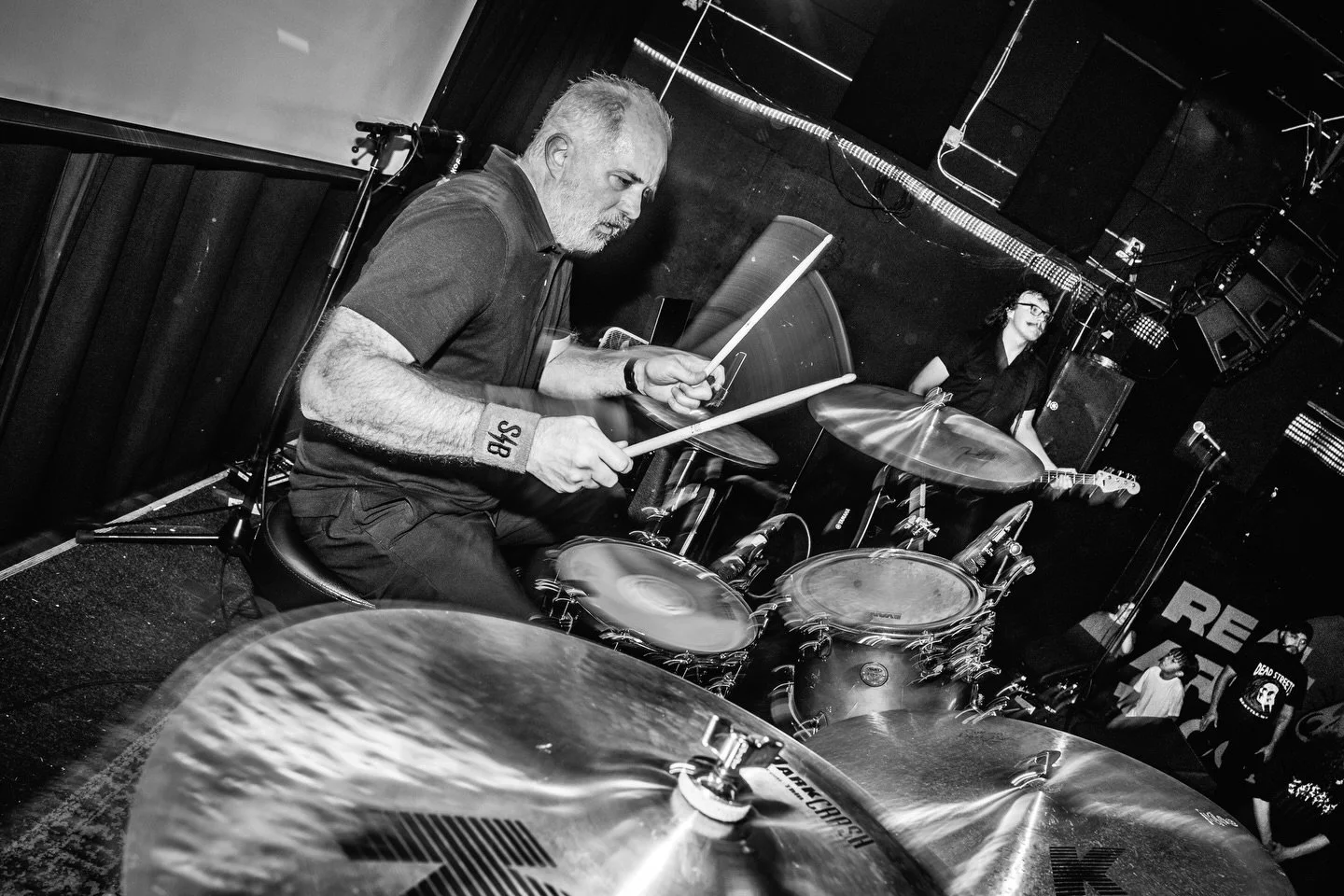
Photo credit: pnw_joey
Beast Machine Theory features songs ranging from the very first ones Chas wrote to a track played together for the first time on recording day. How does the album manage to feel cohesive when the songs represent such different eras of the band member’s life?
Jeremy Anderson, drums/snacks: Even though the songs span from the early days of the band to most recently, we’ve continued to play the older tunes in practice and put them on our set lists, so they continued to develop and stay fresh even as we worked on new stuff. I think that’s helped make everything feel cohesive on Beast Machine Theory.
You worked with Scot Michael again for the LP. What is it about his production style at Titan Recording Studio that captures that freight train energy reviewers have noted in your sound?
Jeremy: Scot is like another member of the band at this point. He's been involved since day one, and Chas and I worked with him in our previous band, Voycheck. Scot is a musician, songwriter, and performer in addition to his production work so he brings that experience and viewpoint. He's super talented behind the board, but also knows when to push for a better take, or to let you know that it could use just a little more oomph. And then he captures the oomph. So some of it is his unique production talent and ear, some of it is our level of comfort working with him, and some of it is him just letting us get it right in the studio.
Chas: So, think a lot of us punk/DIY lifers sort of feel weird when something is too polished or too high quality: like it loses its authenticity. I remember hearing Josh Homme from QotSA talking about this, and I’m paraphrasing, but you want to sound good, but not TOO good … you want to be successful, but not TOO successful … polished but not TOO polished. And I think as a band we take that to heart; we consciously err on the side of energy. We leave an mis-sung lyric in if the energy is right or we’ll leave a wrong note in if the energy is right. And that’s how Scot works, he gets that the energy is the most important part … and don’t get me wrong, it always sounds polished and “radio ready” but the energy allows it to remain accessible.
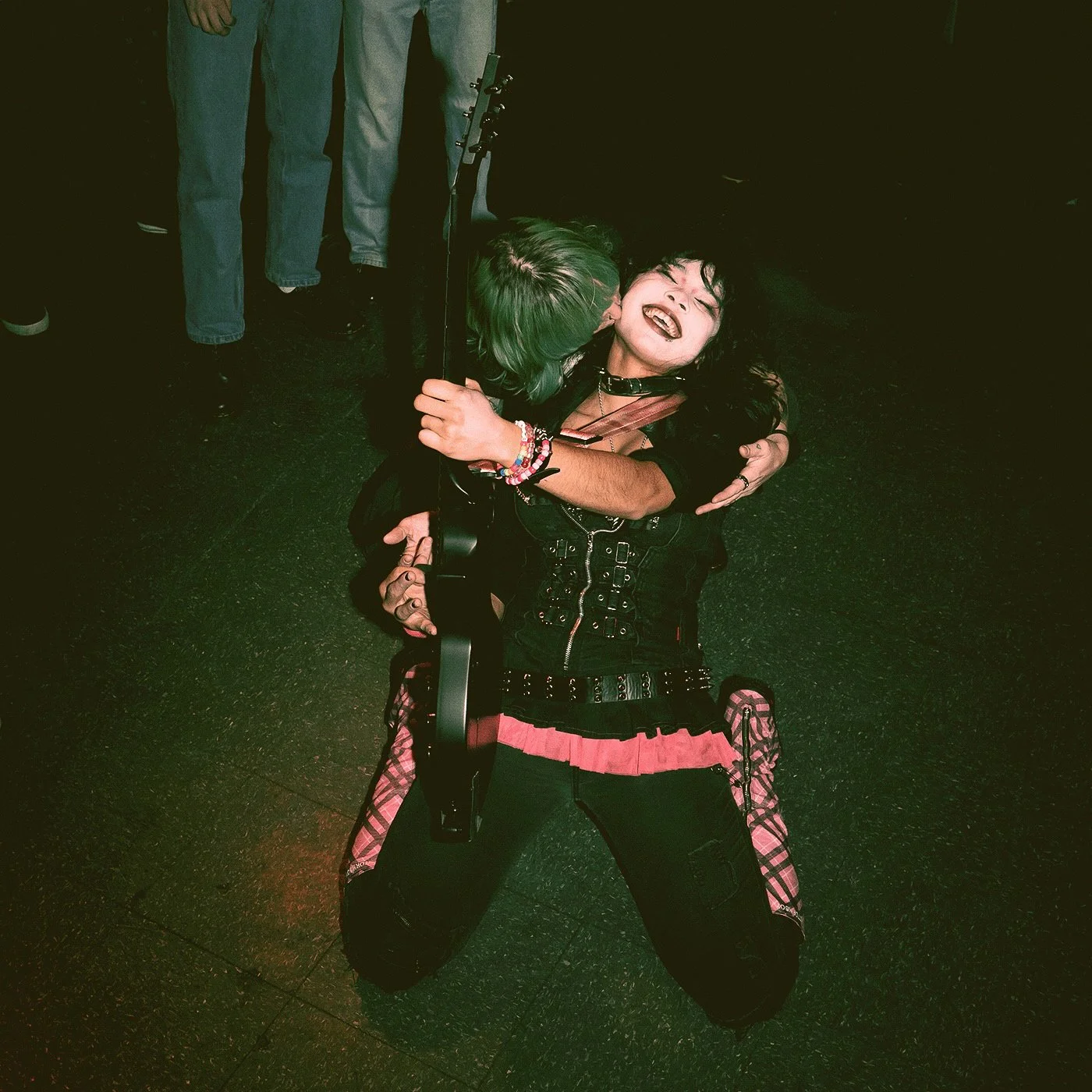
Photo credit: @ftpradaa
You’ve described your music as fitting both fists in protest and asses on the dance floor. Is there a specific track on the new album that you feel perfectly bridges that gap between political urgency and physical movement?
Charli: In the Shadows of Fort Reno would be my answer. It easily gets me going with passion and rage, definitely one of my favorite ones to rock out on stage with!!!
Chas: For me it's Tiny Fists which speaks to the lack of true options for change AND has sweet ass dancebreaks built in!
Kuba, joining after the band was already playing shows can be a whirlwind. How did the chemistry between you and Jeremy (having played with Chas in Voycheck) click to form the rhythm section we hear on the new record?
Kuba Bednarek, bass/vocals: Joining a band as the most recent addition can be intimidating. Everyone was super warm and welcoming about it. Melding the rhythm section has been a challenge, coming from a 6-string background, but it's been a fun one. Jeremy is a solid drummer and lays down interesting rhythms in locked in timing. I'm just trying to play equally interesting lines while staying on the same beat as Jeremy, Lol!
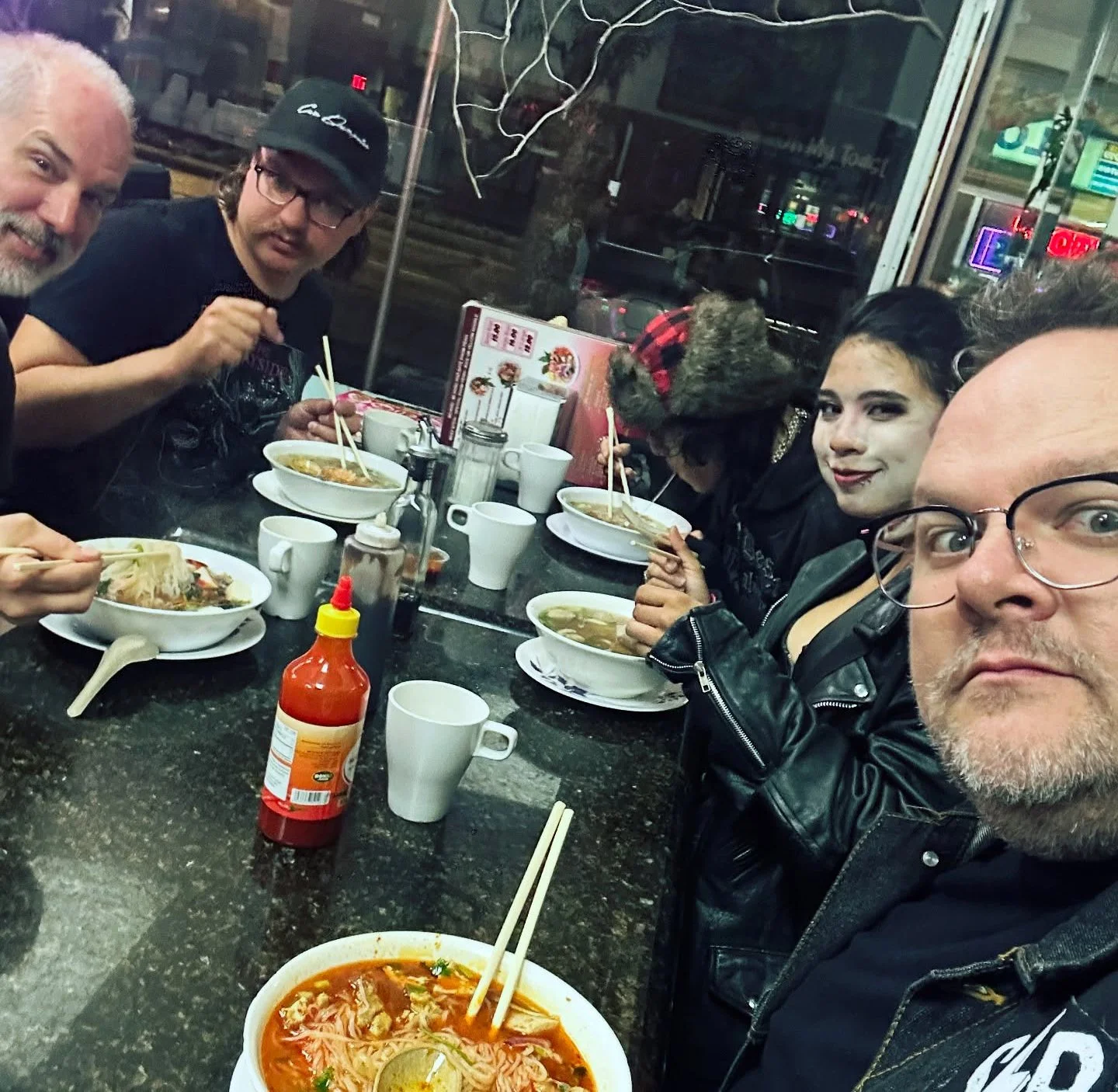
You’re an Olympia band, a city with an extensive DIY and punk history. How much does the specific culture of the Northwest influence your approach as compared to the East Coast scenes Chas grew up in?
Chas: You know it’s wild … for such a small town, Olympia has such a huge reputation. There are only 50,000 people that live in Olympia, but those 50,000 people are hustlers, and go-getters, and action-minded … and always hungry for more. I think some of the similarities are in the community aspect. Growing up in and around DC, there was a a lot of that … a lot of benefit shows, a lot of intermingling with bands, a lot of collaboration and the majority of it all was done DIY. When I first came out to the west coast, namely Seattle in the early aughts, I think a lot of that was missing. Because I had it so ingrained in me, I was able to get a lot done in a variety of mediums, like the aforementioned fringe-theater, cabaret, and wrestling. Musically, it felt more disparate. I would wager a big chunk of that being in the separation between 21+ and all ages. I think Olympia has a lot more of what I valued coming up, and I think I speak for all of us when I say we’re proud to be part of that. I love that we’re able to play shows with the bands that are still in high school as well as artists who were here “way back when.” The community is thriving because the community feeds in.
Speaking of the East Coast, you’re about to tour the Northeast. Chas,what are you most excited (or nervous) to show your youthful stomping grounds about the version of yourself and this band that you’re bringing back from Washington?
Chas: Ha! On one hand I’m excited. This is the first time I’ve brought a band back since I left, so I can’t wait to share what we’re doing. I’m not going to lie, a mid January northeast tour may end up being the triumph of hope over logic, but I’m here for it!
You know, the way you phrased that (the version of myself) really touches a nerve. I like to craft a narrative that I was the cool punk rocker, flashing two fingers and telling everyone to piss off, who hopped a freight train and dipped … there’s truth the that but also, I was a weird, smelly, fat kid with a stutter who would have birthday parties that no one would come to. There’s always a bit of that and as a fully DIY band, there’s always a worry that we’re going to throw a show that no one is going to come to … but if they don’t, I know for a fact that they’re going to miss out on something special. And if nothing else, we’ll get to eat at Waffle House, drink Hal’s Seltzer, and give the finger to the White House.
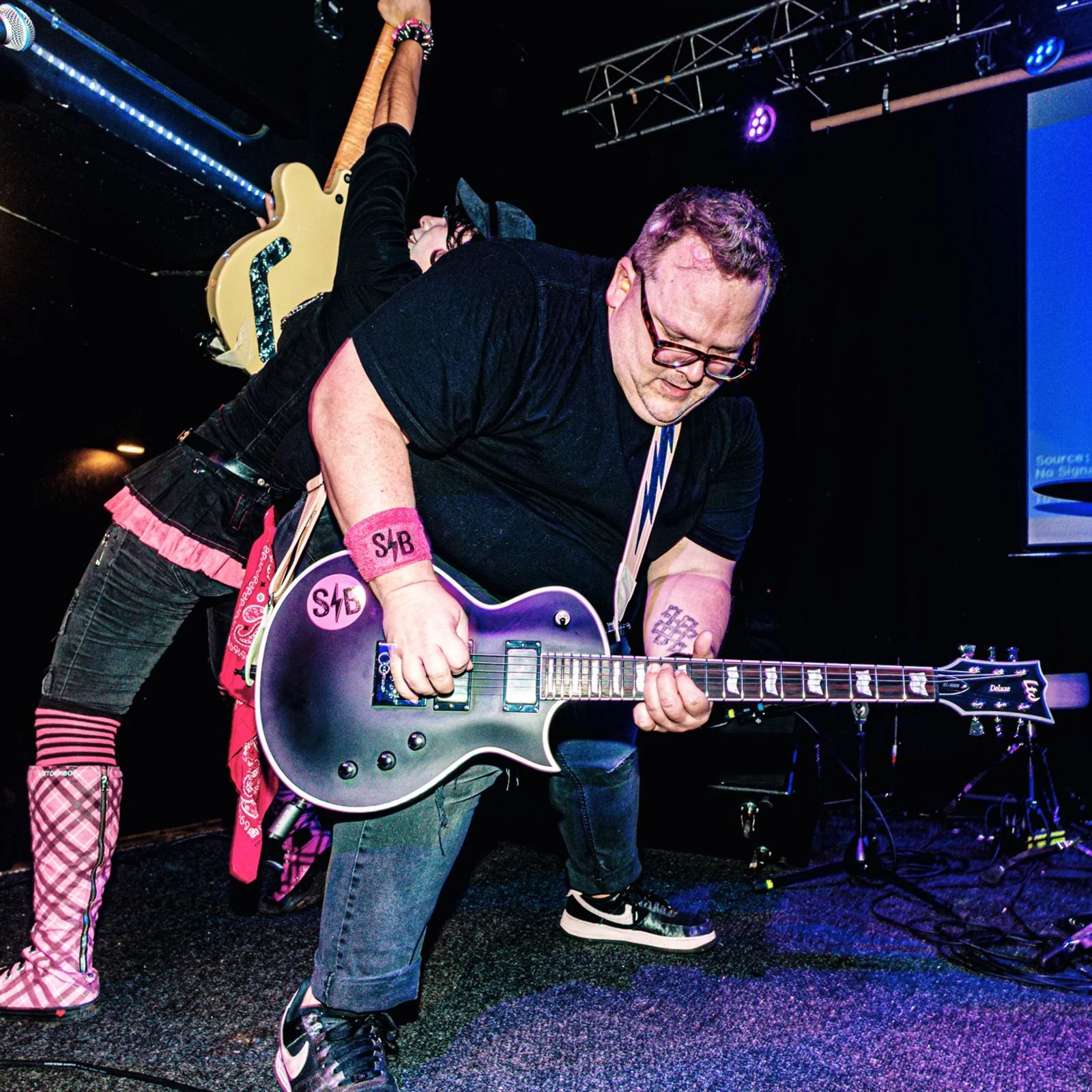
Photo credit: @pnw_joey
The title of the LP is evocative and technical. What does the "Beast Machine Theory" represent to the band collectively as you look toward the future?
Chas: So where SUPERPOSTION! represented the ways that both the band members exist within different identities to different people and how the band rode multiple paths simultaneously, Beast Machine Theory invites us to ask "which us is the true us?"
Our friend Matt Brennan, who operates as the artist Two Thangs shared this thought with me when he finally gave up being a paralegal and pursued art as a career, “I just started asking myself whether I wanted to be a paralegal who paints, or a painter who lives.” This conversation has had me thinking ever since about what the most authentic version of myself is: where am I the most true and where and where am I a simulation of something? What about the rest of us? We all think about that daily. And I think, as it pertains to the themes represented on the album … taking it back to your first question…what’s the reality in which we exist and the reality we are presented ESPECIALLY as it pertains to social media and the prevalence of AI simulating reality so believably? That’s the challenge. So as we look toward the future, it’s about how can we continue to grow and evolve authentically …while still trying to figure out what authentic means.
Anyone you'd like to thank?
We have a million people to thank, but we just keep saying "your mom" jokes, so I think we can skip this one.