

The Unexpected Norm: An Interview With Common Thread Hardcore Podcast
By Staff | March 5, 2026
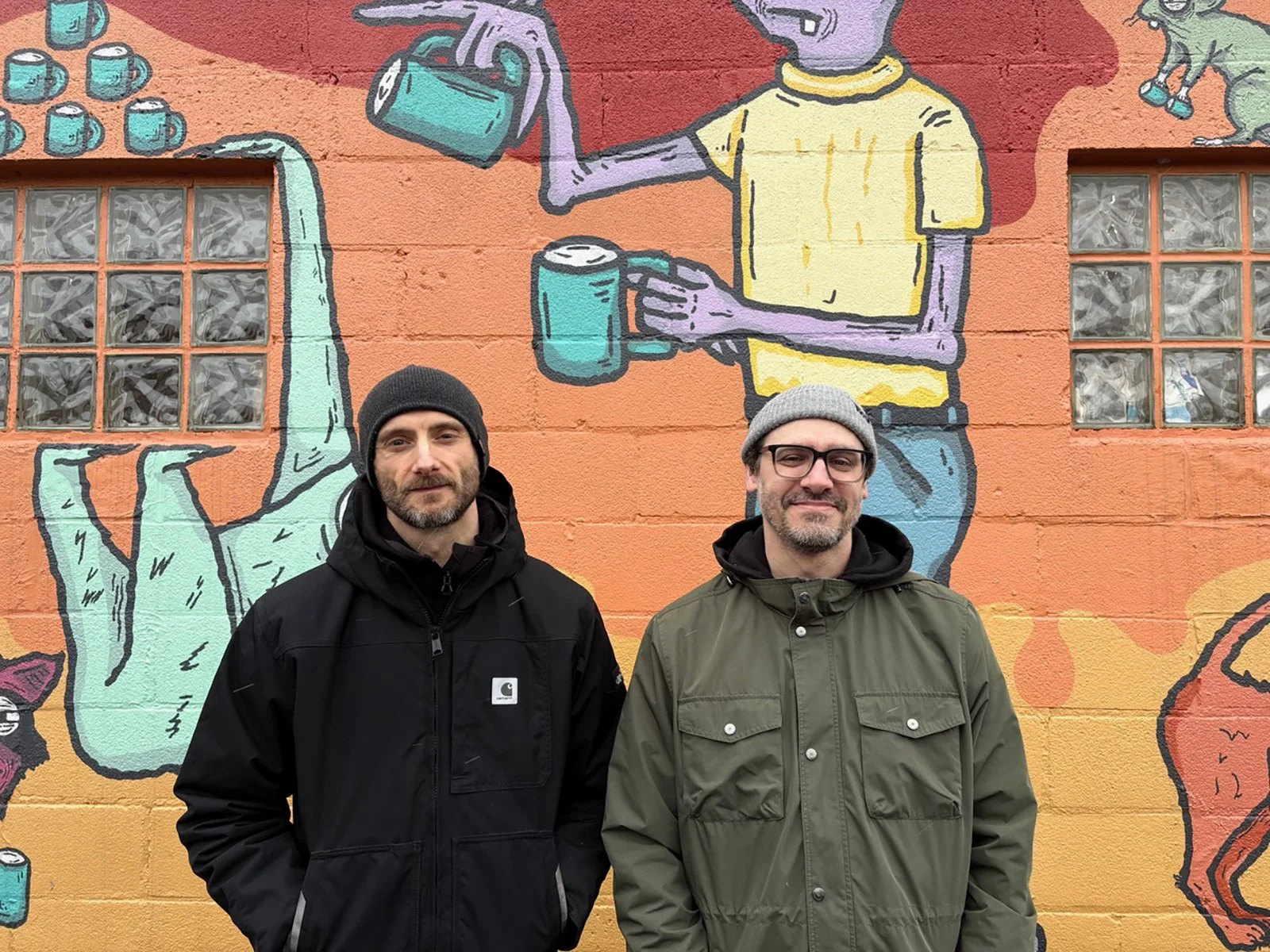
The Common Thread Hardcore Podcast explores the intersection of the DIY punk ethos and the complexities of adult life, particularly through the lenses of fatherhood, professional careers, and community building. Hosted by Rory (founder of Ugly Duck Coffee) and Greg (a public librarian and veteran musician), the podcast delves into how the scrappy, collaborative spirit of hardcore translates into navigating bureaucratic systems and fostering intellectual freedom. The discussions are often deeply personal, touching on topics like radical acceptance, neurodiversity, and the transition from the rage of youth to the empathy required for parenting. Ultimately, it serves as a testament to the fact that the core values of the underground—nonconformity, resilience, and authentic connection—don't disappear with age; they simply evolve into a more nuanced, sustainable way of moving through the world.
They also interview record label heads who just drone on forever (click here for an example).
Hardcore is built on building things from nothing. In your professional lives, how do you apply the DIY ethic to systems that are traditionally bureaucratic or rigid?
Rory: This happens organically for me in a few ways and has become more structured for others to follow. For example when I started Ugly Duck it was a mobile pop up coffee operation, partnering with other local businesses and various events. Similar to being in a band where you are loading in and out for a show and promoting yourself at different venues, making connections and relationships along the way. There is a camaraderie with touring bands and the same exists with small businesses and when you find those you connect with it’s good synergy. So that’s the beginning of this DIY scrappy business and it continues to build with people and relationships over time.
Greg: One of the aspects of DIY culture that I love the most is when people who have a common goal or shared creative vision are willing to collaborate and create something greater than what they would have accomplished on their own. With regard to my work in public libraries, the projects and partnerships that standout in my memory, and are uniquely "me" have all incorporated some amount of involvement from either my personal contacts or people and groups that are willing to think outside the box. The government system that I work within may be bureaucratic, but there is still a lot of room for creativity and novelty. I find that the stakeholders I am accountable to have been very willing to let me color outside the lines if I explain what I am going to do in advance and how it benefits the broader community. The best example of this work is probably the "Punk Rock Book Club" that I coordinated with help from Rory. Last summer we invited Karl Buechner from Earth Crisis, and co-authors Keith Ward, and Jeremy Mueller to read an excerpt from their young adult novel The Unraveling: The Counsel of Crows at the library. We invited my friend who runs Axe of Kindness Tattoos to be a “celebrity guest” tattoo artist and apply temporary tattoos on kids. We also had catering from The Red Fern, a popular vegan restaurant in Rochester. One of Rory’s bands (Coming Down) closed out the evening with a free show. The intent was to make a fun event where aging punk rockers could share aspects of the underground culture like tattoos, music, and veganism with the kids and younger teens in their lives. We had a lot of people in their 40s in attendance with their kids and nieces and nephews, which was what I had hoped would happen. The event was a success and I think the collaborative approach is what set it apart from the other author visits we have done in the past.
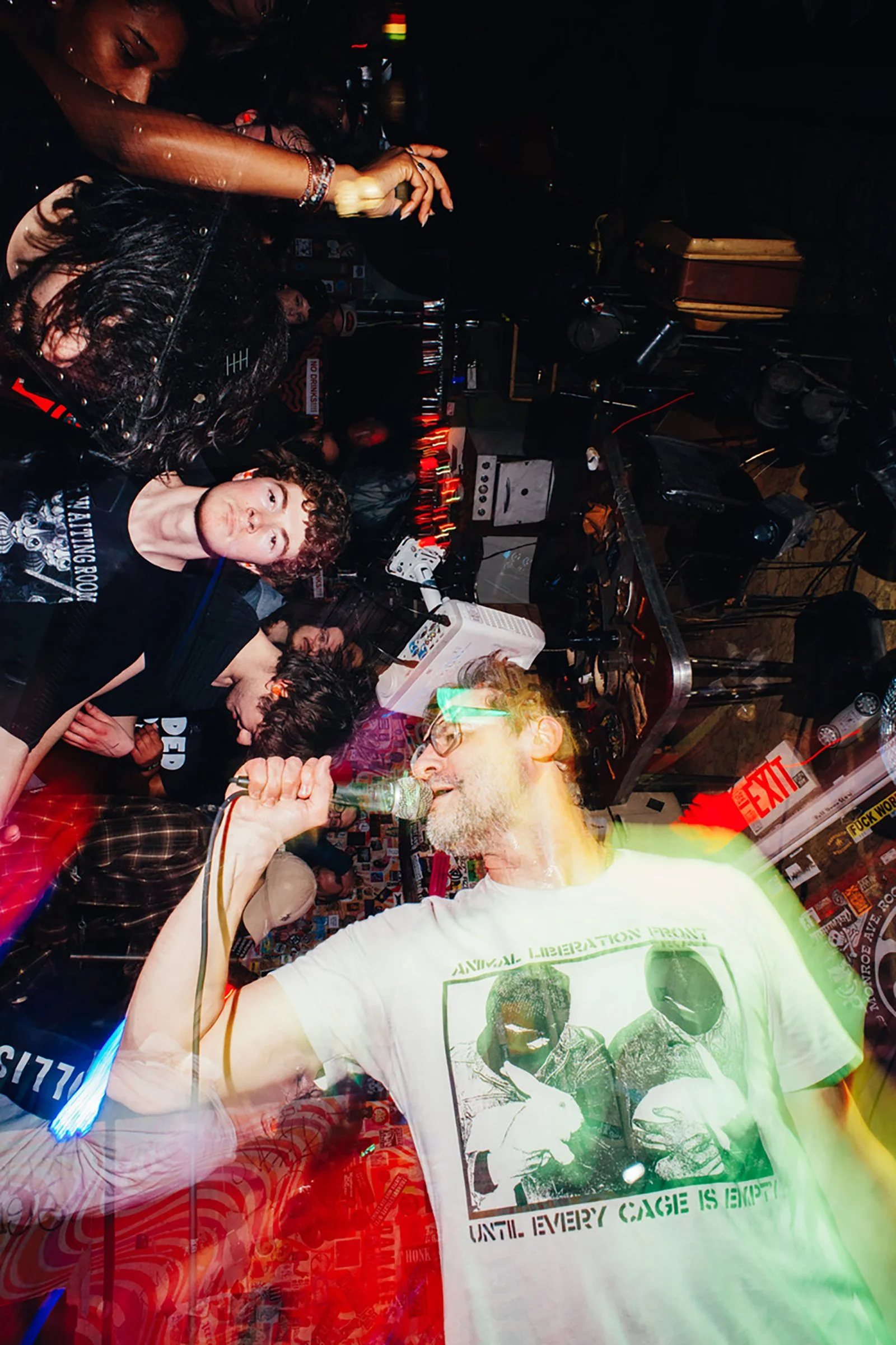
Phot credit: Nick Kundrat
The punk scene has a history of gatekeeping. Greg, in the library world, you fight for intellectual freedom. How has the scene’s tension between community standards and individual expression shaped your view on censorship?
Greg: I am of two minds about censorship and self expression. At work, I have an obligation to ensure that people using the library have access to a wide spectrum of ideas, perspectives, and works representing varying and at times conflicting viewpoints. I believe that this is an essential component to a healthy democracy and a well informed electorate. In my role at the library, I have had to defend the decision to include titles, authors, and ideas in the library's collection. This includes defending titles that express ideas I am fundamentally opposed to and the first amendment rights of authors that I disagree with. In this scenario, tolerance of others' freedom of expression, even expression that I find abhorrent, is a legal right that applies to everyone universally.
My perspective on censorship and freedom of expression within the hardcore scene is slightly more nuanced. In a self-organized, grassroots community like hardcore, I view tolerance of others as a social contract, and not as a virtue or obligation. In this scenario, tolerance should not necessarily be extended to everyone universally, but rather should only be extended to those who reciprocate it to others. To me, the beauty of hardcore is the community's come-as-you-are mentality and nonconformist, anti-authoritarian ideals. Hardcore thrives on, and is sustained by authentic self expression. Authentic self expression requires vulnerability, and neither can flourish when people are permitted to alienate others on the basis of their race, ethnicity, cultural background or other aspects of their social identity,
Rory, Ugly Duck Coffee clearly functions as a community hub. Do you find yourself curating that space with the same "all-ages venue" philosophy that governed the spaces we grew up in?
Rory: It’s funny you ask a question like this because it’s something I was just having a conversation about. I’ll put it this way, when you have a vision and you execute it publicly specifically community spaces like coffee shops there comes a time when it doesn’t really belong to you anymore. I believe that’s a really wonderful place. So with that said I set the table and created a space for our team and the folks that support us to make it what it is today. Of course I guide it, but I recognize that it’s a living breathing place and controlling it won’t allow it to grow and live as it needs to. So the foundation is there and I continue to tend to pieces to make sure it’s cared for so it’s still true to the original vision.
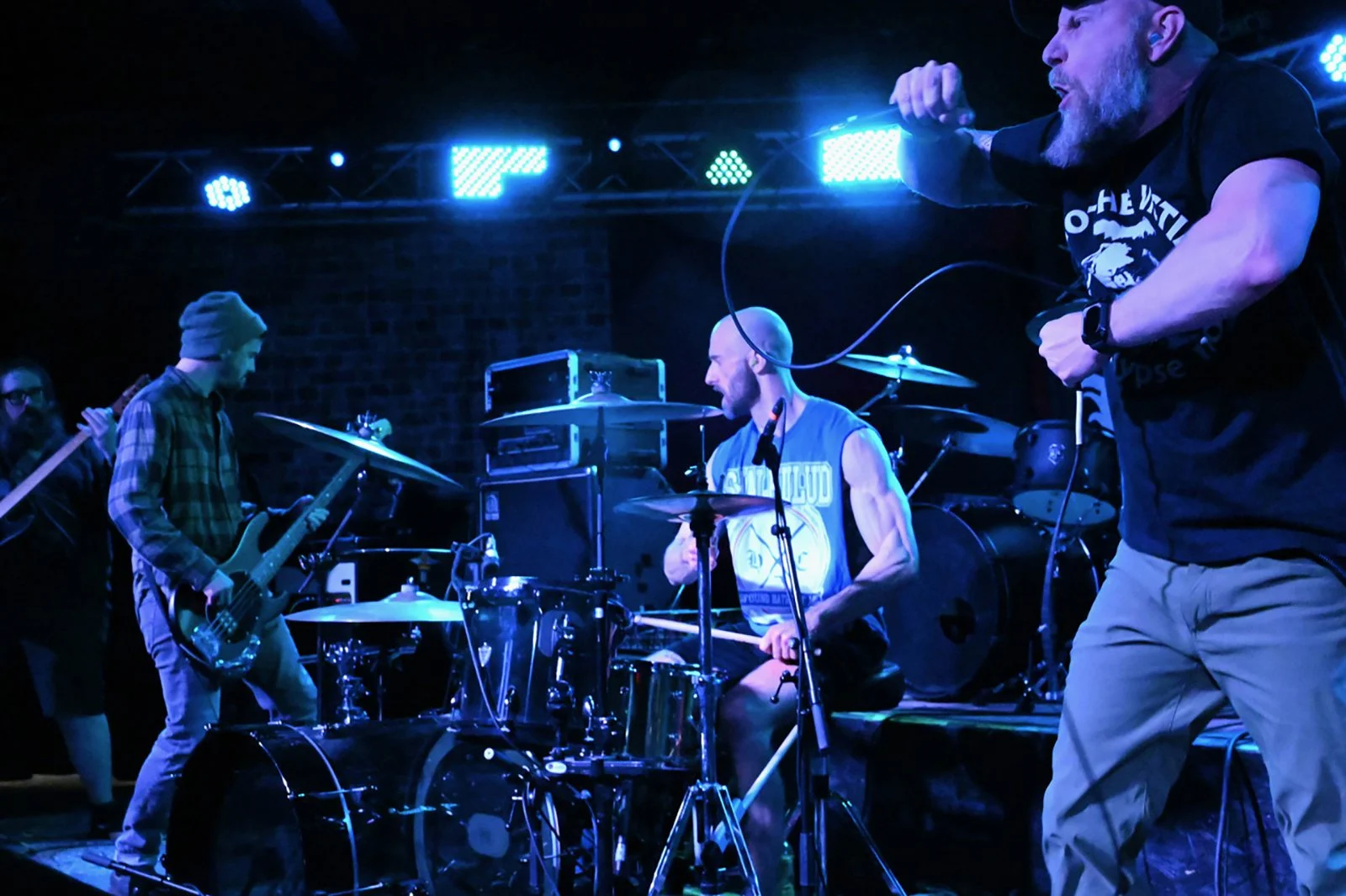
Photo credit: Tia Slaughter
You were raised to question everything. How do you navigate teaching your children to have a critical, punk-rock eye for authority while still maintaining the Dad authority needed to run a household?
Rory: Within punk and hardcore was where I found my foundational identity and that inspired questions to myself and realized I had the ability to forge my own path. I became very Anti whatever my parents and older brother were into, mostly drugs, alcohol, drugger music (classic rock and jam bands), and partying. With that in mind I do my best to offer opportunities and let the kiddos decide on their own path. I try to meet them where they are at and not be overbearing about what “I” think they should be doing. Offer perspective and personal narrative but do my best to allow them to ultimately choose. For example my oldest doesn’t like guitar music, he likes some pop, rap, and classical music so I try and connect on that level. Stay curious and ask questions about their interests. Apologize when I do something wrong and communicate that I also make mistakes and don’t know everything. I really don’t remember my parents apologizing to me or being interested in what I did beyond sports at a young age. That alienated me from my parents from my teen years until early adulthood.
Greg: My children must naturally be pretty punk rock, because right from the start they dind;t listen to anything I had to say... But in all seriousness, I think like most things, the key is to lead by example. I want to show them that when I am in positions of authority and influence either in the home, at work, or elsewhere in the community, that I am flexible in my thinking and approach to conflict and interpersonal relationships. I want them to see that I listen to other people's perspectives and change based on their feedback, and that I can admit when I was wrong or acted unfairly. It is as much about questioning the authority within one's self, the ego, as it is about questioning external authorities, because in the end, we can only control our own actions and behaviors.
If you had to strip away the loud guitars and the aesthetic, what is the one core value from hardcore you feel is most essential to pass down to your kids?
Rory: Empathy. I believe that is an essential component to navigating life. You never truly know how some got where they are and how they are feeling. It’s empowering and a great way to help organizing as well. Think of all the benefit shows that have happened and continue to do so. Pre GoFund Me it was always a benefit show.
Greg: Nonconformity. One of my kids is autistic and both have ADHD, I can already see how these traits make them different from many of their peers, and they are still young. I want them to know that if they do not fit in in some environments or social circles, that's okay.
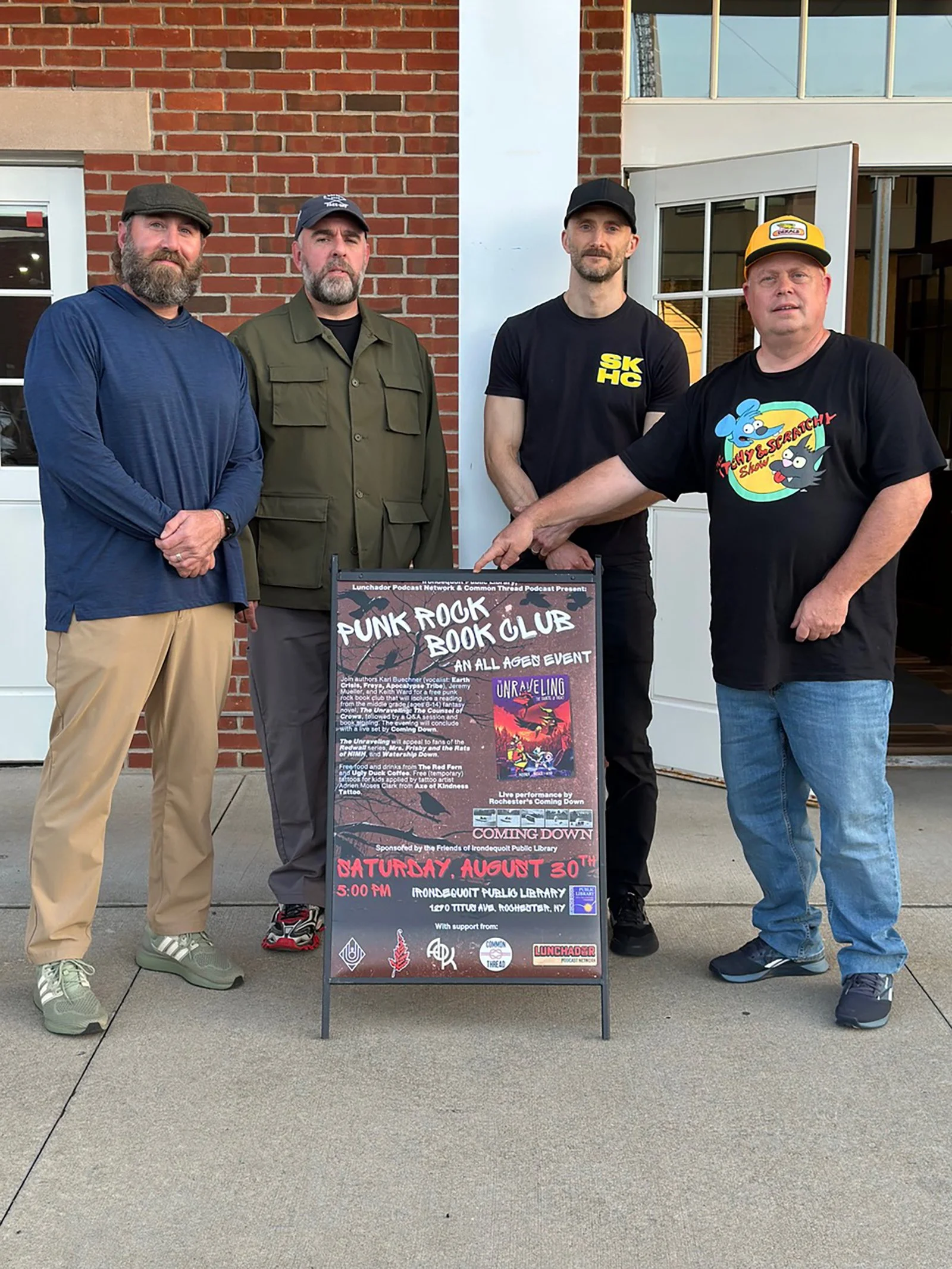
The Unraveling Authors
Rory, you mentioned failing forward as a parent. How did the resilience built through touring or playing in bands—where things constantly go wrong—prepare you for the trials of fatherhood?
Rory: The ability to figure it out. Knowing that you don’t have to have the answer but willing to look for it and try different things to arrive where you need to be. Early stage of parenting the “sleepless” nights are how I describe doing overnight drives in a touring band. You do the drive and show up to the destination in a daze and somehow make it through the day. I also believe a lot has to do with supporting someone else and putting others in front of yourself. When you book a show for a band you typically aren’t doing it for yourself you’re doing it for others, it’s kind of similar in that way.
Also what can go wrong probably will go wrong and that’s ok. Breakdown on the side of the road equates to a diaper blowout while making an hour drive to see the grandparents.
Hardcore is often an outlet for rage and trauma. As you’ve moved toward Buddhist philosophy and radical acceptance, how has your relationship with aggressive music changed? Is it still a release, or is it something else now?
Greg: Even though I've made an intentional effort to mellow out and challenge the angry, frustrated tendencies that I seem to have naturally, aggressive music is definitely still a release for me. Anger and other undesirable, aggressive emotions are an unavailable part of life, and addressing them is like doing the laundry or mowing the lawn. It's the type of work that never ends because it is an inherent, routine aspect of life. Music is still one of the healthiest and most effective ways to release those types of emotions, but at this stage in the game I am a little more mindful of where those emotions are coming from. Through mindfulness and meditation practices, I have developed a better capacity to more quickly disengage from anger until a more appropriate time.
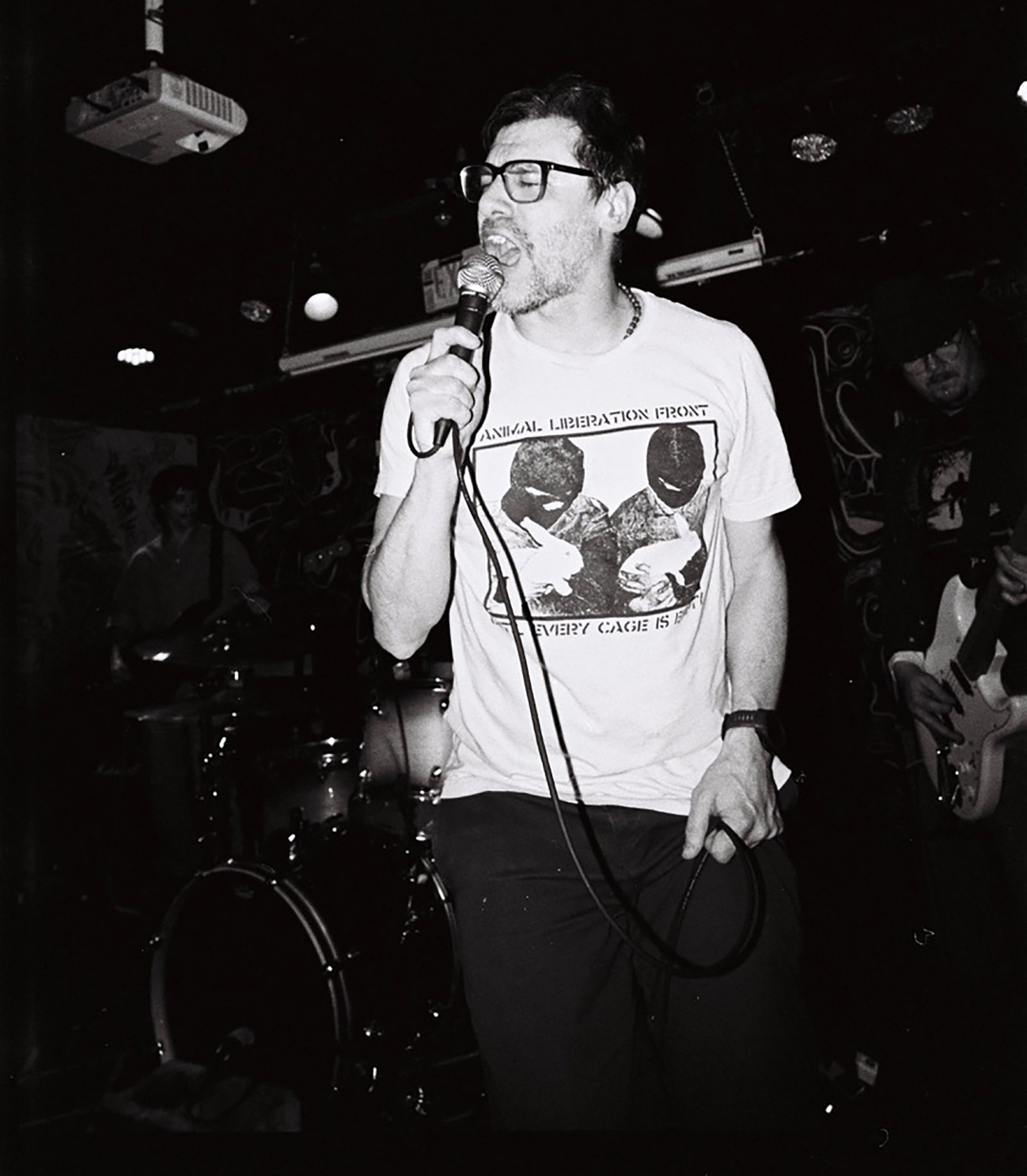
Phot credit: Steve Carter
You both advocate for PTSD and autism awareness. How did the socially conscious lyrics of bands like Earth Crisis or Endeavor prime your brain to view personal health struggles as a broader social/political issue?
Rory: While those bands do have a special spot for me in my journey I owe a lot to Propagandhi, Minor Threat, and Pennywise. Connecting with lyrics where folks are explaining personal experiences that are similar to yours is something that makes you feel less alone in this world and I think at a young age that really connected me to HC and Punk. A space that allowed me to be imperfect was so needed for myself. The personal then turned to become an extension of my life. Personal is political and then that touches aspects of your life constantly.
Greg: The most significant way that hardcore influenced me to see health struggles as a larger social and political issue is through my interest in veganism and my involvement with various environmental, animal rights groups, and animal welfare groups. Our economic system favors agricultural practices and food production methods that prioritize profit over environmental sustainability and optimal human health. I think about that reality every day when I'm making food, and I try to make choices that reduce animal suffering and poor health outcomes for myself. It's challenging though, and profit motivated economic and food production systems are only partially to blame. The other factor driving these unsustainable systems is human food preferences. Humans value convenience and expedience in so many facets of life, but it is especially true of our collective and individual relationships with food. Quick food is usually unhealthy. Tasty food is usually unhealthy. Cheap food is also unusually unhealthy. We can blame capitalism to a significant extent, but in the end we walk that last mile ourselves by choosing what to buy, and we often don't prioritize healthy outcomes for ourselves or the ecosystem. That beings said, the cheapest foods in the grocery store are still the most natural: dried beans, rice, rolled oats.
There’s a cliché that people grow out of this music. When you’re at a PTA meeting or a board meeting, how does your hardcore kid identity manifest in ways that your colleagues might not even recognize?
Rory: As a small business owner and parent this shows up everywhere for me. For me it’s a great bullshit detector and helps me figure out how to navigate in various ways. How do I soften myself to help someone else reach their potential in a work setting, walk alongside someone rather than just tell them what to do, let them explore and experience growth themselves and celebrate it. When it comes to parenting and that world, I’ve just gotten comfortable with being me, but I always listen and not everyone requires a response. The core tenant when it comes to my kids is that it’s about them and not my ego or feelings. Being in a band or collective has taught me those aspects of life.
Greg: For me this comes back to an appreciation for the things that make people unique and the ability to collaborate with others. Often times "adult" group work can be about strategizing and implementing change. This can be a frustrating or competitive experience, like doing a group project in high school, or it can be creative process that improves group cohesion. Hardcore and punk rock have taught me to appreciate and defend the necessity of diverse perspectives that diverge from the expected norm. When I'm in a group setting like a PTA meeting (hypothetically speaking, I've never been to a PTA meeting), I try to use my presence to make sure everyone had an opportunity to make the voice heard and that decisions are made transparently and fairly. Punk rock also taught me that innovation and change are products of deviating from the norm and subverting the status quo. When it works, it's exhilarating. When it doesn't, it's alienating and isolating, but that's okay too. Punk rock prepared me to step into the role of the outcast and gave me the ability to feel comfortable finding my own path in life.
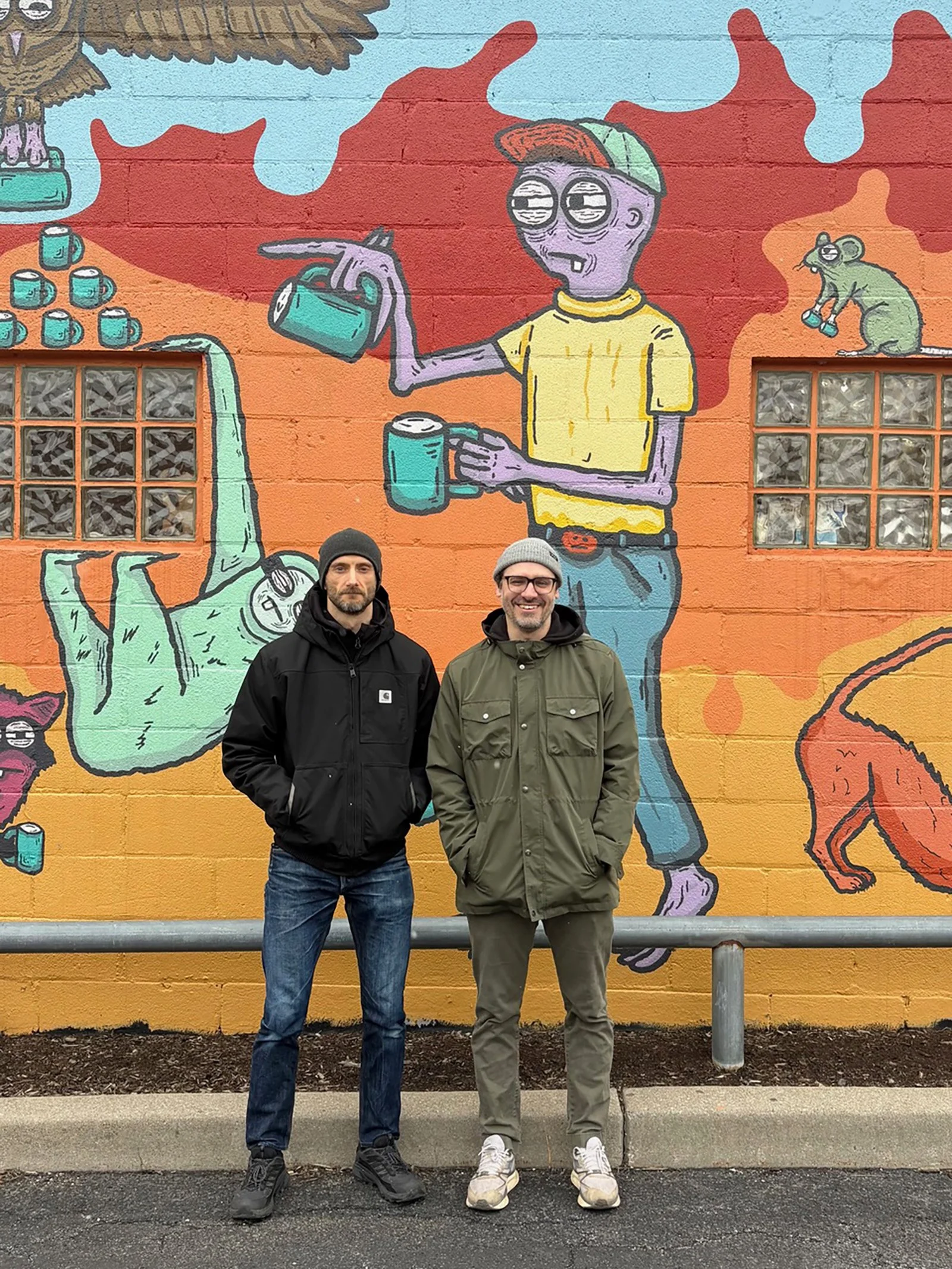
The Unraveling Authors
Playing drums in bands like Worldpurge or Achilles requires intense collaboration. How does the band dynamic inform the way you lead a team or work within a family unit?
Greg: In some ways, the family dynamic of my family of origin prepared me for group dynamics of a band or other creative group effort. That is, you don't usually get to have things exactly the way you'd like, and if not one got exactly the outcome they wanted, that's probably an indication that things were done fairly. Beyond that, both family and bands require a commitment to be patient and forgive to the other in the group above all else. Being in bands in my 30s and 40s while raising kids is in some ways easier than being in bands in my teens and 20s because I have more realistic expectations about what out output will be.
If you could show your 16-year-old self a video of your life today, what part of your adult world would they be most surprised—and most proud—to see?
Rory: I think my 16 year old self would be surprised that I have a family and live where I live. Surprised by the relationship I have with my parents and brother now considering those early years. I do think he would be proud, but also skeptical and nervous that it could unravel at any moment.
Greg: I think my 16 year old self would be thrilled to learn that I still love all the same bands and music that I loved back then, and that I'm still friends with many of the people who I was friends with as a kid. I think my younger self would be surprised at how much my childhood trauma negatively impacted my adult life, but I'd like to think my younger self would also feel reassurance now that I'm mostly on the other side of all of that.
Check out their podcast here: https://open.spotify.com/show/0mLWXVzyH10BeU8ZacZsLK?si=8a0e0479902c4c95