

It’s About The Moment: An Interview with Ohio’s Knife The Symphony
By Raph Copeland | April 2, 2026
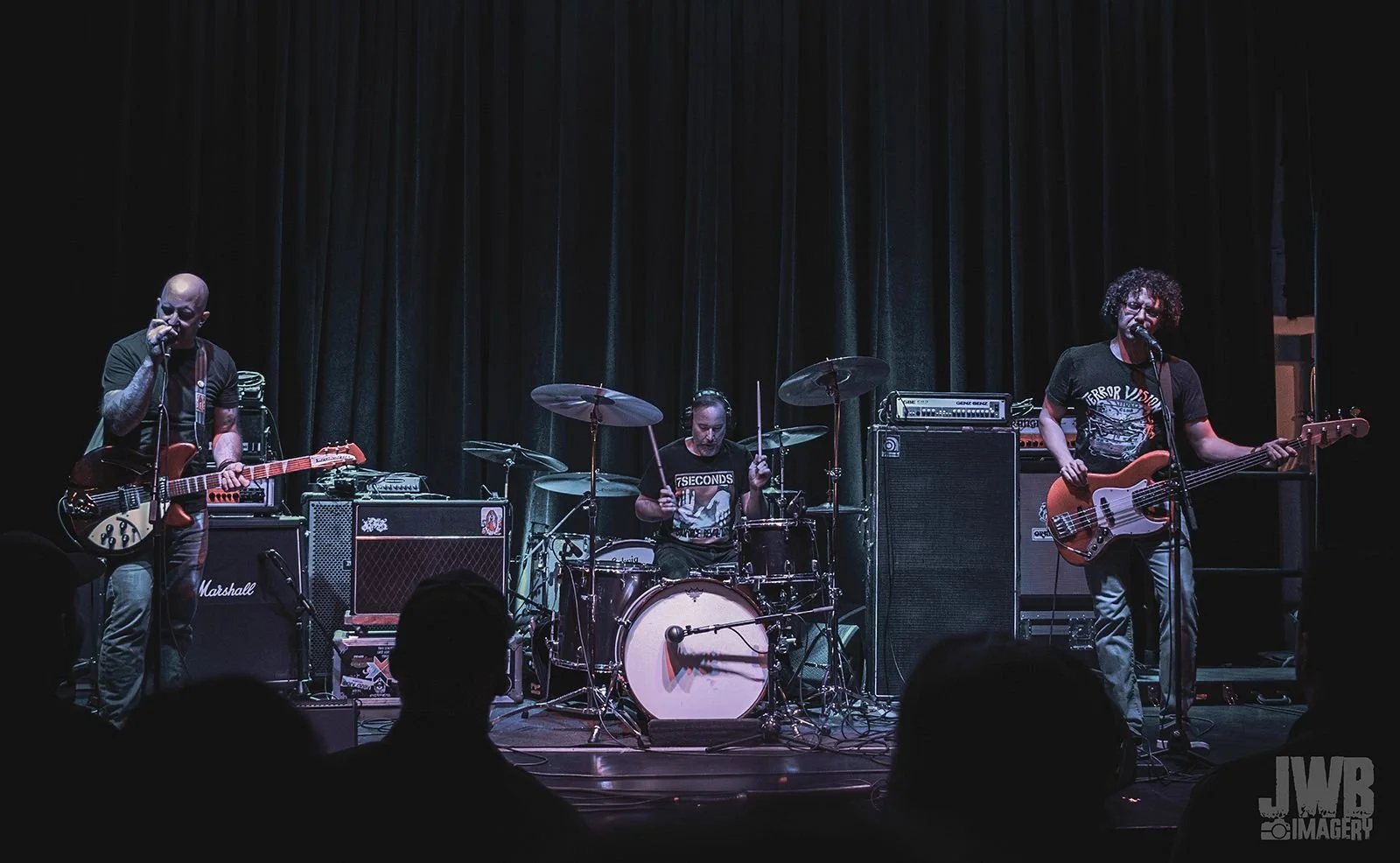
Photo credit: Jared Bowers
For two decades, Knife The Symphony has been a cornerstone of the Midwestern post-hardcore scene, navigating the evolving DIY landscape with a steadfast commitment to community and authenticity. Rejecting the trend-driven gatekeeping of the modern era, the trio draws from a diverse sonic palette—ranging from the raw aggression of the Minutemen to the intricate textures of The Police—to ensure their ten-release catalog never stagnates. Their philosophy prioritizes genuine human connection and social responsibility over digital metrics, frequently backing their people over profit ethos through benefit shows and local activism. Whether they are sharing stages with legends like HR from Bad Brains or recording in their own practice spaces, the band views their longevity not as a trek toward fame, but as a continuous, intuitive evolution fueled by deep-rooted friendship and a relentless drive to find excitement in the danger of new sounds.
Two decades is a lifetime in the indie scene. Looking back at Ohio landscape from when you started versus now, what is the biggest change you’ve seen in how the DIY community operates?
In the 90s there were a lot of basement spaces available for shows. You could carve out a space in the past to cultivate what you were playing, what you wanted to hear, what couldn't get on a stage somewhere else. Now, you can play anything anywhere.
Despite that opening of what sounds can be heard anywhere, there's more gatekeeping going on these days. It's about passing a litmus test. Before, the idea of a DIY space - no matter what the sounds coming out of it - it was about being open, being a second space. You came in with the right ethos and an open mind? That was enough. Now it's more like, "What boxes are you checking?" People are viewed that way, too. Not as rounded whole things, just boxes to check.
We get it. We're old. We're from an older generation now. But, you know, and this is how it has always been, but now more than ever no one looks up to those who are older, who have gone through things, who have spent time living and evolving in an ethos. We know how the old guard paved the way for what is now. That seems to be missing.
It used to be DIY was something of a giant movement, now it's maybe more like an umbrella with a bunch of fractured pieces under it. You can be this or that but it isn't viewed as one collection together. It's almost as if it isn't okay to include everyone and have differing views, thoughts, and ideas around you.
Look, we're at a point where it is just about getting through the day, seeing people as people, and making sure you are getting out there with new faces. Otherwise, who the hell are you pontificating to anyways?
You cite bands like SST and Touch and Go as influences. How do you keep
that raw, aggressive energy feeling fresh and authentic after 10 releases?
We all like and listen to different things. That keeps it very fresh. And it really runs the gamut. We're just as much Genesis and The Police as we are Minutemen and Drive Like Jehu. Or Circle Jerks. Or whatever new is resonating with us like Dijon, Assertion, SPARES or anything else that comes across our radar.
We don't exist just in the past. We keep moving and challenging ourselves. We look for energy so we don't stay stagnant. Just as much as the Circle Jerks were an influence, they seem to just be riding it out. Not to take away from the fact that they're still playing at the age and rate they are, that's amazing! It would also be great to see them release some new music.
Your job is to grow as a band, as musicians, as people. We just try to keep progressing with what feels good to us musically and sonically and not fall into ruts. The best way to avoid that is not being scared to try new approaches and sounds. For us, the goal is to create an album with an ebb and flow, not just a sonic assault for 40 minutes. That mindset allows us to be more inventive with what we try to do while keeping the excitement and energy levels up. We dove into that with our first LP "Crawler" and I feel like we came full circle with our latest release "All The Wrong Turns Taken To Get Here".
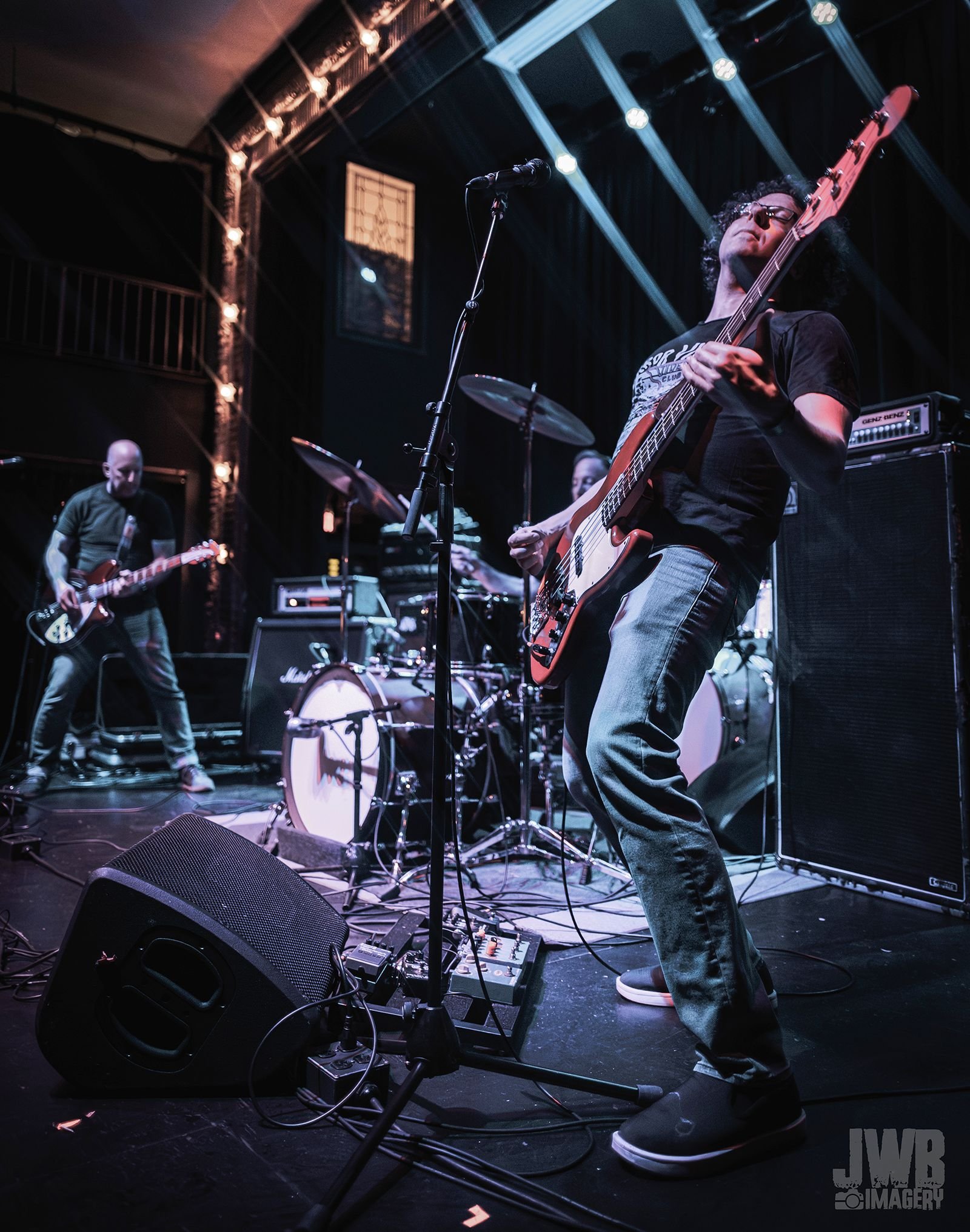
Photo credit: Jared Bowers
Keeping a catalog of 99% of your shows is a real commitment to your own history. Is there one specific show from that archive—perhaps one of those recent 2025 dates with HR or Pelican—that felt like a full circle moment for the band?
Jeff: I'm not sure if there's been one specific moment. The archive is a good reminder of what we've been able to do through the years and everyone that we've shared a stage with or just crossed paths. When we do get the opportunity to play with bigger acts or a legend like HR, it puts a fire under us to be in front of a new crowd. We don't really have a name for ourselves so our stage presence and how we perform speaks volumes for us. Although, if there was one shining moment, it would be crossing paths with Ed Crawford(Ed fROMHIO of Firehose) on some random night in Pittsburgh. He just happened to be in the venue and watched us, I think along with a few other people. The small encounter allowed Ed to come to Northern KY and record some songs in the studio where our practice space is. Those are the moments that feel full circle.
Jerry: Playing with 7 Seconds
Seth: For me, it's meeting the new people that first time on the road. And then you come full circle with them a year later or two years later, but you've made that connection and now you can keep coming back to those people. That's what always brings it back.
The band: We always approach it as equals when we cross paths. We never feel out of place no matter who we are playing with or where we are playing. It's about the moment and just getting it done.
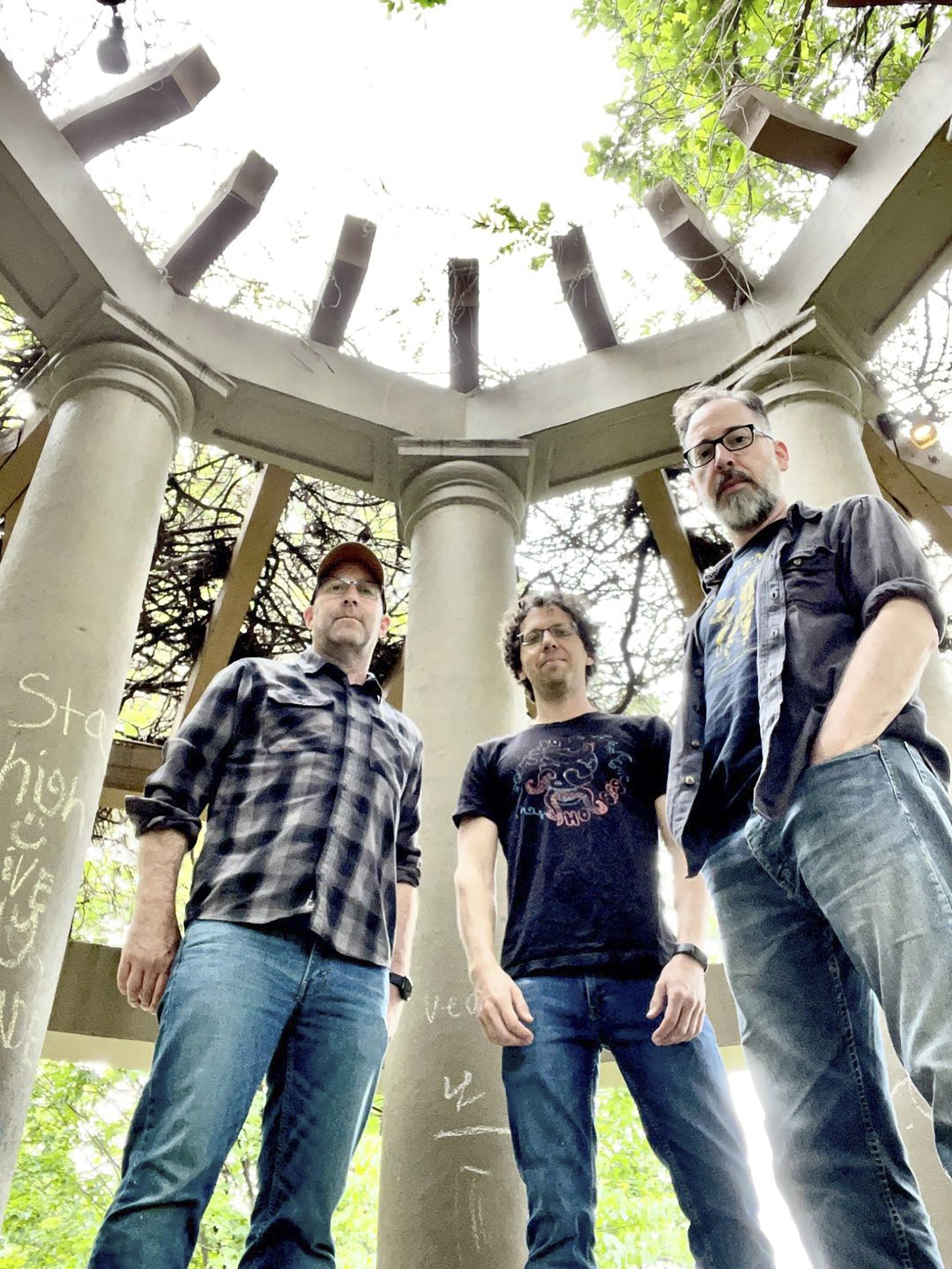
Photo credit: Knife The Symphony
Many bands say they're DIY, but you back it up with benefit shows and community programs. Why has it been important for Knife The Symphony to be a community oriented band rather than just a music project?
None of us grew up with social media, with that constant need to chase likes or always be "on". We didn't get into music for money - it's never been about the money. It's always been about an ethos and some simple concepts. No profits over people. That's something the world could really use right now. Support your neighbors. Build community, not divisions. That's how we were taught by those older generations that paved the way for us to do what we do and be where we are.
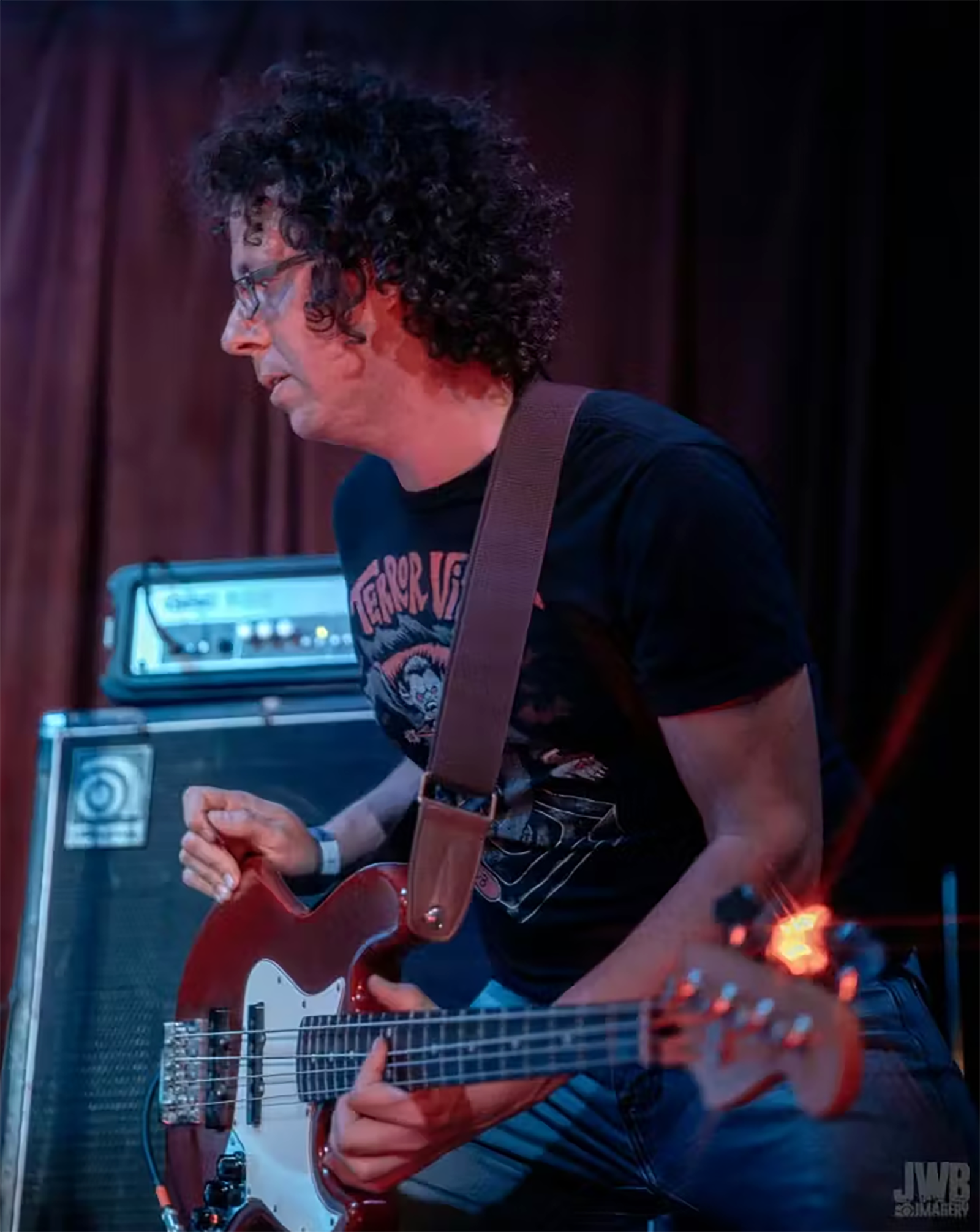
Photo credit: Jared Bowers
With a new release on the horizon, how has your writing process evolved? Does the chemistry of 20 years together make things more intuitive, or do you find yourselves intentionally trying to find new sounds?
Are we more intuitive? Absolutely. Do we still write the same way? Yes.
It's us in a room listening, bringing ideas, riffing, building. We go from there. But, like we said earlier, there's no resting on the past. Don't just draw from that. The music you are playing should be exciting to you. There should be some danger as you are writing. Is it all going to fall apart at any moment? What thing happening next gets us excited?
Photo credit: Jared Bowers
The recent eye injury to your drummer must be tough to deal with. During this temporary holding pattern, has the band found other ways to be creative or productive regarding the upcoming record?
We all work and funnel our passions into so many other things, but, look, there's something most important about a band and it isn't playing the music. It's about being together, being friends. That shit is important. So, we've been going out, talking, hanging out, having drinks. If we can't be playing music, we're not going to stop talking about all the things that influence us: music, movies, politics, current events, random bullshit, personal shit, history.
Honestly, that is pretty much how we've always operated. We don't walk into our practice space and just immediately play. We hang out and catch up first. We debate. We laugh. There are times we look at the clock and go, "Oops. Forgot to practice!" You know, that's okay, though. It's what makes the writing and energy and presence come alive.
Photo credit: Jared Bowers
Ohio has a storied history of noisy, post-hardcore, and art-rock exports. Do you feel there is a specific Midwestern quality to your music that wouldn't exist if you were based on one of the coasts?
There's a lot you can say about the Midwest, but one thing musically it adds is freedom. The coasts get so wrapped up in being a specific "thing". You have to be the sound that is from the east or west coast. We don't have to follow that. We don't have to rely on having a "sound" in order to play a show. The Midwest has always been kind of this polite but eccentric beast. When you don't have a defined sound based on your region, where you live, you can be anything.
Photo credit: Chad Snowden
Once the band is back at 100% and the recording lights go on, what is the primary goal for this next release? What do you want the 11th entry in your discography to say about Knife The Symphony in 2026?
We just want to show that we've grown and persevered. I mean, who isn't trying to just survive right now? The world is in one of the worst, most repressive places it's ever been and we're living in that. So, how do we something meaningful to us in this moment? We're all old enough now to overall find contentment in the day to day - that doesn't mean we are complacent, though. All that said, ultimately, we want whatever comes out to speak for itself. Listen to it yourself. It's not my job to tell you what it says, it's your job to listen and relate it to who you are and where you are at that moment in life.
Photo credit: Adam Nice
Anyone you'd like to shout out for their support - friends, family, other bands?
Jeff: Always a huge thank you to Morella and staff at the Southgate House Revival venue in Newport, KY for supporting us as well as supporting all the other independent artists in the area. Also, all our peers that we've navigated this thing called music with. Too many to mention but the lifelong friendships are a huge part of why we continue to play: Nonagon (Chicago) The Mostly Dead (DC). Maple Stave(Durham, NC) Archaea (Kalamazoo, MI along with Tom and Betsy and the rest of the Kzoo folks and Ampline (Dayton, KY).
Jerry: I would like to add to the list by saying thanks to the club owners that have ever taken the time to get to know us and have repeatedly given us opportunities to play these last 20 years. Similarly, the handful of live sound engineers that let us just turn up and be ourselves. Recording engineers Mike Montgomery, Steve Wethington and Shane Chaney. Robyn Roth and Andy Perkins who contributed to the sound and growth of this band in the early days. And to my partner Meaghan who has been supportive of every ounce of time I've spent in this band the last ten years.
Seth: Much love to our brothers in Chicago, Nonagon. We've been playing shows together for a long time now. Not much better than sharing the road and the stage with good friends. I'd be remiss to skip out on a shout out to my wife for supporting this part of my life as well. When you can support one another in your passions, it really makes a difference.
Links
https://knifethesymphonyband.com/
https://www.instagram.com/knifethesymphony_band
https://knifethesymphony.bandcamp.com/merch
https://www.instagram.com/nonagonchicago/
https://www.instagram.com/themostlydead/
https://www.instagram.com/maplestaveband/
https://www.instagram.com/archaeakalamazoo/
https://www.instagram.com/amplinegram/
https://www.instagram.com/sghrevival/
https://www.instagram.com/candyland_recording_studio/
https://www.youtube.com/watch?v=eWTR7Tprbrw&t=1s
https://www.youtube.com/watch?v=GjEkvPV1q2E
https://www.youtube.com/watch?v=fjpqHiL9vuk