

The Power Of Vulnerability: An Interview With Brooklyn’s Eevie Echoes and the Locations
By Staff | December 19, 2025
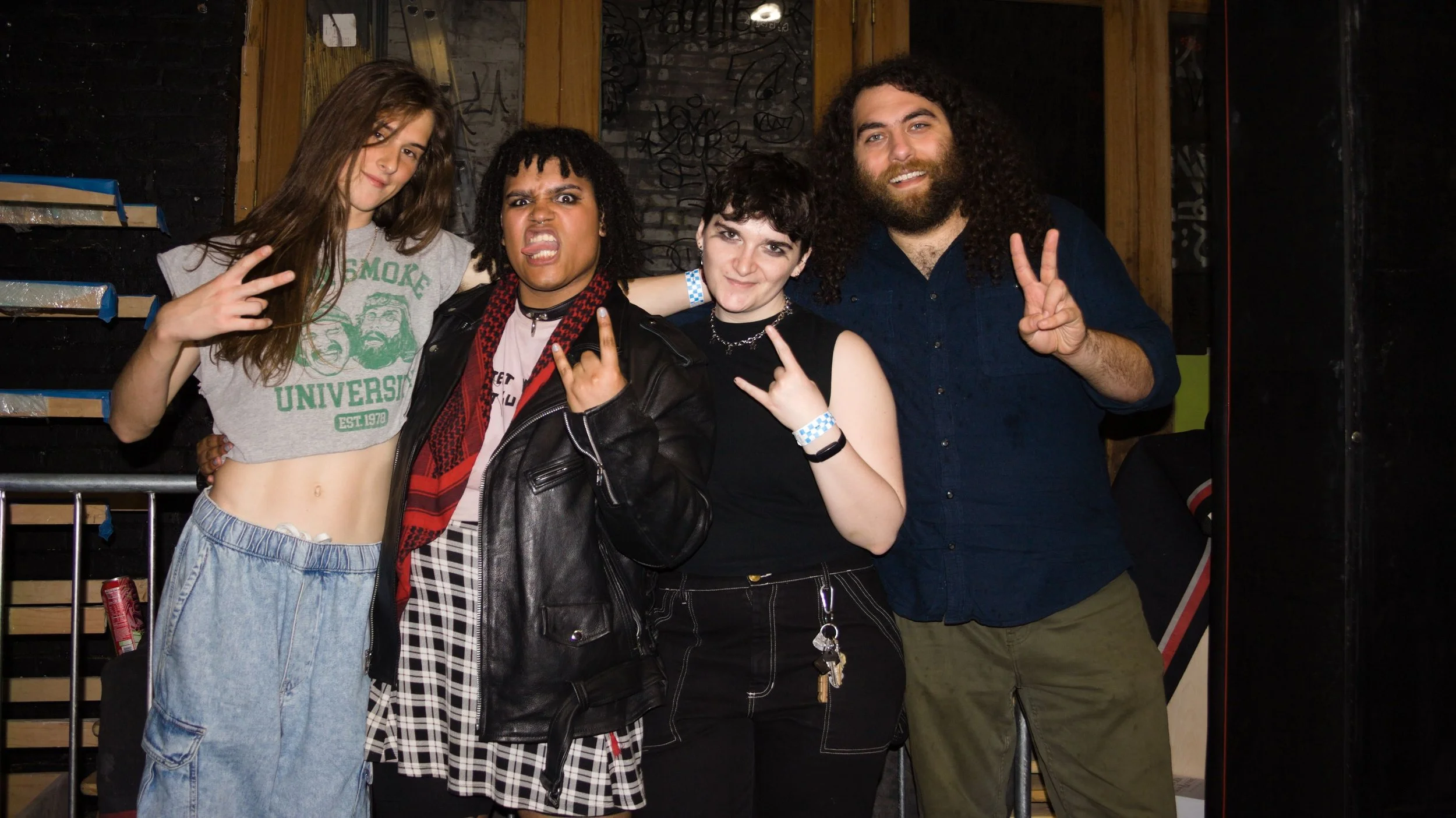
l-r: Emma Taylor, Eevie Echoes, Eliza Endless, Nick Grasso
Eevie Echoes & The Locations started as humble open mic performers before cementing themselves as a bedrock queercore act of the Brooklyn punk scene. They specialize in seamlessly blending the personal and the political. As a mostly trans band, their music addresses the struggles of the LGBTQ+ community, and confronts naysayers who seek to erase queerness from existence while always bringing raw power, pure emotion, radical authenticity. The 4 piece consists of Eevie Echoes as lead vocalist, songwriter, and rhythm guitarist, Emma Taylor as backup vocalist and lead guitarist, Eliza Endless as backup vocalist and bassist, and, Nick Grasso as drummer. The four have had a fruitful music career, playing notable shows alongside bands like Delilah Bon, Jasmine.4.t, Brennan Wedl, Vial, Shamir, Teenage Halloween and Kaonashi, as well as numerous festivals and headliner shows around the USA including Stoopfest and Punk Island. The quartet's debut album "The Cons Of Being A Wallflower" gained them significant attention and showed off the group's diverse sound and ability to play with genre, dabbling in ska, chiptune, emo, garage rock, pop punk and grunge.
The name "Eevie Echoes & The Locations" is distinctive. What is the story behind the name, and does it carry any hidden meaning relevant to the band’s themes?
Eevie Echoes (vocals/rhythm guitar): So evidently it does carry some meaning. I've always been very into bats specifically and I have a giant bat tattoo on my right shoulder. My name is Evelyn but pretty much everyone calls me Eevie. “Eevie Echoes” started as a stage name for my solo project during my earliest stages of transition because I wanted my voice to echo out into the world as a musician. I had just started learning guitar during quarantine and was very new to composing my own music at the time. I’ve always found music to be a deeply powerful tool in my life, and I was using the act of learning a new instrument, writing, and listening to music a lot to cope with the struggles of realizing that I was trans. I was suffocating with dysphoria during that time. There was a lot of fear, shame, confusion, and discomfort that came up for me with that realization, and I didn't know how to handle any of that at the time because it all felt so overwhelming, so I used music to navigate through that. When I formed the full band post-quarantine, “Eevie Echoes & The Locations” became kind of a play on the terminology “echolocation” which is where bats use high pitched sound waves to navigate low visibility environments when they’re hunting for food. So the band name is a play on words and also a metaphor for using sound and music to find your way through the darkness.
Your debut album, "The Cons Of Being A Wallflower," is noted for its genre diversity, pulling from ska, chiptune, emo, pop-punk, and grunge. Was this genre-hopping a conscious effort to challenge punk purism, or simply a result of the band's diverse individual tastes?
Eevie: It was certainly not a conscious choice for the record to become as genre diverse as it was. “Wallflower” was written from a conceptual place, and I do stand by the idea that it is a loosely structured concept album because I wrote it while in a really raw state of being freshly out and trying to battle social anxiety. I was a young artist trying desperately to make a name for myself with these songs I had written about being vulnerable and sad after this world-shattering experience of realizing that everything I thought I knew about myself was completely wrong. Like with all of my songs, I write with intention, and I write every song individually, like the song is its own little universe. So when I put together the album, it was a bunch of songs that were kind of disjointed in terms of style because I had written them over a couple of years and at different stages along my early transition with different intentions in mind for each song. At the time, the genres included in that record were all in the soundscape of what I was surrounding myself with, especially with regard to ska and pop punk, so “Wallflower” exists both as a sonic snapshot of where my head was at as a songwriter as well as a contained story about my first couple years of being out as a trans woman.
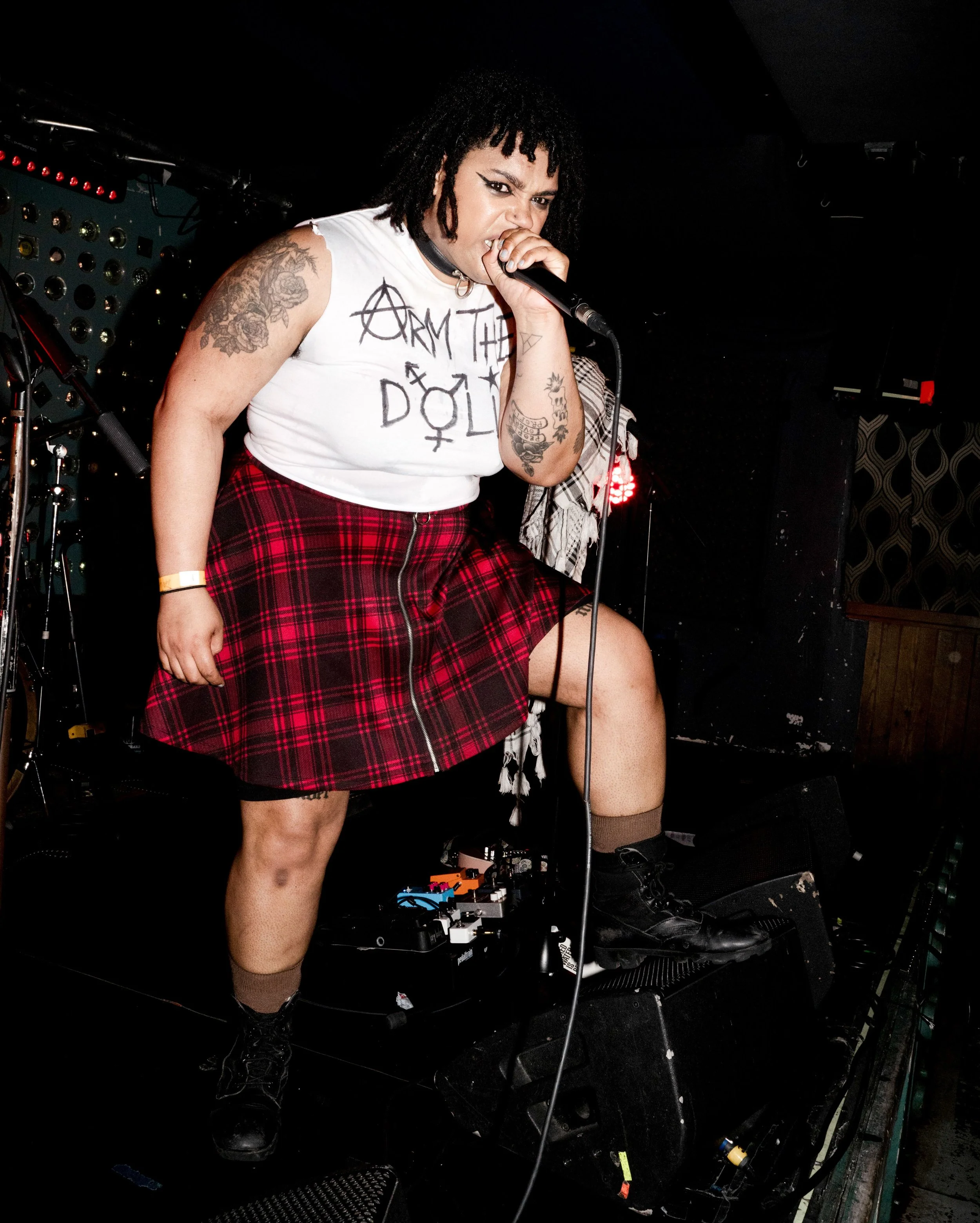
Eevie
Your music is often described as "queercore," a powerful subgenre. What does that label mean to Eevie Echoes & The Locations, and how do you feel your sound contributes to the current legacy of queercore?
Eevie: I think that the label of queercore just feels right for this band. In a lot of ways we are a punk band and if you really want to boil it down, we're a melodic punk band but I think that calling ourselves queercore is very intentional because it harkens back to bands like HIRS Collective, G.L.O.S.S., Against Me, Limp Wrist, She/Her/Hers, Daisy and The Scouts, and Worriers which are all bands like that have been deeply influential for me as an artist. I think that there's such a beautiful legacy of powerful and deeply poetic punk rock that is specifically from a queer lens that really resonates with me as an artist, which is why I really like the term queercore. I think also, since a lot of what we write addresses the firsthand struggles of being queer in America, that also makes “queercore” feel especially apt. I think much like other queercore bands, we are loud, angry, queer, and unapologetic about our beliefs, but I think what we bring to the legacy of queercore is an unapologetic rawness because we blend personal experience with the political.
Your lyrics directly address the struggles of the LGBTQ+ community and confront transphobia. When writing, do you feel a greater responsibility to deliver a message or to express a personal emotion? How do you balance the two?
Eevie: When I sit down to write a song, I usually write from a place of trying to get a feeling out, and I just let that take me where it takes me. As I was saying earlier, I think that it's really important to blend the personal and the political in songwriting because my personal experiences as a trans woman and as a lesbian are almost always linked to the greater political sphere. My very existence in and of itself has become a political statement in a world that tries to demonize me and strip me of my humanity. For example, our song “Letters U Wrote” is related to my mental health and the struggles of being trans when I grew up in a deeply religious family. All of that bigotry that I've experienced from my own family comes from somewhere. It comes from Christian hegemony and this concept that we’re supposed to fit a specific mold or we’re not worthy of unconditional love or even respect from our fellow humans, much less an all powerful, all knowing being. That same bigotry and anti-queer/trans sentiment is baked into our government and into our laws. It speaks to how homophobia and transphobia are deeply ingrained into our society. And so, when I do talk about my personal experiences of living as a trans woman in a society that's not always welcoming to people like me, I think that it speaks to a much larger political struggle for liberation.
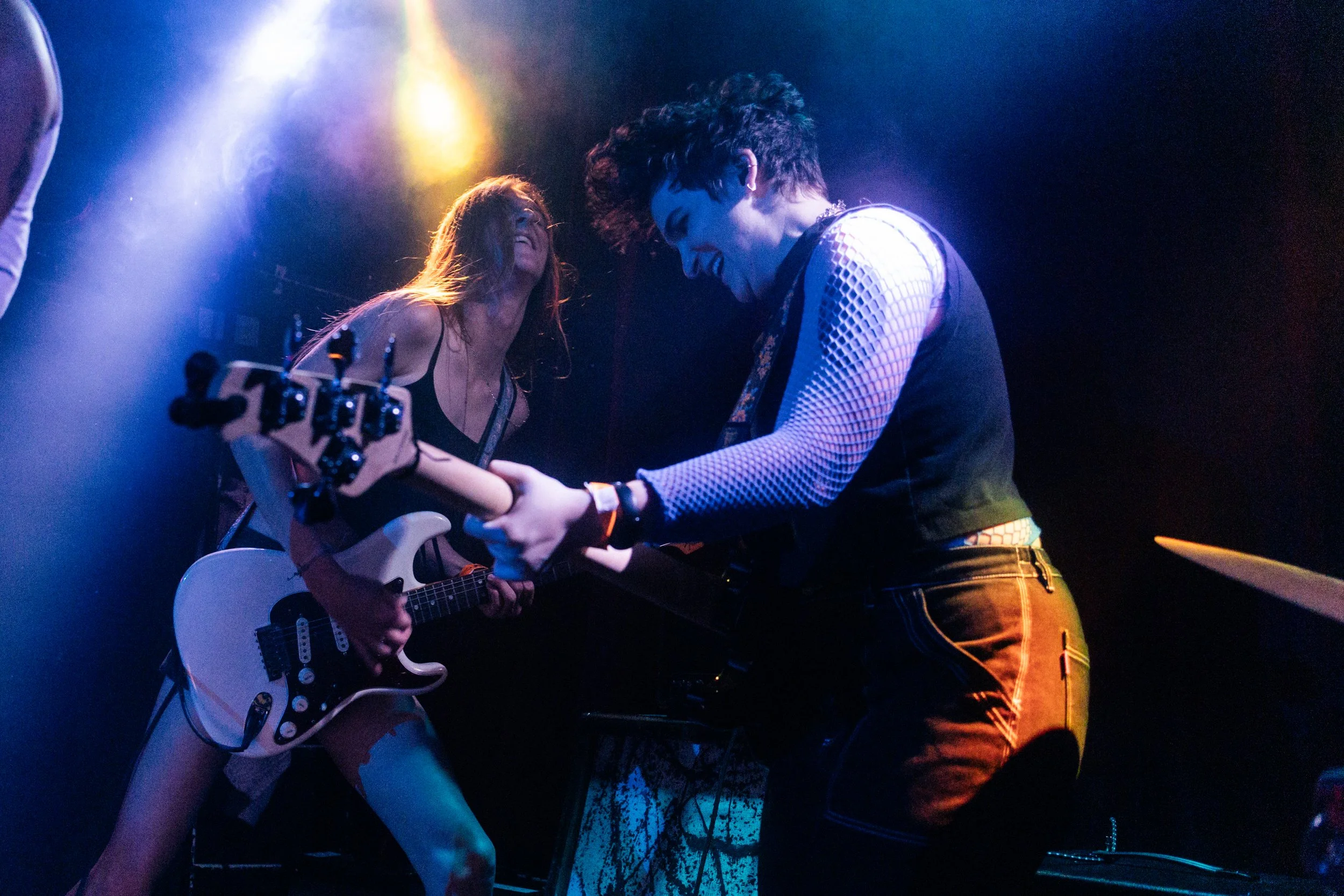
Photo credit: Irisa Zorovich
Beyond the lyrics, what role does the raw power of punk music itself play in conveying your political message? Is the anger and energy of punk a necessary vehicle for your radical authenticity?
Eevie: I think the fact that punk has such an urgency to it really lends itself to the way that we talk about politics and talk about mental health in our music. In a lot of ways it feels like being queer and being trans is like having a giant target on your back, so I think the since punk allows for anger to be expressed in such a visceral and “in your face” way it creates an avenue for queer rage and to get out our frustrations. It's not easy living as a marginalized group in society especially not when you consider the intersectionality of being queer and also Black and Hispanic. There's a lot of anger and fear that sits in my spirit simply just because of how difficult it can be to live in a society that can be extremely closed-minded, and that is so heavily propagandized against people like me. I think that being a punk musician really gives me the ability to have that catharsis on stage and scream everything out.
You have opened for and played alongside a diverse group of artists. In the broader music scene, do you feel there has been a positive shift in acceptance and representation for trans and queer artists, or are there still significant barriers the band has faced?
Eevie: I think it really depends. I'm extremely grateful to every single artist who has booked us and given us opener slots. It's been truly incredible to play alongside artists that I've admired deeply and it's not something I ever would have expected to happen with this project. However in the grander world of rock and punk, it's kind of a double-edged sword where being openly queer and trans has subjected us to scrutiny but has also opened up a lot of opportunities for us. There are a lot of people looking out for us in the local music scene, specifically looking to book acts that typically would not get mainstream media coverage. So in some ways it's given us incredible opportunities to connect with other bands, organizers, and other artists like us. However, on the other hand, you just don't see the same kind of solidarity with queer artists in a mainstream setting. We face a lot of scrutiny simply for being who we are and for being public about our identities. In a lot of ways we have to work twice as hard for half the reward and on a mainstream level we don't have that “commercial appeal” because we're unapologetically ourselves and politically outspoken. I think when it comes to mainstream appeal it can be hard to get people to take us seriously sometimes. We've definitely gotten comments on social media saying that our struggles aren't “real” and that “people have it worse off than us in different countries” when we criticize the government for being anti-queer. To be fair they kind of have a point. In a lot of ways people from other countries are suffering at the hands of US imperialism and suffering through genocide, but that also doesn't denigrate from the fact that even within the belly of the beast, we have our own struggles for liberation as well. Not to mention there are queer and trans folks in countries ravaged by imperialism who are struggling as well for their own gender and sexual liberation. None of us are free until all of us are free.
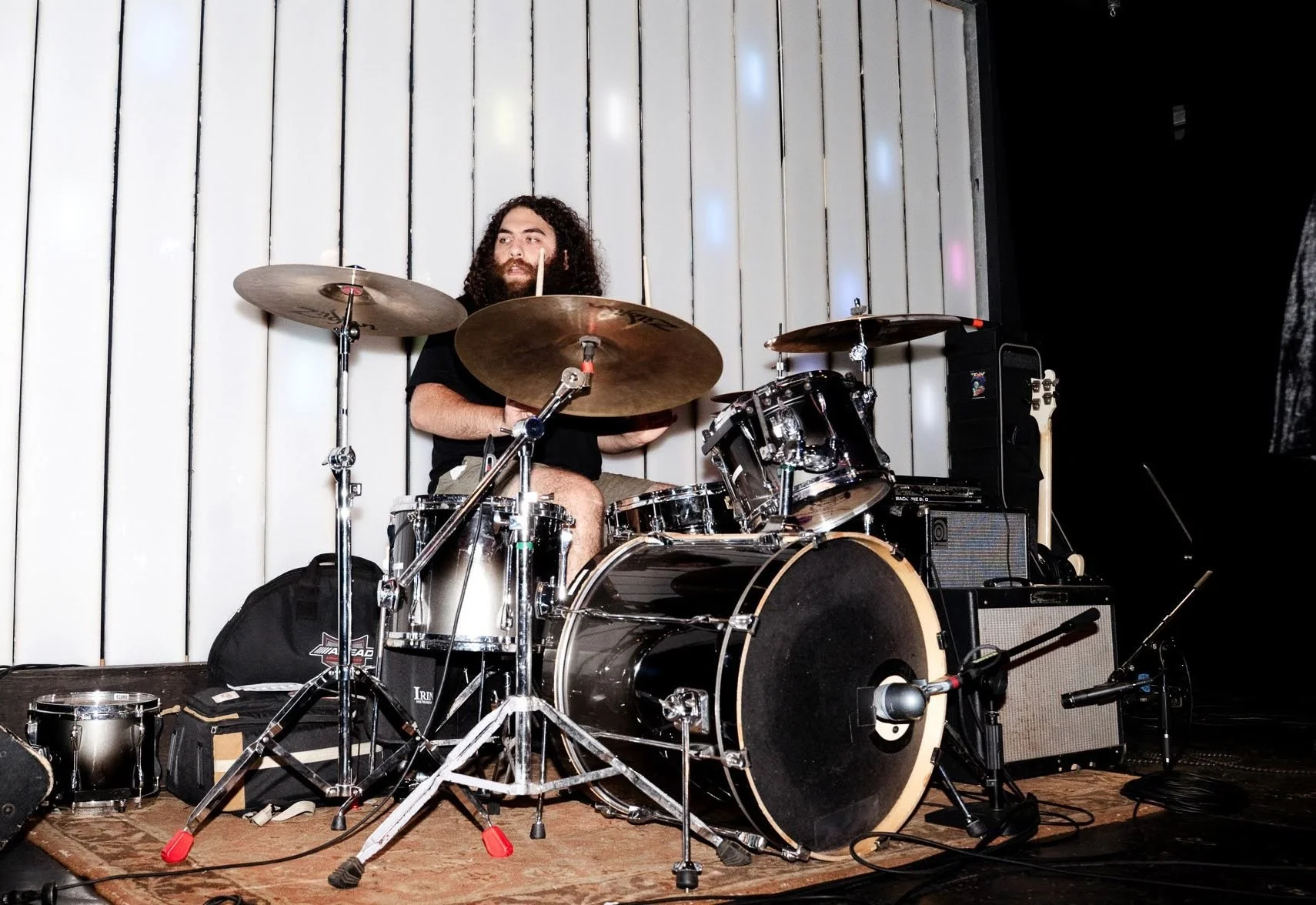
Nick
The term "ally" is often used casually. What does true, meaningful support look like to the band from cisgender peers, fans, and the music industry when it comes to combating transphobia?
Eevie: That's so true!! The term “ally” is used so often and it's unfortunately started to become watered down. Anyone who feels ambivalent or neutral towards the gay community likes to call themselves an ally. But a real ally is someone who actively sticks up for us. Someone who puts money in queer pockets, someone who actively battles the stereotypes that are thrown against us, someone who will throw down if they have to physically protect a queer person. We face so much violence, whether that be verbal, physical, sexual, or systemic. Being a true ally looks like concrete support for queer and trans folks. Visit your trans friends when they recover from surgery, hire and give job leads to queer and trans people, house queer and trans folks, help us with our shots if we need it, correct people when they use the wrong pronouns or when they're being ignorant. It doesn't have to be a big action, but it's the little ways that you can stand up for us that really matter and make genuine differences in queer lives. Donating $10 to the ACLU and calling yourself an “ally” isn't enough, especially not when the government has launched attack after attack against us by trying to strip us of our right to exist freely and turn people against us through misinformation and propaganda. Donate to someone's GoFundMe instead. Take time to unlearn your own biases, engage with queer and trans art and listen to us when we're speaking our truths. Performative allyship does nothing for our liberation.
If you could boil down the core political message you want a listener to take away from your music into a single action or thought, what would it be?
Eevie: I think the core political message that I would want a listener to take away from our music is that empathy and love for your fellow person should be the bedrock of your politics. I have a patch that says “empathy is rebellious” on my battle jacket and I think it boils down to the understanding that everyone is a person who deserves rights and dignity. We live in a society that pits us against each other. It’s a key tenant of capitalism, this idea of stepping on whoever’s toes you have to in order to climb the social ladder. I think that’s stupid. I think we should be cooperating to help each other achieve whatever it is we want to achieve. Creating an ethical and equitable society is what I hope for and strive for in my activism. I would also say that community is everything. We can’t beat back authoritarianism and fascism alone. We have to have each other's backs. We have to band together. I want people to feel seen by our music and also feel inspired to get involved in our struggle.
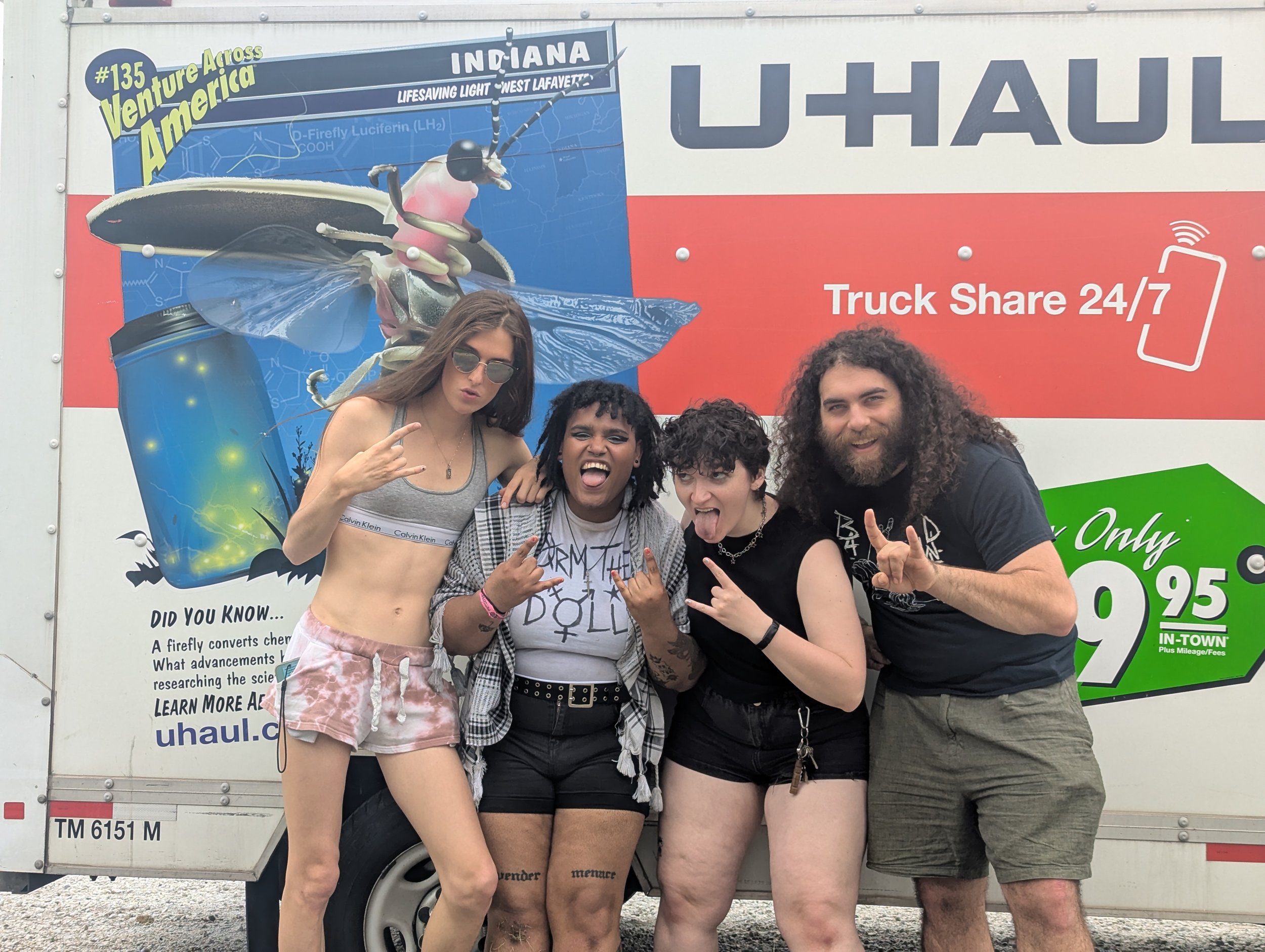
The band
Eevie, as the primary songwriter, can you walk us through the general process of taking a deeply personal or political idea and shaping it into a fully structured, catchy song?
Eevie: I'm definitely more of a lyrics-first writer and I treat songwriting like poetry. I put a lot of effort into the lyrical and thematic content of the songs that I write. So for me it always starts with a concept. For example, I wrote a song called Rods From God recently and the premise behind that song is portraying the feeling of being trans in America right now, feeling like there's a constant target on your back, and how legislation can be violent coming from the top down and destroying everything in its path. It reminded me of this really obscure conceptual weapon from the Cold War era called the Rods From God in which tungsten rods would have been dropped from space and decimated anything in his pathway. The power of a “Rod From God” would have been equivalent to a small nuke. So that metaphor was very potent for me because that feeling of being under siege reminded me of the kind of anxiety that I feel in the current political climate. I don't know if I'm going to be able to afford my medication a year from now. I don't know if I or my comrades will be able to get access to necessary surgeries because of the attacks on trans rights. My heart bleeds for trans youth right now and how they are one of the main political scapegoats in our current climate. The song includes the lyrics “rods from God aimed at my heart, hunt till you're filled. I'm just target practice so go ahead and make your kill”. Writing from that place of intense anxiety around my safety was a big source of creative inspiration.
Emma, what are the challenges and rewards of weaving your lead guitar work and backing vocals into a sound that is already so lyrically and stylistically dense?
Emma Taylor (guitar/backing vocals): I love to find a counter melody or a unique harmony part that would stand as a melody on its own. To me, it adds a whole nother world of melodic reality which I find extremely stimulating, and boy do I love stimming. It requires letting go and fitting in in a way that just feels right, flowing with the satisfaction, oftentimes improvisationally. Additionally, I love repetition and there are so many catchy melodies already right in front of me. It’s fun to adapt them, spice them up a little to give some variation of the same thing. Keeping the listener attentive and breaking expectations. For solos, the challenge is merging energy with the instrument. an overwhelming amount of intensity surfaces and my job is to put that into the guitar and forget about everything else. I study my guitar neck, intervals, modes, other solos, shapes and techniques to be able to forget about them in the moment when it comes time. The plan is no plan, and the skill is letting whatever that may be happen.
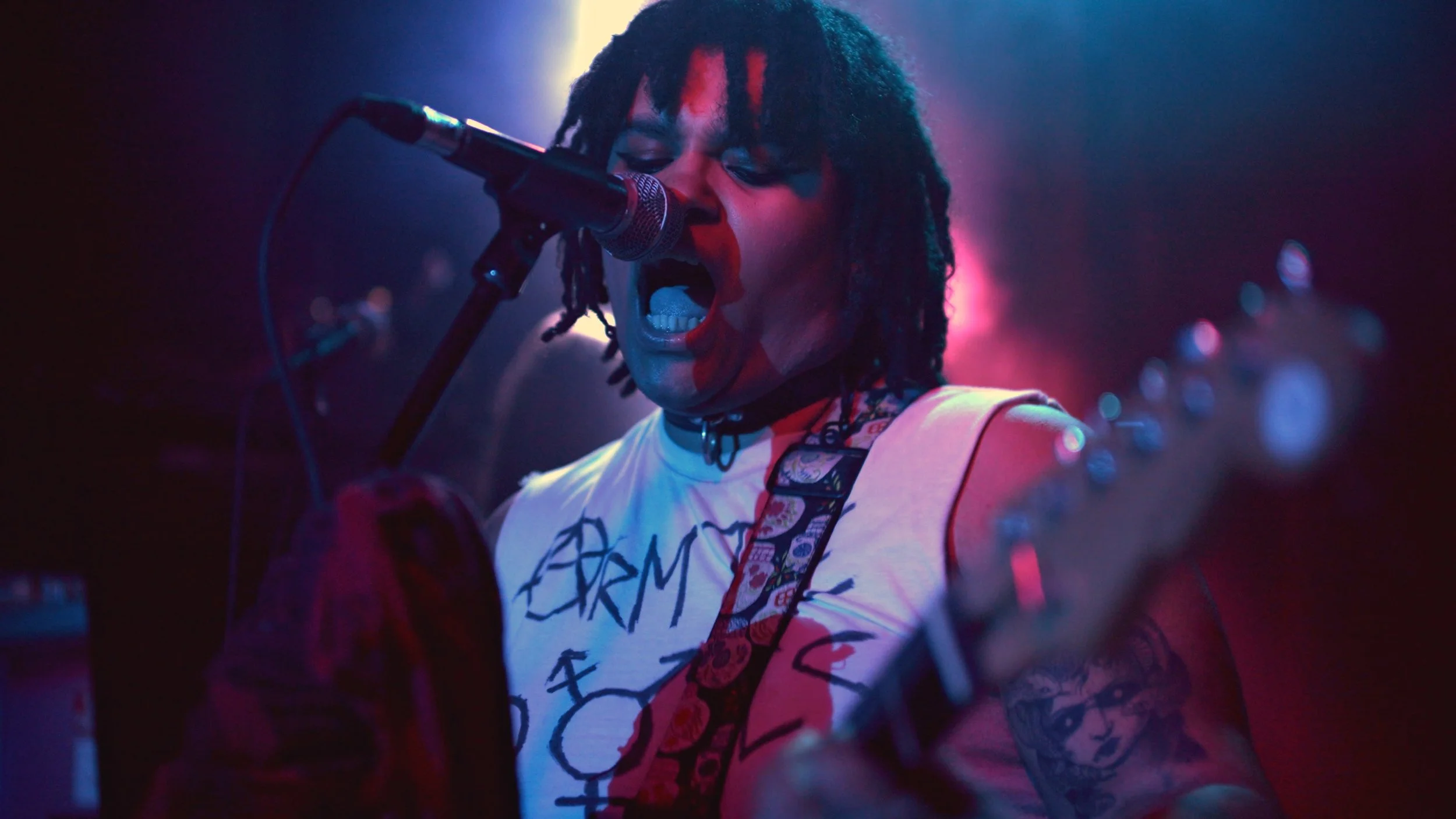
Eevie
Eliza and Nick, your rhythm section has to anchor this genre-blending sound. How do you approach locking into a groove when one song is ska-infused and the next is garage rock?
Eliza Endless (bass/backing vocals): Some of it is for sure technique, maybe it’s choosing when to play with a pick vs fingers on a song or determining if fills are appropriate. Ultimately the question I’m always asking myself as a bassist is “how do I support and uplift this sound?” I very much see the bass as a way to help people feel grounded, so there has to be a level of awareness for what feeling grounded means on a particular song. When moving between genres you have to enter with open ears, ready to listen and support.
Nick Grasso (drums): It definitely helps to be well-versed in the genres, knowing what grooves fit and whats the norm for the style. This might mean playing a busier part when there is too much space in the section, or laying down a powerful downbeat when the guitars are playing something more syncopated, or even better, matching the hits of the tune spot on (just to let you know we mean business). But more importantly, audience response plays a huge role in the way I interact with a song, like where to pull back/push forward to exaggerate the dynamic range, when to heavily embellish and show off chops, and when to keep it simple. It means flailing my arms like a maniac during the breakdown of “users” for all the emo mcr and paramore fans, or for the grunge people, accenting every revolution of “liar” with a big wide left and right crash like Dave Grohl. At the end of the day, we are just trying to get you to shake your ass and push your friends around, and I've got to do what I can to make you feel that way.
Are there specific artists—punk or otherwise—who you feel were critical influences on the band's collective sound or approach to songwriting?
All: We each have our different influences that shape the way we approach songwriting. For Eevie, bands like Against Me!, We Are The Union, Worriers, Bad Cop/Bad Cop, Propaghandi, War On Women, Bikini Kill, and Rage Against The Machine were/are highly influential in the way she approaches music. For Emma, bands like Red Hot Chili Peppers, The Beatles, Tame Impala, and The Last Dinosaurs are influences. She’s a big fan of more barebones indie music. Eliza really takes inspiration and loves artists like Ezra Furman, Laura Jane Grace, Cheekface, B52’s, Queen, and Idles. Nick is more of a metalhead. He listens to artists like Dallas Green and bands like Veil of Maya, but also takes a lot of inspiration from the various other bands he performs in.
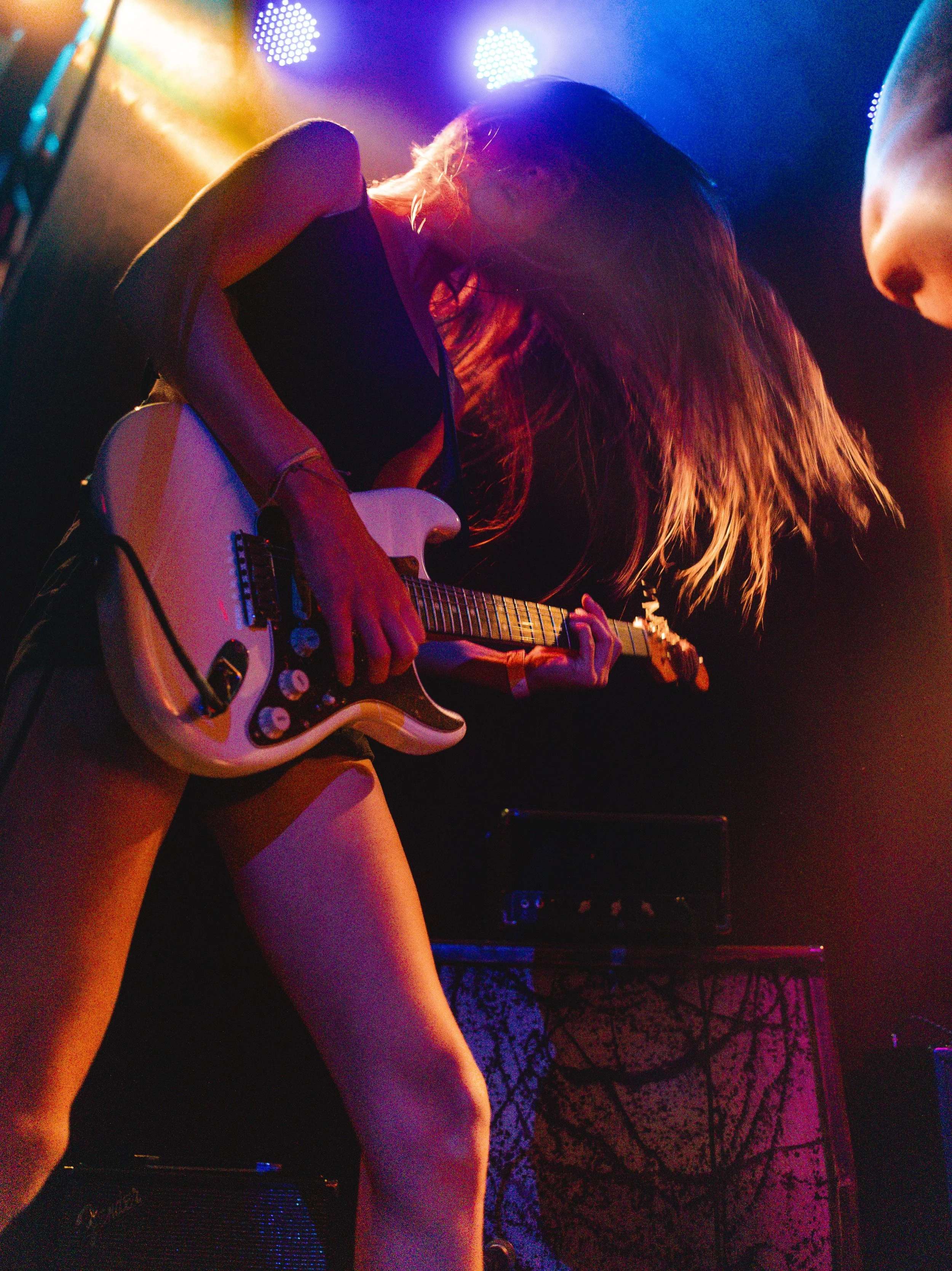
Photo credit: Irisa Zorovich
Now that you've explored so many sounds on the debut, what, if anything, are you finding yourselves drawn to or experimenting with for the next release?
Eevie: As I’ve started developing as a songwriter I think my style has definitely evolved a lot. That’s probably one of the most obvious changes with the next release. The songs feel tighter, they’re catchier and they feel more polished. Part of that is because most of the songs on “Middle Path” are songs that have been in our live rotation for a long time so we’ve really gelled and gotten all these songs feeling well played in before recording. I can think of one song where we definitely get a little experimental which is “Smile A Bit Bigger”. It feels very old Twenty One Pilots, which is one of my all time favorite bands, so I wanted to take production and songwriting cues from them. There’s also a song called “Sometimes” which feels like Against Me! in their “Total Clarity” era. Other than that we stay pretty firmly in punk and hard rock with the next release and don’t explore ska as much as we did on the debut.
You started out playing open mic nights before moving into the Brooklyn punk scene. Can you share a key learning experience from those humble beginnings that still informs how you approach live performance today?
Eevie: The biggest lesson I learned from my time at open mics is to not be afraid to share your art. I was just learning guitar and songwriting when I started doing open mics and I was not nearly as technically talented or well practiced as a lot of people who I played with during those mic’s but I found that people really loved the message and the music not because I was a virtuoso but they connected with the heart of the music and it evoked emotion for them. You never know what someone else will see in the art you create so I would always encourage people to share what they make because it may become really special to someone in an unexpected way. One of my fondest memories from when I was doing open mics was when someone came up to me and gave me a hug after playing a song that made me tear up onstage. They encouraged me to stay strong and said that my music meant something to them which meant the world to me as a young artist and still does to this day. There's a lot of power in being vulnerable.
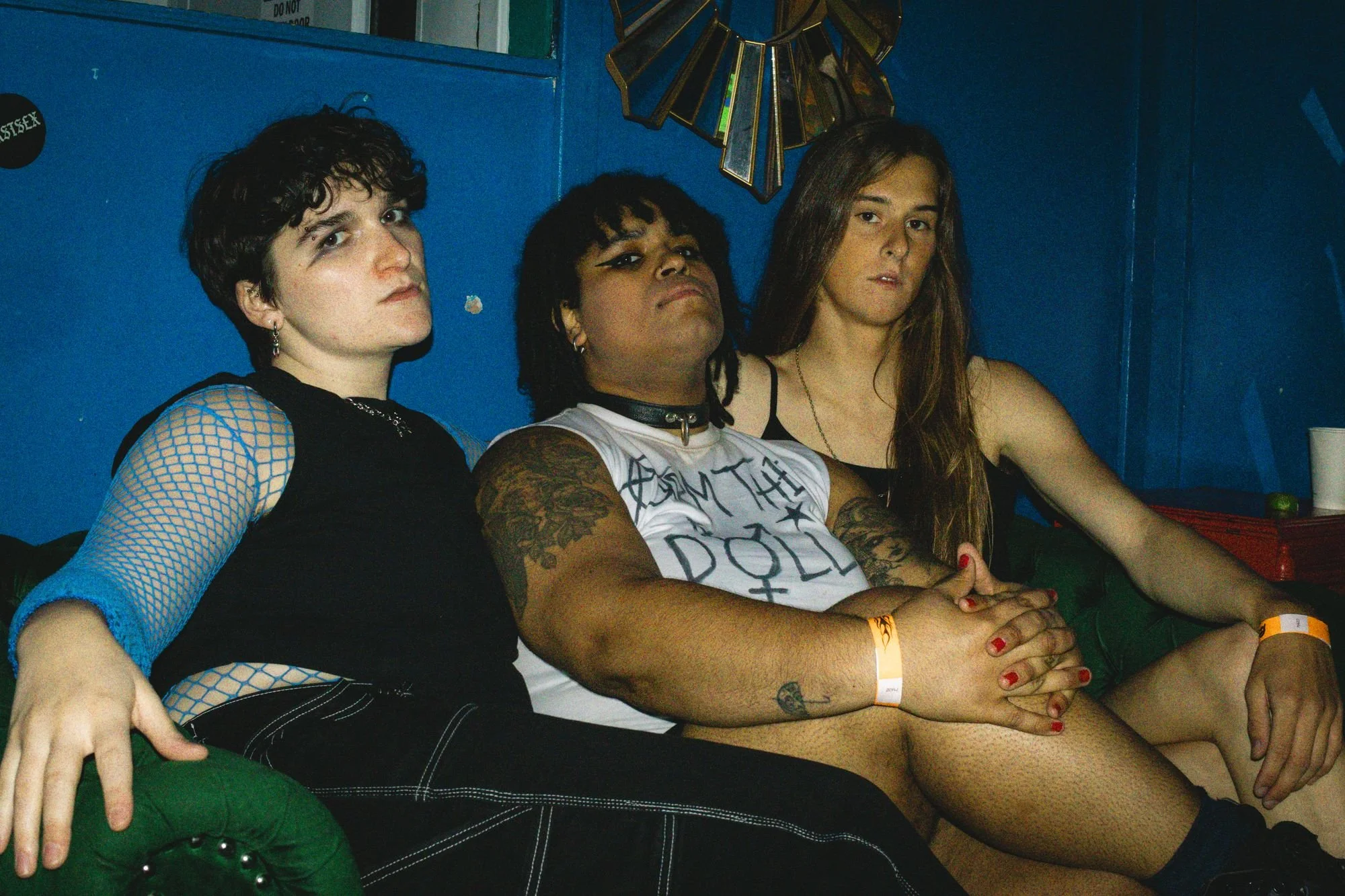
Photo credit: Irisa Zorovich
Playing major festivals like Stoopfest and Punk Island is a significant achievement. How does the energy and preparation for a headlining club show compare to playing for a massive, diverse festival crowd?
All: This is going to sound so pretentious so please be forewarned. We hardly really practice to be completely honest. A lot of it is scheduling and we’re all very busy people but we also just don’t have the money either to be practicing on a regular basis so a lot of the times we just put our trust in each other to keep up with the songs and send voice memos for new tunes we want to play. We’re all very musically tapped in with one another and are good at picking up on how songs should sound and what we need to bring to the table, so for most of our club shows we don’t get a practice in, but for festivals or bigger shows we definitely try to get into a room together and hammer out any kinks for a couple hours. We also like to use practices to introduce each other to new songs and bounce ideas off each other. As far as the energy goes, we really feed off the crowd. We love crowdwork and so it’s always such a blast to play for a crowd that’s equally excited to be there as we are and give their all just like we do onstage.
The Brooklyn DIY punk scene is known for its intensity and community. What is it about this specific scene that has allowed the band to thrive and build such a passionate following?
Eevie: I think one of the things that makes our scene so special is just the amount of love we have for each other. There is also, such a sense of camaraderie where we'll book our friends' bands pretty often or share unreleased demos with each other. I'll see friends at practically every show I go to and we'll queen out like old homies. There is such a genuine respect for each other's art that I think is very prevalent in the Brooklyn scene. I'm genuinely so proud of all of my artist friends and all of their incredible achievements.
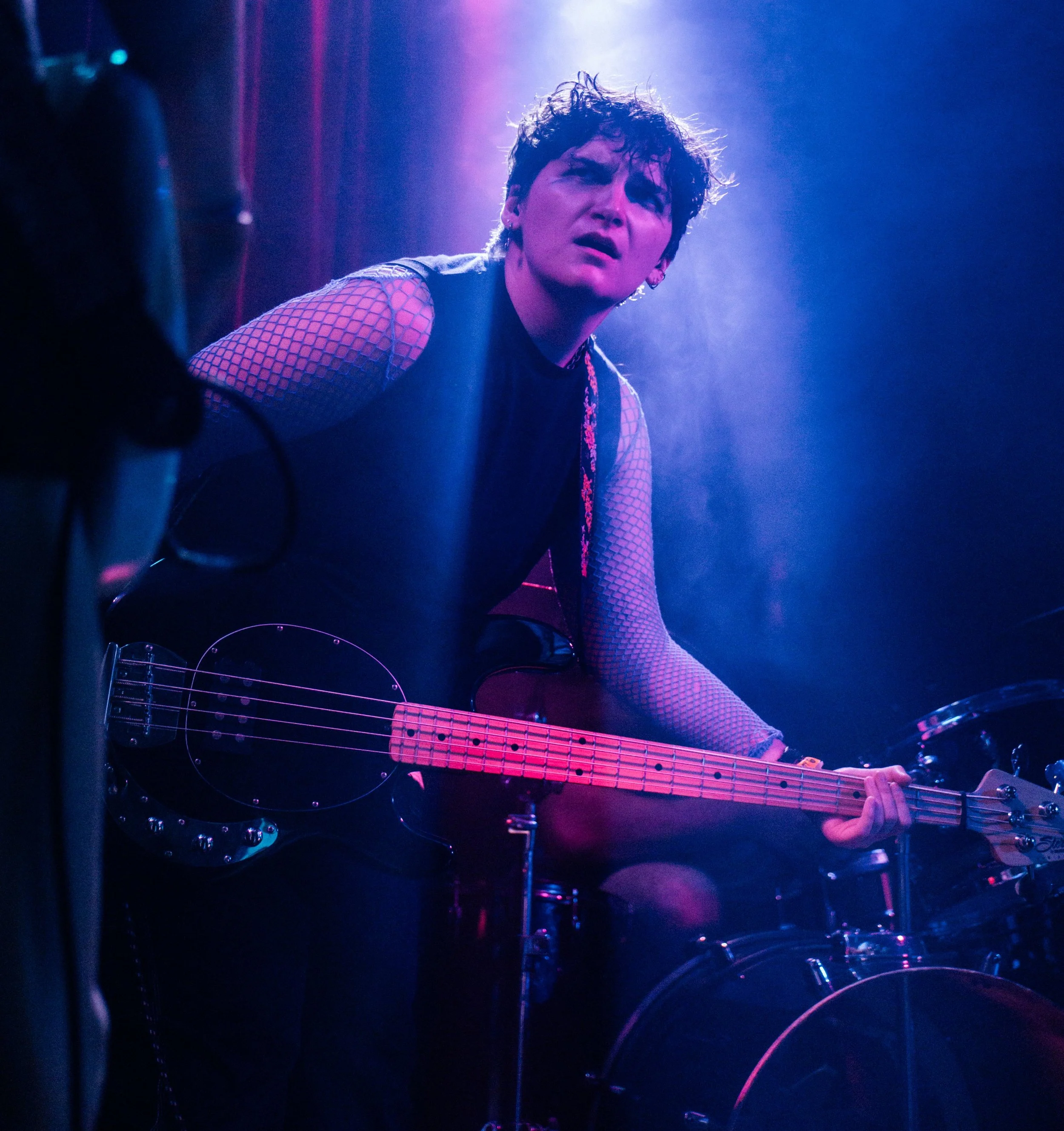
Eliza
Of all the shows you’ve played, is there one specific performance—maybe one where the crowd's reaction or energy was particularly intense—that stands out as a defining moment for the band?
Eevie: One moment that I'll never forget is when we played Vermont for the first time. I hadn't been to Vermont since I was a kid so I had no connections in Vermont really aside from internet friends Burly Girlies, but during that show there was this one kid in the front row who scream sang “Apathy” back to us and that was such a powerful moment for me because it showed me how much community and how much connection we built through this project and through this music. It blew my mind that this person I'd never met before, who had never seen us live nor met me in person knew the lyrics to a song of ours and sang it back to us in a state we had never been to before. I think another defining moment was when we played Punk Island for the first time and there was a bunch of older 40-something-year-old punks who told me that our set reminded them of when they were teenagers and he encouraged us to keep making music because they loved us. Those were a couple pretty incredible moments.
Looking ahead, what is the ultimate goal for Eevie Echoes & The Locations? What would success look like to you beyond album sales and touring?
Eevie: I think the dream honestly is to be able to live off of music. Being a professional musician in any capacity would be truly a dream come true. If I could make a living off of doing the thing that brings me the most joy in the world, that would be the pinnacle of success to me.
For young queer artists who are just starting out at open mics, what is the single most important piece of advice you would offer about turning personal struggle into powerful music?
Eevie: The single and most important piece of advice that I would offer to a young queer person who is trying to turn their personal struggle into music is to be as honest as possible and don't be afraid of vulnerability. People can really connect to a message when it's coming from a real place and that’s a big part of how I found and built up my community. I needed queer art so badly when I first came out. I thought I was losing my mind and I thought I would never live a “normal” life because I was trans. I was so deeply afraid of everyone I'd ever known abandoning me but instead I found the most beautiful community and have an even more loving family than I ever had pre-transition. There's power in identity and there's power in community.
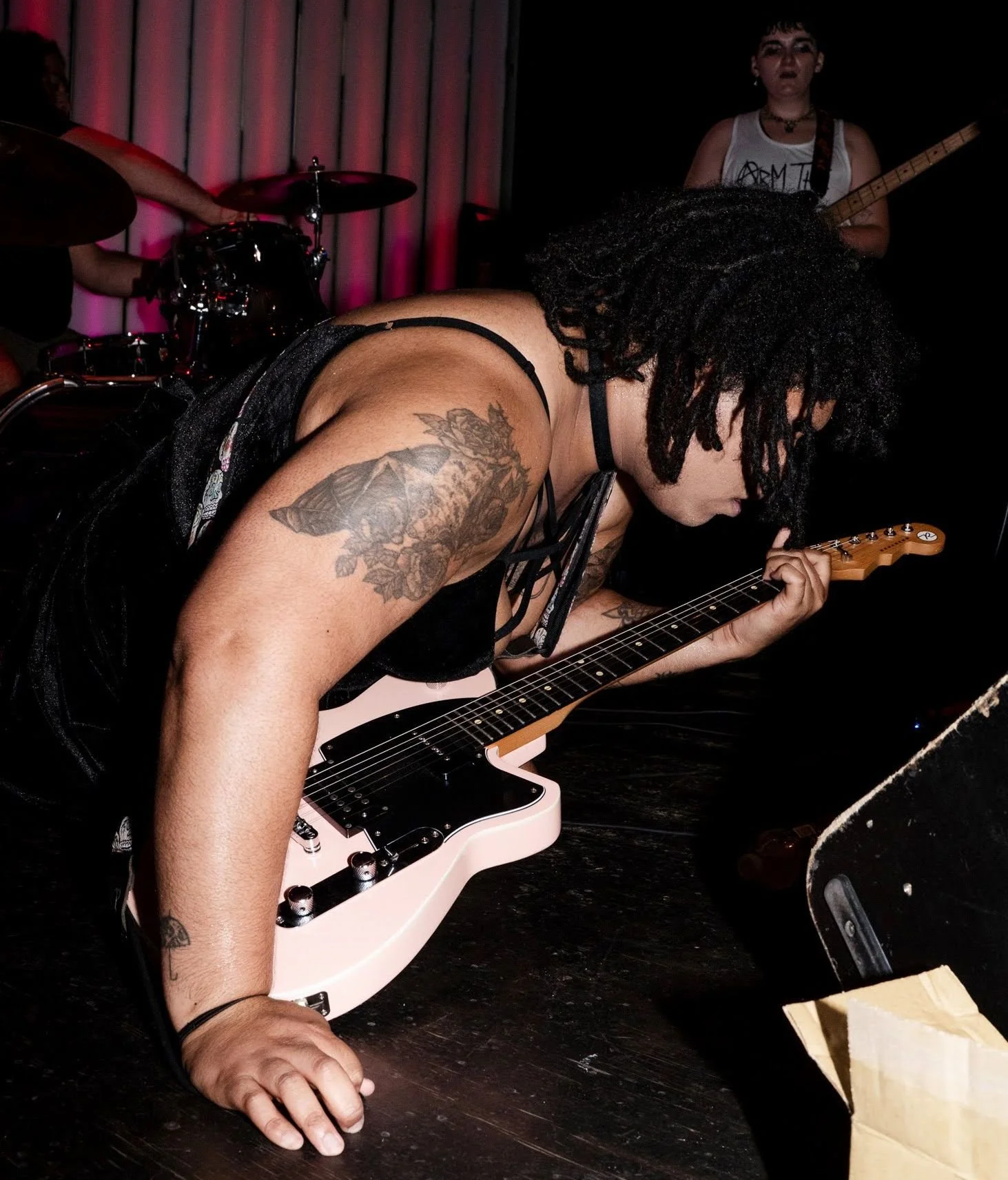
Eevie
Anyone you'd like to thank?
Eevie: I'd really like to thank all of my friends who have truly seen me through some of the hardest times of my life and haven't turned their backs on me. That's invaluable to me. I specifically want to shout my buddy (and our OG bassist) Jon and his family for being such a huge support system in my life and during my transition. I also want to thank Emma specifically who has been a dear friend of mine for years and has taught me the value and beauty of sisterhood. Lastly, I want to thank everyone in the queer punk scene who was formative for me and my revolutionary queer elders who fought like hell for me to be able to live openly and honestly and continue the struggle. Being in this music scene saved my life. I love y'all so much.