

Not Just A Viral Sensation: An Interview With California’s F.A.T. Betty
By Staff | May 18, 2026
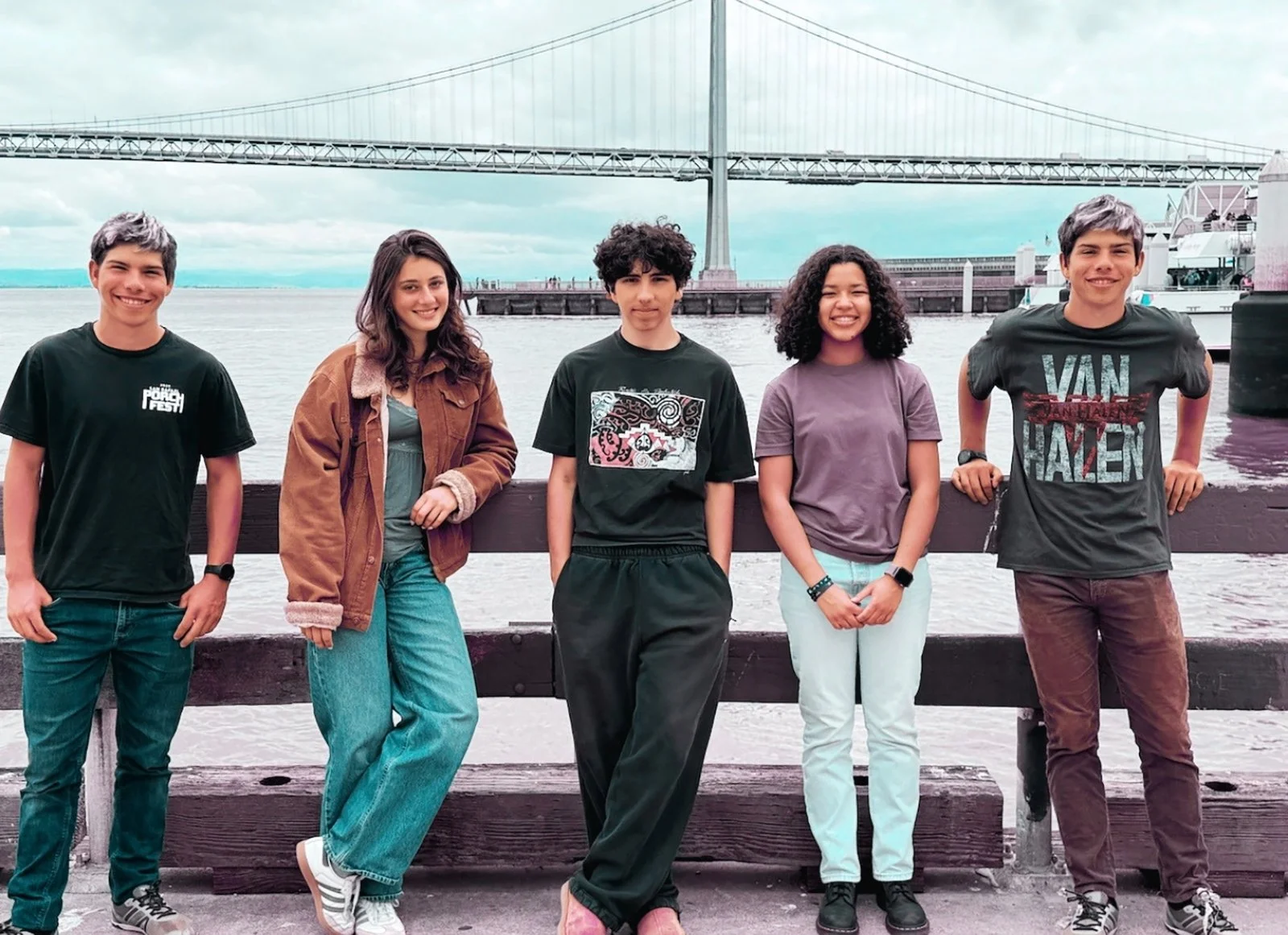
If you know F.A.T. Betty just from seeing them on YouTube, you’re missing out on a good part of their story.
Hailing from Northern California, an area steeped in music history, F.A.T. Betty is a teen rock band that defies easy labels. Blending complex jazz theory with classic rock energy and funk grooves, the group catapulted from humble open mics to headlining the Fairfax Festival Main Stage after their cover of Rush’s “The Spirit of Radio” unexpectedly went viral. The band balances ambition and a jazz-schooled rhythm section, all while looking forward to festivals, continued online success and figuring out how to keep their unique chemistry alive beyond high school.
What was your collective reaction when your video cover of The Spirit of Radio started going viral, and how did that shift your perspective on what was possible for the band?
Teo: I was amazed. We were only posting our videos on YouTube and Instagram so we would have something to show to venues, I never thought that people on social media would actually watch them. It was crazy, just seeing the views go up every day. I think it helped us realize that we had something special in our band, and gave me a lot of encouragement, knowing that we had fans all over the world.
Petra: I didn't expect anything to happen when we posted our videos. Many of us barely used social media but none of us focused much on YouTube. It wasn't until it was brought to me by my parents that Danny Sapko reviewed our Rush cover that it went viral and then it just kept happening every couple of months by different well known YouTube reviewers. One time I even got recognized from the Spirit video which was such a crazy moment (to be fair, it was at a gig; but we weren’t on stage!). I didn't expect to make money as a band but realized this was a really good way to get gigs and make some money. I will say that with the positive comes the negative and there are a lot of people that have unkind or creepy words, especially for a female singer singing male dominated songs.
I also think that YouTube may have affected the songs that I chose to cover because the audience was leaning toward classic rock.
How does it feel to go from relatively humble beginnings as a teen rock band to headlining the Main Stage at the Fairfax Festival?
Petra: We live in a very musical little city. A lot of Grateful Dead members, fans and musicians live here or nearby, so we have all been raised around live music. The festival is sort of the pinnacle of live shows in a small town like this and it is the highlight of the summer for a lot of people including myself. We got to be a very small part of the festival last year on a Zeppelin-themed float which was still a BLAST, so to be back at the festival, but this time on the Main Stage was a total surprise and I am beyond excited.
Teo: Honestly, I still feel strange playing in venues like Sweetwater and the Fairfax Festival, where I would go watch all the best local bands perform. Going from playing at open mics and fundraisers to gigs with hundreds of people was a dream come true, and I am very grateful to the band for making this a possibility.
With such strong backgrounds in jazz and performance, how do you navigate blending those complex musical influences into the rock and funk tracks you write?
Petra: I don't know if I navigate it well or not or if I blend it. It is definitely difficult to blend such different genres. It is hard to put ourselves out there as a jazz band since jazz is not as mainstream and it's hard enough to get kids to our school jazz shows. As much as I would like to be a little jazzier and funkier, I am still just trying to get adults and kids to show up to our gigs. Hopefully one day we can write and create more on our own terms.
Bella: In jazz, the main job of the bassist is to understand chord tones and outline them in walking bass lines so that both the listener and other performers can have context for the melody and an overall foundation for the song. By learning more about how to do this, I’ve become more creative with the notes I choose in the bass lines of our songs. Understanding more about jazz has brought significant benefits to my playing across genres because the music theory I’ve learned as a result of it has shown me why certain note choices or phrases evoke a certain feeling which is a key aspect of songwriting. It’s also common for people to reference other standards or famous licks in jazz solos which is something I like to do in my own solos when I can fit it in there.
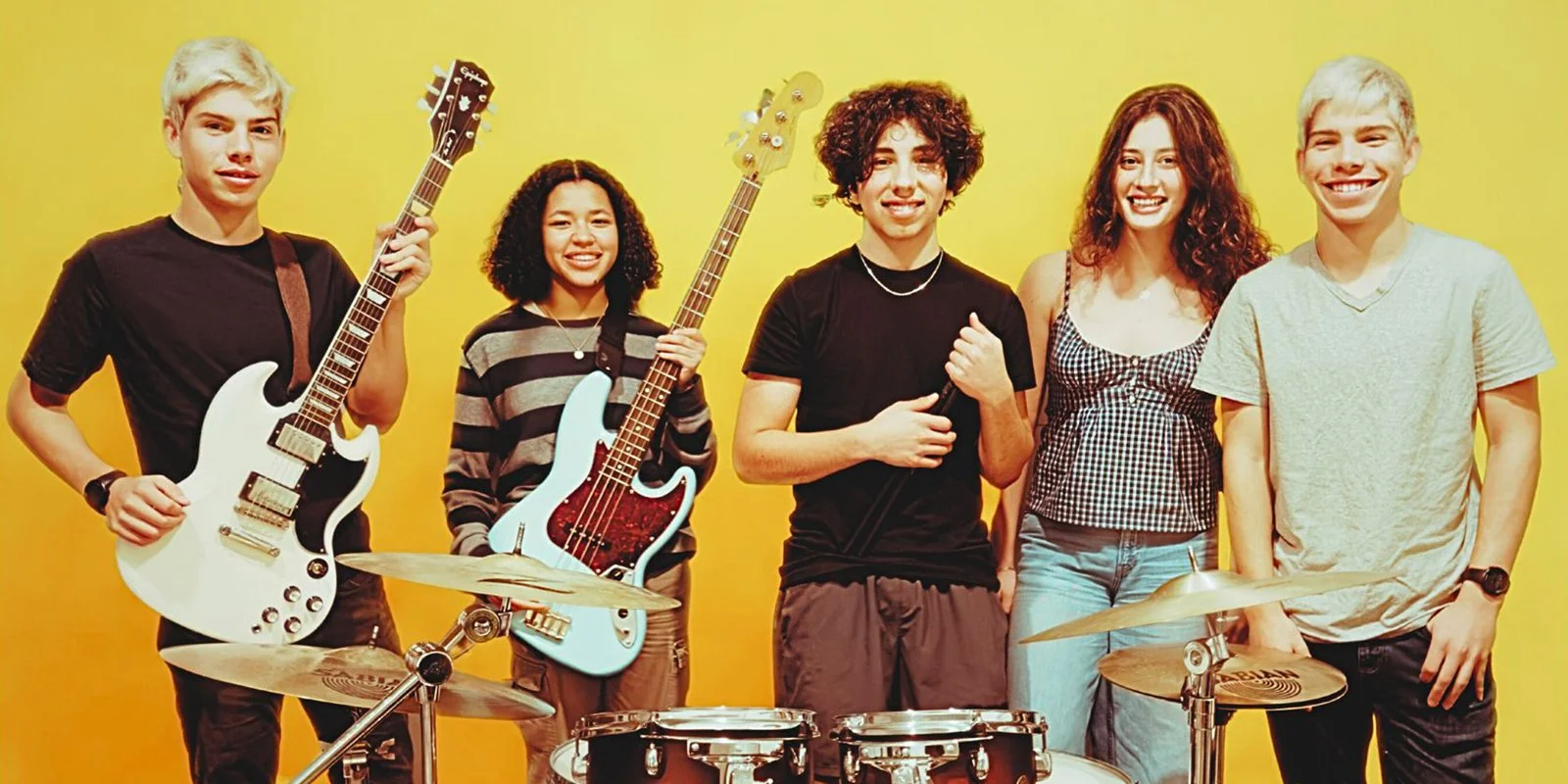
As you head into this transition with the twins starting at UC Berkeley, what strategies are you putting in place to maintain the band’s momentum and chemistry?
Fin: As of now we don’t have a definitive strategy. Playing in the band has been amazing and is something I would like to continue. However Berkeley is a pretty big time commitment so rehearsals may not be as frequent as they are now, especially with the longer drive. No matter the case, I am hoping that it works out.
Petra: That is a really good question and one that we have been avoiding as it may force us to make some big decisions. Do we all quit? Do we attempt to replace them? Nobody really wanted to talk about it. Starting over would be really hard with how far we have come and the platform we have built. I'm grateful that they are nearby, but they also have to start their lives in school. Luckily we have played long enough (2+ years almost everyday in and out of school) that we have a strong set list and we don't have to practice everyday for shows. But we still need to figure out how to write and practice occasionally.
Teo: I think we are still trying to figure out the answer. There are a lot of unknowns right now, especially about what college will be like for Fin and I this fall. Definitely hoping everything will work out though.
Petra, given your commitment to social advocacy and leadership, do you find yourself intentionally weaving those personal values into the lyrics you write for the band?
I don't know if I write political lyrics as much as I write lyrics that are personal to me. I guess I don't even feel like I am taking a position or a stand but it probably comes out that way. I have VERY STRONG opinions on everything and a big mouth with no filter, which can come through in my lyrics for sure. I don’t like what is happening in our country, around the world and often in my small life. Being a teenager is hard right now for a lot of reasons and writing about it helps me to express myself but I am not trying to change anybody's mind.
It’s actually been much harder than I imagined writing lyrics that have a story or an opinion because people react and take it personally. What feels good to write and sing in the moment doesn't always go over as well as you would hope.
Fin and Teo, does your aptitude for computer science and app development ever influence the way you approach sound design or the technical side of your music production?
Fin: While I am not into sound design or music production, I managed the more technical aspects of the band such as setting up a YouTube account, editing and stitching together videos of our live performances, and handling the band’s finances. It definitely helped being familiar with computers, like picking up new computer skills, setting up spreadsheets, and navigating how to set up YouTube or online merch stores with royalties.
Teo: A little bit. I think mainly the iterative process of programming and having to do a lot of problem solving and research is what has translated to F.A.T. Betty. Most of it, I feel, was just trial and error, figuring out what worked and what didn’t, and then going from there.
Isabella and Julian, how has your experience with the SF Jazz scene and the Marin Symphony Youth Orchestra shaped the way you interact with the rhythm section of the band?
Julian: I started taking drum lessons eight years ago with a great teacher here in Marin named Bob Tatum who I still study with today. When I was in 7th grade, I joined the Marin Symphony Youth Orchestra where a percussionist plays a wider range of instruments, including timpani, cymbals, and bass drum. Playing music like Overture to Candide by Leonard Bernstein introduced me to more music theory and helped me gain a deeper understanding of the interaction of the rhythm section. In the symphony, you have to be in sync with 70 other players and there is a different level of focus and timing that comes in handy when setting the rhythm with this band.
Bella: At SFJAZZ, communication between the rhythm section, especially between the drummer and bassist, is constantly stressed so I’m always trying to catch the rhythms Julian emphasizes to bring our parts together. This makes our interaction take an active role instead of us just playing our own individual parts. A lot of the teachers at SFJAZZ also talk about how music should be a conversation so when I’m playing with the band, I apply it to our music too. I want my bass lines to create space for others while also knowing when to fill the space.
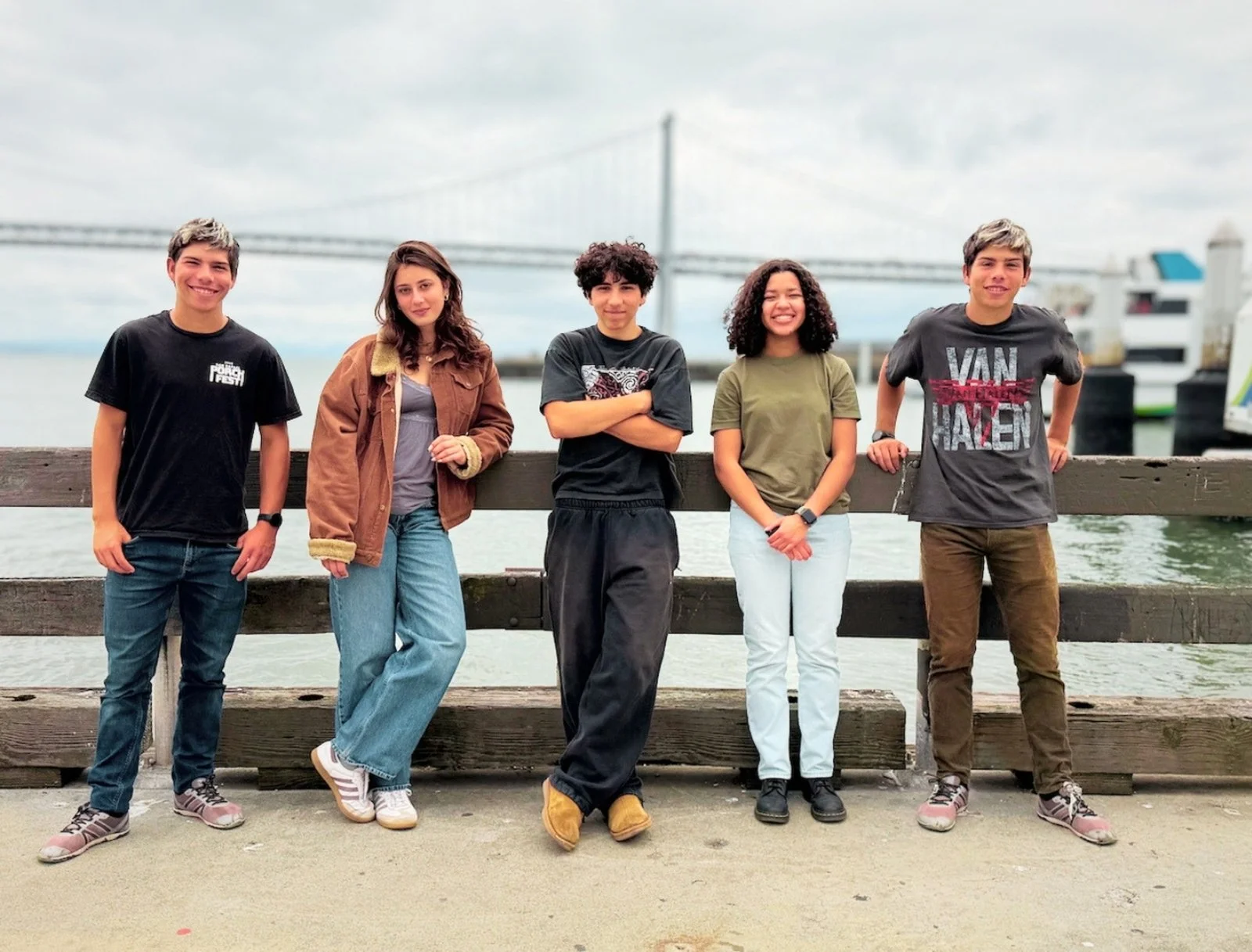
How does working on side projects like the acoustic duo help you grow as musicians and bring fresh ideas back to the full band?
Petra: Working with Bella has been incredible for so many reasons. Bella is such a talented guitar and bass player, so having her being able to play out melodies in my head and craft new ones has opened up a whole new world of possibilities. The sound is so different and I personally feel as though I am writing for an entirely different audience so I can definitely be more feminine. FAT Betty has a more masculine energy, which is awesome but hard to keep up sometimes being a teenage girl and all. I wrote one song at UCLA music camp last summer that FAT Betty does play and ideally we could integrate more of my originals, but the style is very different. Both bands are still so new in some ways and mixing them is hard. We could probably use some direction or a producer that could help us, but we are all basically figuring it out together while also figuring out school, social lives and other music projects.
Julian: In my free time I compose instrumental pieces using programs like Logic Pro and Reaper, both digital audio workstations (DAW). I love doing this because it helps me build my music theory while understanding the dynamic of other instrumentalists through writing.
Bella: Before I started working with Petra on our own originals, I would write casually every now and then, but having a partner in songwriting definitely put more motivation into doing it regularly with focused goals. Working with another person on originals has also taught me to be open to the new directions a song could be taken in. I have also really enjoyed the process of taking inspiration from the wide variety of artists I listen to. Part of that process is learning more songs by the artists I like so that I can understand what about their songs interests me. I also do this with bass lines I enjoy and those influences definitely become incorporated in my playing.
Looking at your trajectory so far, what is the ultimate creative vision or dream gig you are currently working toward as you move into this next chapter?
Petra: I can’t speak for everyone but my dream gig would be in front of a huge audience at a large festival like Outside Lands in San Francisco. I want to have all- the college experience and a band, so going on a tour and becoming huge isn't necessarily the goal. Of course I would love to hear our songs on the radio but I can't even imagine that!
Anyone you'd like to thank?
Petra: I would like to thank my parents for always coming to my gigs and immersing me in music throughout my life. My dad plays in a band so he helps get us gigs, and gives me guidance and occasionally a stage to play on. My mom does a lot of managing, organizing, and nagging me which can obviously be annoying at times, but is ultimately what keeps me afloat in the midst of high school, music, sports, and everything else that comes with high school life.
Teo: I would like to thank my high school’s music program. That was where I first started playing keyboard, and the music classes motivated me to keep learning and improving and were a great experience in playing in a band. Also, our music teacher, Mario Aparicio, who I have had for the last 3 years was probably the biggest reason our band is where it is at now. He does all the work behind the scenes helping people improve and growing a strong music community at our school that our band formed out of.
Julian: I’d like to thank my drum teacher Bob Tatum and our school music director Mario Aparicio. And of course my folks and my 10-year-old sister Stella who’s had to go to a lot of music shows over the years.
Bella: I’d like to thank my family, my school’s music director, Alison McIvor, and my bass instructor, Lily Stern.