

A Long Road: An Interview With Nashville’s Mourning Joy
By Staff | October 27, 2025
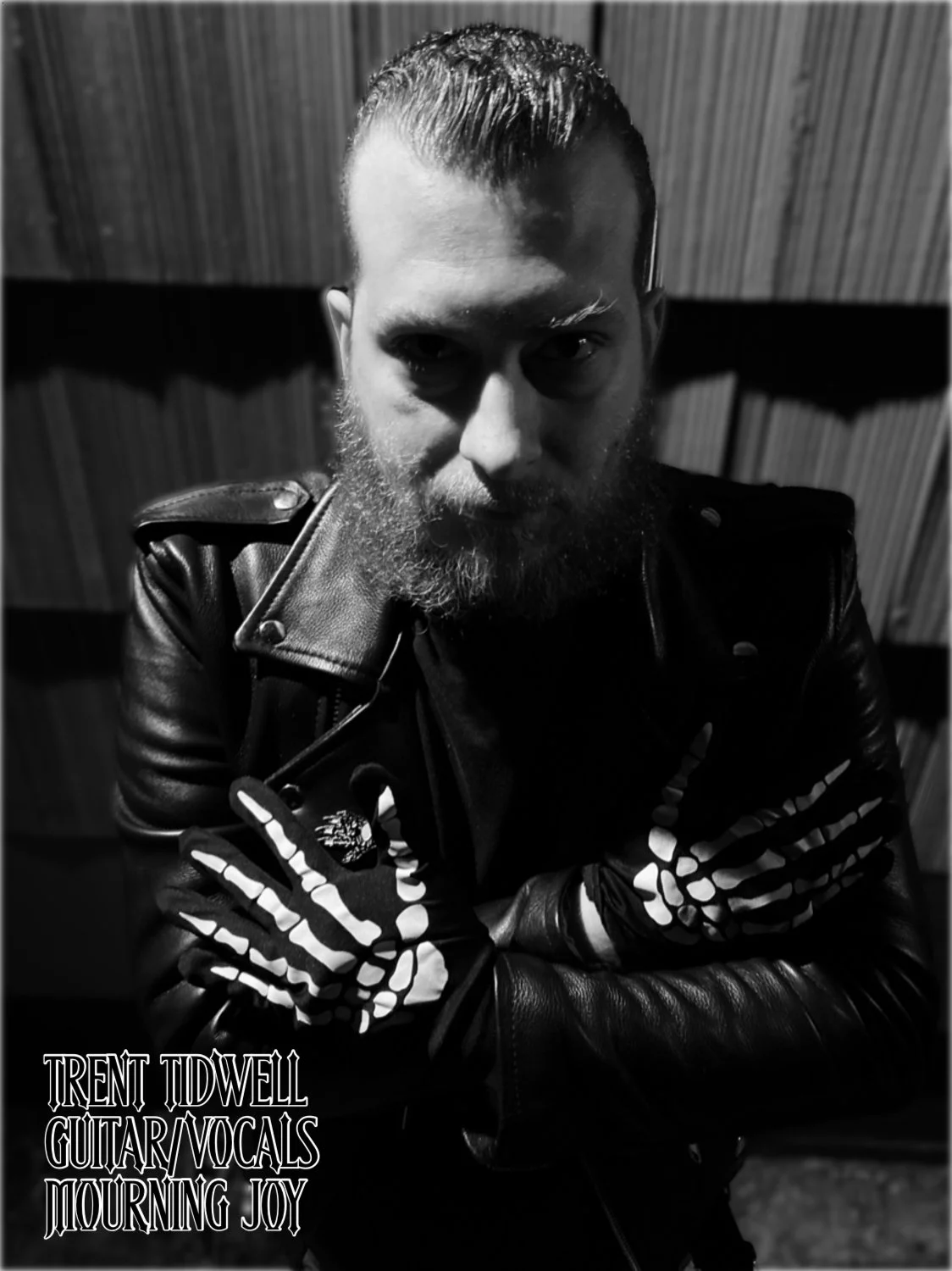
For the Nashville-based band Mourning Joy, it's been a long road. Initially conceived of as a name in high school by singer/guitarist Trent Tidwell, fifteen years later it has finally become a reality. Mourning Joy is heavily influenced by Alkaline Trio, Rancid, Lawrence Arms, Banner Pilot and The Misfits, as well as by Tidwell's own admiration for the native Nashville music scene. The band is currently working on an EP with plans of touring in 2026.
We had the opportunity to sit down with Trent to discuss a wide variety of topics, including where he gets his inspiration, the prospect of getting older, and how he channels some of the despair that we all feel in everyday life into his music.
How did the name Mourning Joy come about, and what does it mean to you now that it's a realized project after all these years?
Trent Tidwell (guitar, vocals): Interestingly enough, the name came from an old gospel song that includes the line “In the Morning of Joy.” I thought it would be cool to twist that into Mourning Joy — a play on words that also reflects everyday life for many people. We’re all secretly carrying some kind of pain, yet we still try to find joy wherever we can. It means a lot to me to finally see this vision come to life after years of dreaming it up. The positive reception to the two singles we’ve released so far truly means a lot.
Fifteen years is a long time for a concept to marinate. What finally made this the right time to launch Mourning Joy?
Trent: There are a lot of emotions tied to this moment — mainly the realization that I’m getting older and that it’s now or never. What kept this from happening before was, honestly, myself. I battle depression and anxiety, and to be truthful, I was afraid of everything that comes with doing this — playing live shows, putting my feelings out into the world through songs, all of it.
I’ve dabbled in music for a long time, mostly recording and performing for friends and family. I’ve tried making synthwave and straightforward rock, but my heart has always belonged to punk rock — that’s what I grew up on. I turn 35 in November, and I’ve come to realize this is my last real chance to do something meaningful with the music I love — the music that truly has my heart. This is it.
Given that you're based in Nashville, a city famous for country, how does that environment influence or contrast with your punk sound?
Trent: I’m a fan of country music — just not the pop country you hear on the radio. I have a ton of respect for folk and traditional country artists. There are a lot of lyrical poets in Nashville, but unfortunately, Music Row doesn’t have the taste to recognize that.
We’re a straight melodic punk band. Nashville has a huge music scene, but only a handful of punk bands come from here — and the ones that do are incredible. Snooper and Free Throw, just to name a few. The majority of music that gets churned out here is mainly pop country, so you really have to dig to find the bands you love. But they’re here.

What is one non-musical thing — a book, a film, a life event — that has had a significant impact on Mourning Joy's lyrical themes?
Trent: Definitely a lot of horror movies. Alive Tonight, which we released over the summer, was completely inspired by Bela Lugosi’s Dracula. I also love listening to crime podcasts — there’s a lot of that content floating around in my head when I listen to true crime shows and documentaries.
I’m also a huge reader. I love horror and thrillers, and I’ve got some ideas inspired by Riley Sager’s Survive the Night, which is one of my favorite modern novels. We’ll see where that goes 😉.
What's the meaning or story behind the very first song you wrote for this project?
Trent: Our first single, Blood on Broadway, was based on an old unsolved murder from the 1920s in Nashville. Stories like that give me chills. It’s that eerie feeling — like walking through Walmart and realizing you never really know who you’re passing by. That’s pretty much what inspired Blood on Broadway. Nashville has a dark history, especially Broadway if you dive into it. An interesting place that has changed so much over the past 10-13 years.
For a new listener, how would you describe Mourning Joy's sound in just three words?
Trent: Dark, Melodic, Melancholy.
How do you balance the distinct sounds of your influences — the darker, literary style of Alkaline Trio and Lawrence Arms versus the classic horror-punk of The Misfits?
Trent: With Alkaline Trio, I’ve always been able to really connect with the lyrics. Matt Skiba’s themes of desperation, failure, and those criminal and horror elements captivated me at a young age. Then there’s The Misfits — their horror imagery pulled me in and made me want to watch old black-and-white horror films and dive into comic books.
So, in a way, my whole life has been shaped by two bands — where scary meets melancholy! Haha! And The Lawrence Arms — well, they’re just great, period. I love their production and their sound; it’s just pure, melodic punk rock.

If you could tour with any one of your influences right now, who would it be and why?
Trent: For me, Tegan and Sara. Would it be a strange lineup? Yes — but they came from the punk scene and have been highly influential to alternative bands. I actually have two favorite bands: 1a, Alkaline Trio, and 1b, Tegan and Sara — completely equal. I love their audiences; they’re incredibly respectful and just fun to be around. Plus, Tegan and Sara are genuinely good people and seem like an absolute blast to hang out with.
Are there any local Nashville bands, regardless of genre, that have inspired you or that you admire?
Trent: First and foremost, Nashville royalty: Paramore. As far as I’m concerned, Hayley Williams is the mayor of Nashville. But there are two older bands from here that immediately come to mind — The Creeping Cruds and Radio Death Wave. Both were fantastic bands that, unfortunately, aren’t active anymore.
Which one of your core influences (Alkaline Trio, Rancid, Lawrence Arms, Banner Pilot, The Misfits) do you feel is the most prevalent in your current material, and why?
Trent: I’d say our sound is early Alkaline Trio (Good Mourning era) meets Banner Pilot — with a fling involving The Misfits. The Misfits are more of a lyrical influence than a musical one, though. That said, while mixing our upcoming EP, I’ve really been digging the lo-fi sound of Earth A.D. A lot of people don’t like that production style — including Glenn — but I think it’s their best, in more ways than one.
What is the one specific musical element (a particular type of guitar riff, a drum beat, a vocal harmony) that you feel defines the core sound of Mourning Joy?
Trent: I’d say guitar — mainly because I’m the guitarist, haha. Realistically, I’d like to hook people with the music first and have them think, “Hey, what are they singing about? Because that music is sick!” I’m not Bruce Springsteen, so my writing abilities are still a work in progress — but hopefully, people get drawn in by the music first!
You're currently working on an EP. What stage are you at, and what's the biggest challenge you've faced during the recording process so far?
Trent: It’s currently being mixed, and I’m working on two or three more songs to add to it. Realistically, I’d like the release to have anywhere from four to six songs. I’ve got about eleven written, but I’m always working on more — you want the best of the best to make the cut. For me, the hardest part is mixing. I’m handling it myself, and I’m incredibly indecisive about so many details — so honestly, my co-producer is anxiety.
What's the working title of the EP, if you don't mind sharing, and does it represent a central theme or story for the collection of songs?
Trent: As Above, So Below. It’s not what a lot of people think. Most people use that phrase in a spiritual sense — meaning that events mirror each other, and whatever happens in the universe is reflected within the individual. My interpretation, though, is different: hell is below, and here on earth, we’re already living it. Hell on earth, basically. As Above, So Below.
Lyrically, what common threads or emotions tie the songs on this debut EP together?
Trent: Mostly feelings of despair and emptiness. We’re living in divisive, troubling times, and instead of making a Facebook or Instagram post about it, I’d rather write a song that reflects the moment. You can also expect a few horror stories to surface in some of the songs!
Which track on the EP are you most excited for people to hear, and why?
Trent: "Villain” is about how I see myself through other people’s eyes.
How important is it to you to capture a raw, live sound on this debut, or are you aiming for a more polished studio feel?
Trent: That’s a really good question — you want to toe that line carefully. On one hand, I don’t want to record something that sounds terrible just because some people think that’s “the punk way” to do it. We have the tools and resources at home now to make a great recording, and I want to put out something that could catch the ear of someone who might not normally listen to punk rock. I want it to sound good. At the same time, I don’t want to over-polish it and make it sound plastic or robotic. I like to aim for a middle-of-the-road production style — something raw enough to show heart but clean enough to show what I can do as a mixer. I really lean toward the production styles of Jerry Finn and Matt Allison. In a perfect world, my recordings would sound just like theirs.
Anyone you'd like to thank for their support?
Trent: Yes! The Whole Kameese up in Boston — they’ve been incredible. They’ve added our song Alive Tonight to multiple playlists at wrestling shows around Boston, and I really appreciate their support. I would also like to thank everyone at knifetwister records for giving us this opportunity to be spotlighted. You all do tremendous work in the music scene, and it’s evident with every post and interview you do. Thank you (editor's note: hey, thanks, appreciate it!!) I also want to thank my friends and family, especially my brother Kevin. He created the artwork for Blood on Broadway and wrote and sang the second verse. He’s my best friend and one of my biggest influences.