

by Dan Dellechiaie | October 27, 2026
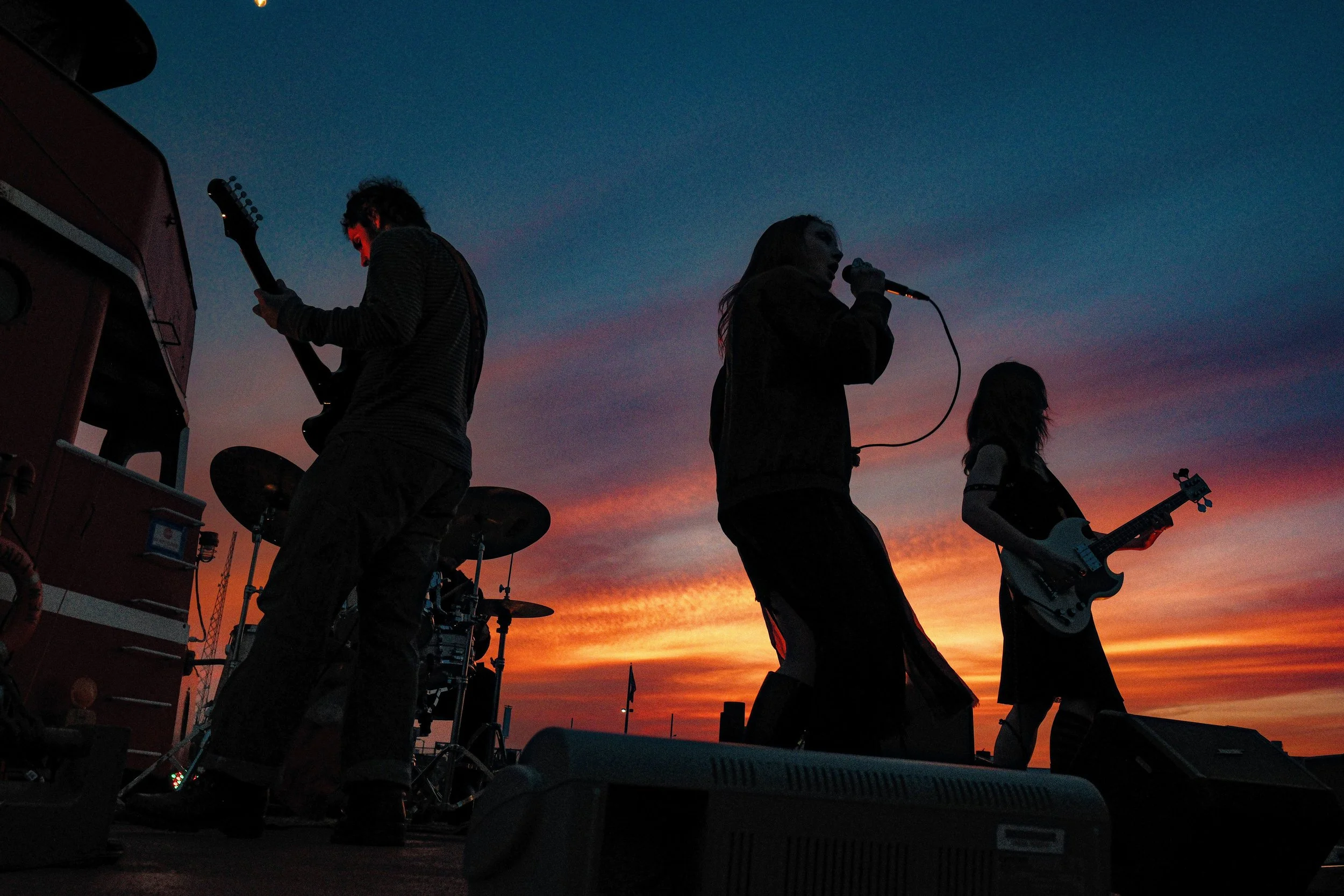
Photo Credit: Jay Trevino
Now being a dark music mega fan, I’m no stranger to hopelessness. But when I heard lyrics like, “I want to be no one / I want to be no one” and “I talk to God / but the sky is empty” the bluest sky turns gray and the floor beneath my feet transform into an inky abyss. These lyrics belong to Seraphine’s Cleaver, one of the most interesting bands I’ve seen perform in New York. Their blend of poetic existentialism with heavy goth rock will tear your face off.
knifetwister records new york caught up with Seraphine’s Cleaver in a dimly lit café just before the last candle flickered out.
Where does your band’s awesome name come from? What’s your origin story?
Sarah (vocals, poetry): The name “Seraphine” derives from Seraphim—a type of heavenly angel referred to as the “burning ones.” The cleaver is symbolic of the contranym “to cleave”—a word meaning to cut or sever something in two, but it could also mean to adhere to something or bring something firmly together. The word has two opposite meanings depending on how you use it, the same way we as people contain multitudes within our one body.
When I saw you guys play with LOST DOG at The Broadway, your lead singer wrote poetry on stage while your string section played their instruments on the floor. Where did this fascinating interlude come from?
The explosive moments that occur during our set grew very naturally over time from the sheer energy of the live performance. It is a culmination of all the tension we’ve been building, and that tension needs somewhere to release. You could say it’s a form of catharsis. But there is also this element of connection which is unique to live music, to being in the room together. In these moments, we bring the audience in, break down the walls between who is “participating” in the performance.
Sarah: Before being in a band, I did gigs as a poet-for-hire where I would write poems on the spot for people on my typewriter. This experience opened my eyes even more to the strong connection poetry build. The way in which people resonate with the words has shown that all feelings are universal and no one is truly alone in their thoughts. We wanted to bring this deep human connection to our shows, making our audience members feel seen and bond over the unspoken.
There are too many rock band’s singers trying to sound like autotuned pop stars. I’m frankly sick of it. What I love about your vocals is their menace, their hopelessness. They’re like Ian Curtis by way of Lana Del Rey. Talk to me about your vocals. What energy are you drawing on?
Sarah: I think it just comes from letting the emotions take over, both from the words and the music, and staying true to oneself. I can’t “conventionally” sing, but that’s not the point. I don’t care about sounding pretty, as many of the things I speak on are not. Art is meaningless if it’s not 100% vulnerable, and a confession is not honest if it’s trying to sound perfect.
You have two new songs out: “Sylvia Plath's Tartan Skirt” and “When the Waves Go High, My Ship Sinks Low.” What are they about? Loved the screaming on the latter, by the way.
The latest double-single digs deep into themes of existentialism, grief, and the weight of overwhelming emotion. “Sylvia Plath’s Tartan Skirt” is an ode to the icon of confessional poetry and her unflinching bravery in voicing the unspeakable. It was inspired by seeing a picture of Sylvia Plath’s tartan skirt displayed in a museum in London. It gave me chills to see the skirt worn motionless on a mannequin and think about how it was once her body. I felt as though I could see her whole life within that skirt and as if I knew her. The skirt that followed her on her journey through France, hugged her while she sat writing, and probably made her feel beautiful while deep inside she felt strange. That skirt gives evidence to who she was and where she’s been; evidence that she lived. This touches on the broader symbolism clothing has on our mortality.
“When the Waves Go High, My Ship Sinks Low,” is a turbulent metaphor for a split mind navigating the volatile highs and lows of human feeling. Channeling the image of a ship battered by rough waters, the song confronts the cycle of self-sabotage, the inevitability of rock bottom, and the exhausting struggle to captain emotions that feel inherently uncontrollable. Each day we must make the choice to ride or give in to the shipwreck.
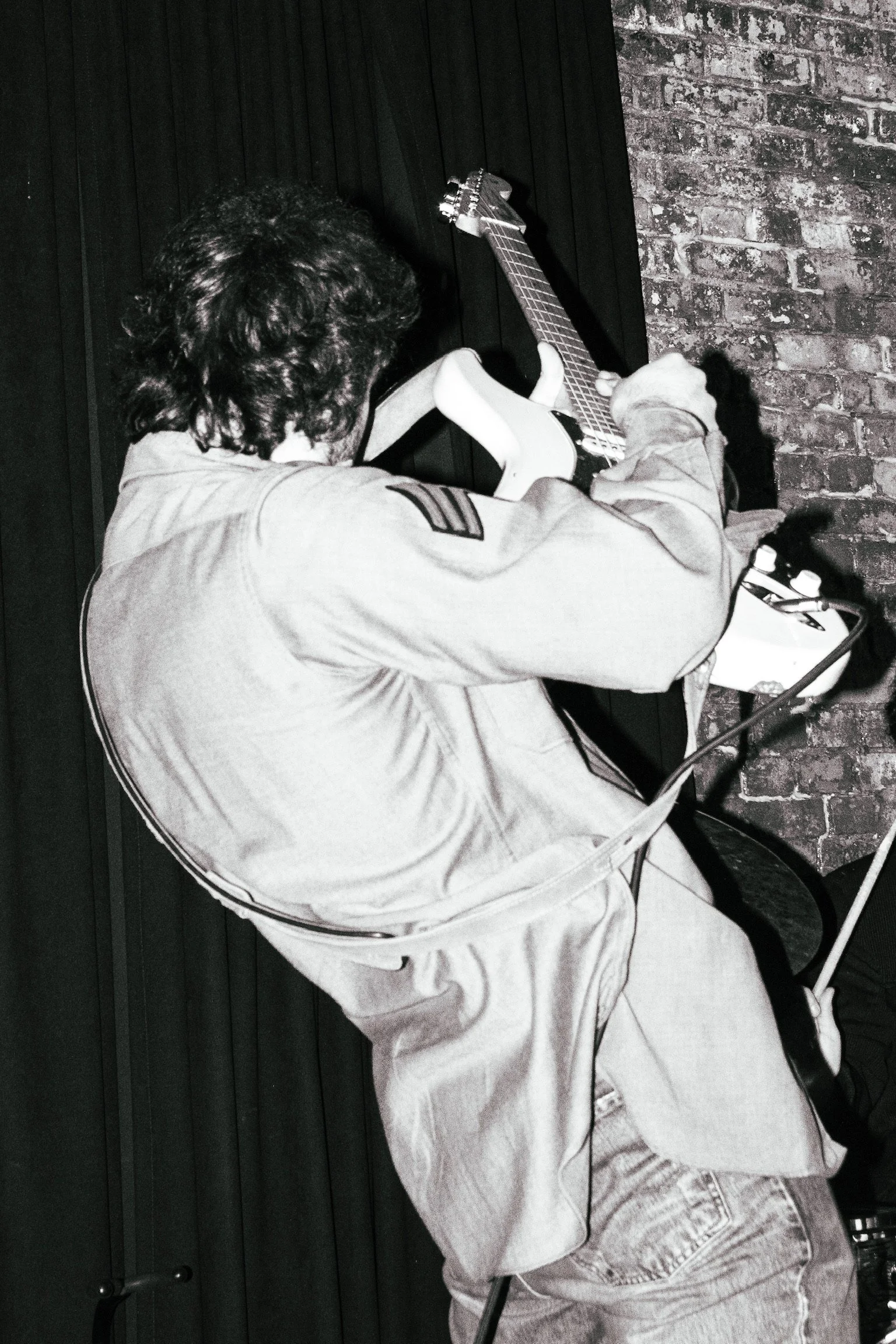
Photo Credit: Sofia Lisena
You are one of the most poetic bands in Brooklyn. You’re the first band I’ve bought a chapbook from. Who are the poets you draw on?
Confessional poets/writers such as Anne Sexton, Virginia Woolf, and Sylvia Plath.
The pioneer poet-turned-musicians, like Patti Smith and Leonard Cohen.
Existentialists like Fernando Pessoa and Emil Cioran.
Is happiness achievable or an out-of-reach ideal?
Still figuring that out.
Photo Credit: Joseph Bagnasco
Who are your favorite dark bands?
Of course, Siouxsie and the Banshees and Bauhaus—just their hair alone makes them the greatest. Some less “classically dark” bands/artists but Swans, Nick Cave, and Lee Hazlewood.
Who are your favorite bands you’ve played with, your comrades, your day ones?
In no particular order:
Trash TV (happy to see them back!)
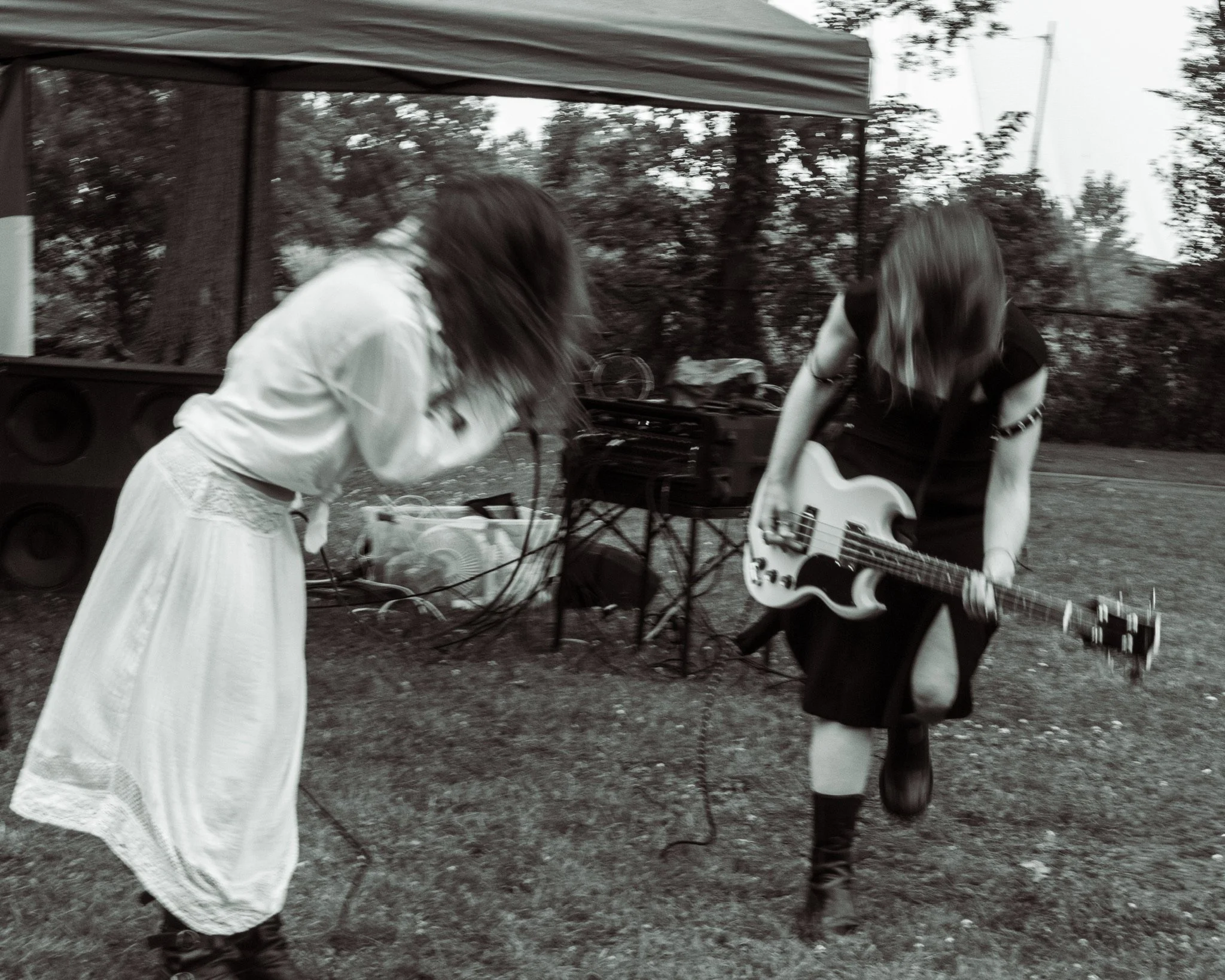
Photo Credit: Sofia Lisena
Anyone you’d like to thank?
Mike from Insecurity Hits for believing in our vision and supporting us with this recent double-single release.
Anyone and everyone who has ever come to one of our live shows and shared their energy with us.
Seraphine Cleaver’s Website: seraphinescleaver.com
Seraphine Cleaver’s Instagram: @seraphinescleaver
Seraphine Cleaver’s Bandcamp: https://seraphinescleaver.bandcamp.com