

The Subversion Of Norms: An Interview With The UK’s Creeping Embers
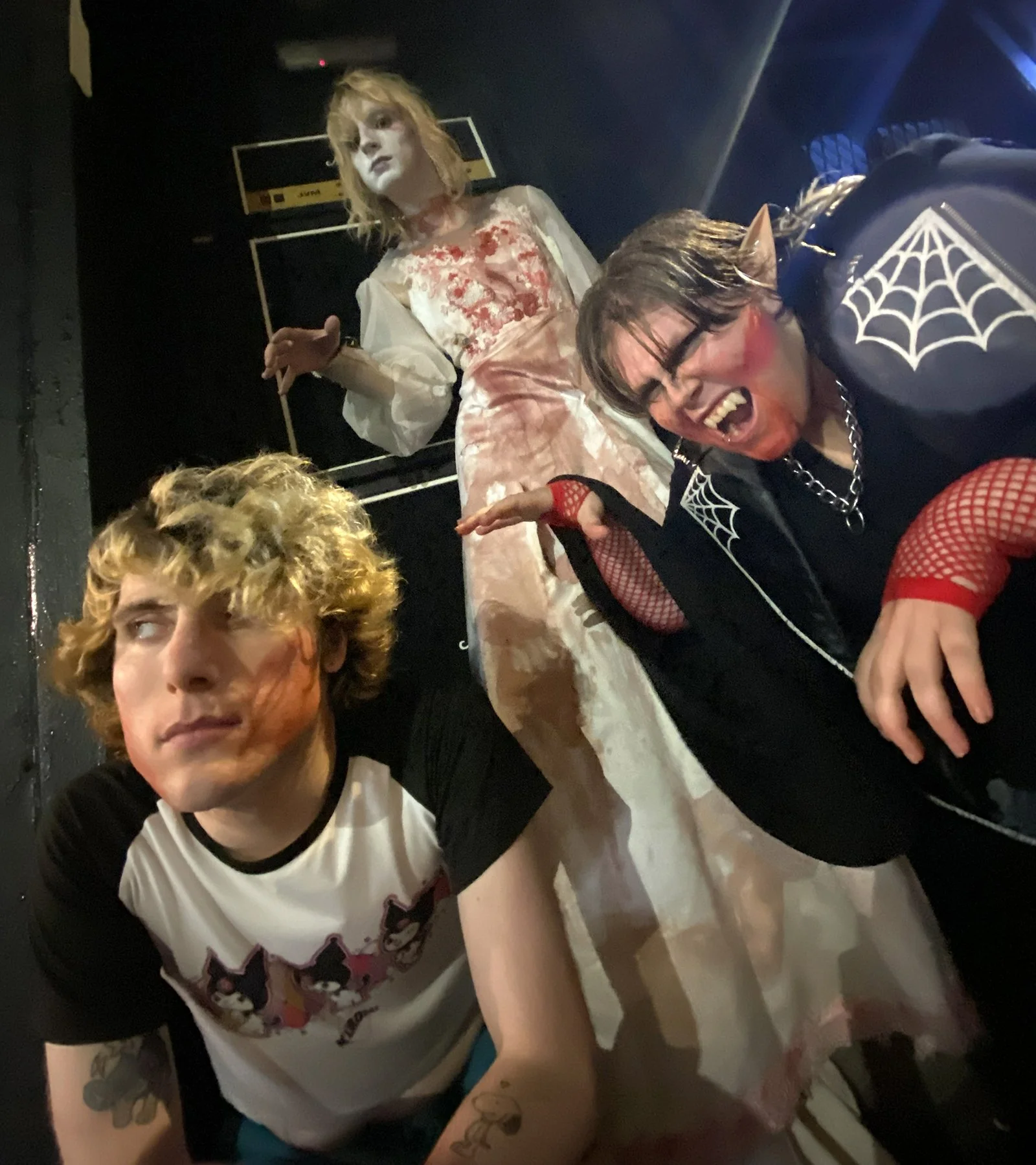
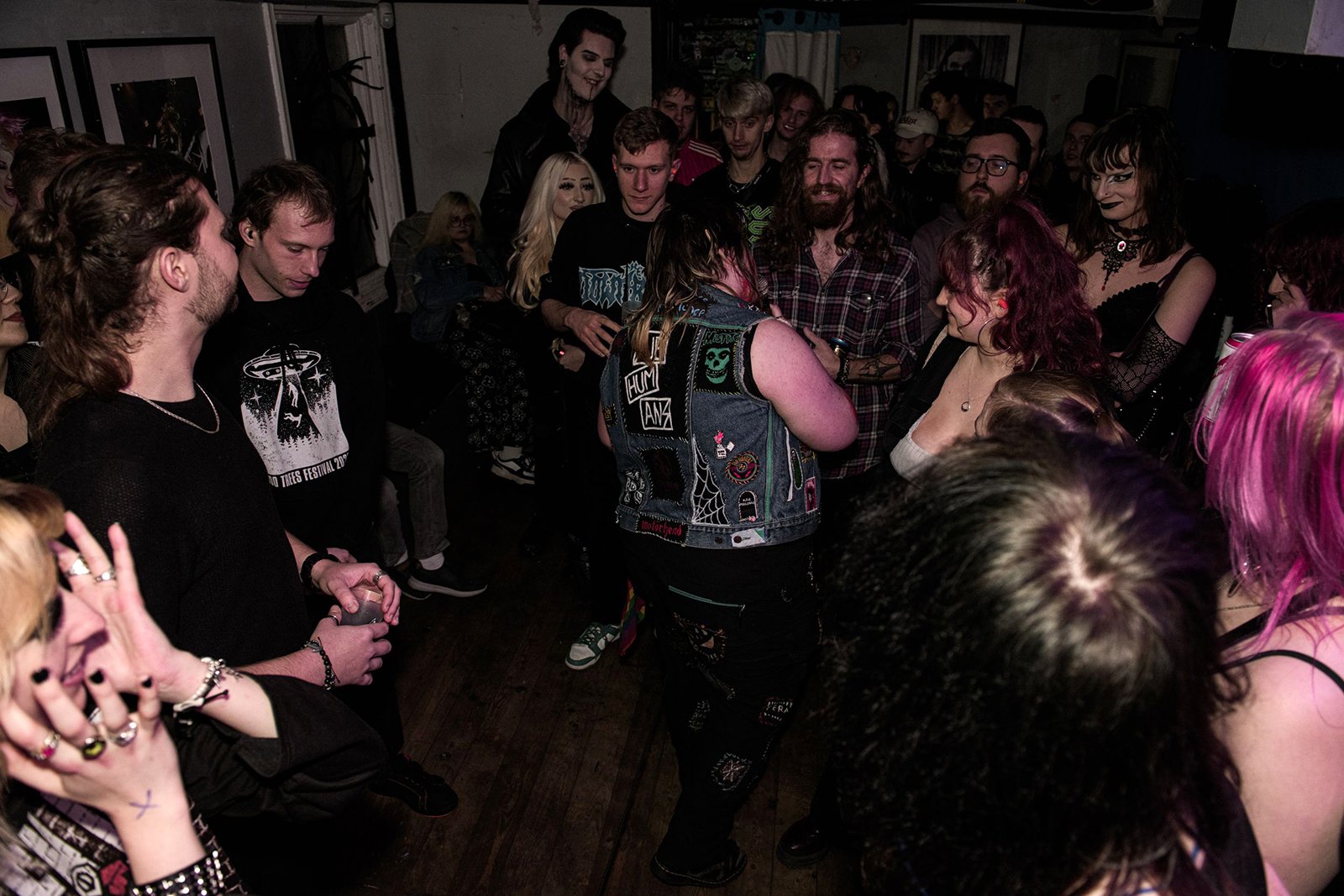
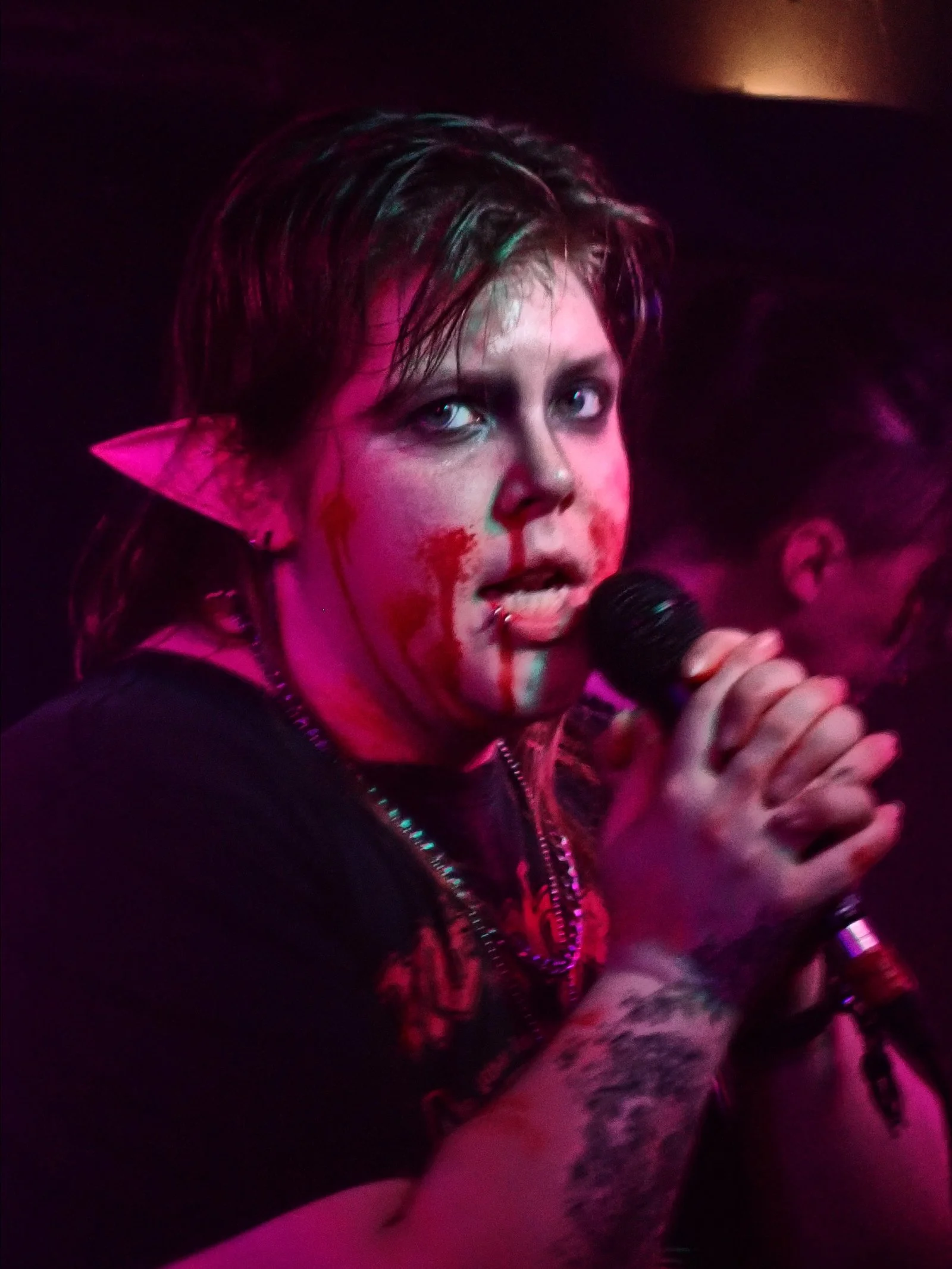
Celebrating their second birthday this month, Creeping Embers is a Brighton-based punk outfit whose all-trans, disabled-led lineup channels raw theatricality into every performance. Their sound jumps between folk, gothic rock, and riot grrrl, using aggression, humor, and abrupt genre shifts to mirror the identities within the group. Onstage, front members douse themselves in blood, transforming visceral chaos into a defiant reclamation of space for queer and disabled bodies. By blending biting social commentary with absurdist wit, the band ensures that their fight against transphobia and misogyny remains both loud, in your face and unable to ignore.
How has the transition from your formation in May 2024 to now shaped the way you navigate the UK music scene as an all-trans, disabled-fronted band?
Luciyan: Early on we didn’t have as much of a clear idea of our identity as a band. Over time we’ve developed our sound and aesthetic to proudly display the fact that we are trans/disabled and bring attention to the issues surrounding being a part of those communities. The scene can be both welcoming and excluding, there’s been instances where other musicians have decided they don’t like us simply because of who we are and that is a real shame. On the other hand there has been so many lovely people and wholesome interactions that totally make up for the negative aspects.
Charlie: For me, being part of the band helped me to come to terms with my identity. Being surrounded by other trans + disabled people gave me the space to figure things out. Making music and creating something honest and real with people that I’m close to has led to me not feeling as out of place.
In what ways does your genre-hopping sound act as a direct reflection of the fluid and multifaceted identities within the band?
Luciyan: Personally I think that experimentation and fluidity in our sound represents us as people. Whilst we have plenty of things in common, there is enough uniqueness to our personalities, music taste and influences to mean that there is always some new way we can combine our ideas.
Charlie: Everyone has their own influences and we all try to bring that to the band in different ways. I’ve had the band involved in performance based uni assignments where we’re using pitch shifted vocals and incorporating electronic elements with intros/outros. It’s been a huge step from what I’m used to both within the band and my own knowledge/music creation. Not sure how much of it we’d be bringing into the band permanently but I’m always interested in adding even more variety when possible.
Evie: I’ve always thought of us as queer band, not just in our respective gender and sexualities, but also in our approach to art and genre. There is something about the subversion and corruption of norms with what we do that speaks as a direct mirror to how we are often made to feel as outsiders and others within society.
Since you blend everything from folk to gothic rock, which genre do you find provides the best bite for your lyrics regarding social injustice?
Luciyan: Often I lean more into riot grrrl/punk style delivery for these topics. Curb stomp your local nonce is a good example, the verses are harsh and bluntly, brutally honest. The vocal delivery is aggressive and confrontational right the way through. It demands the attention of the listener and expresses my own genuine frustration and anger at how often predators are allowed to simply get away with preying on people.
Charlie: As I have a few songs on lead vocals, I tend to usually take a direct approach with lyrics, taking from personal experiences and bringing it to the band and we work things out from there. For the songs where I’m on lead vocals I’d say there’s an overall influence of nu-metal in the style and vocal delivery but looking to push myself into other genre influences where possible.
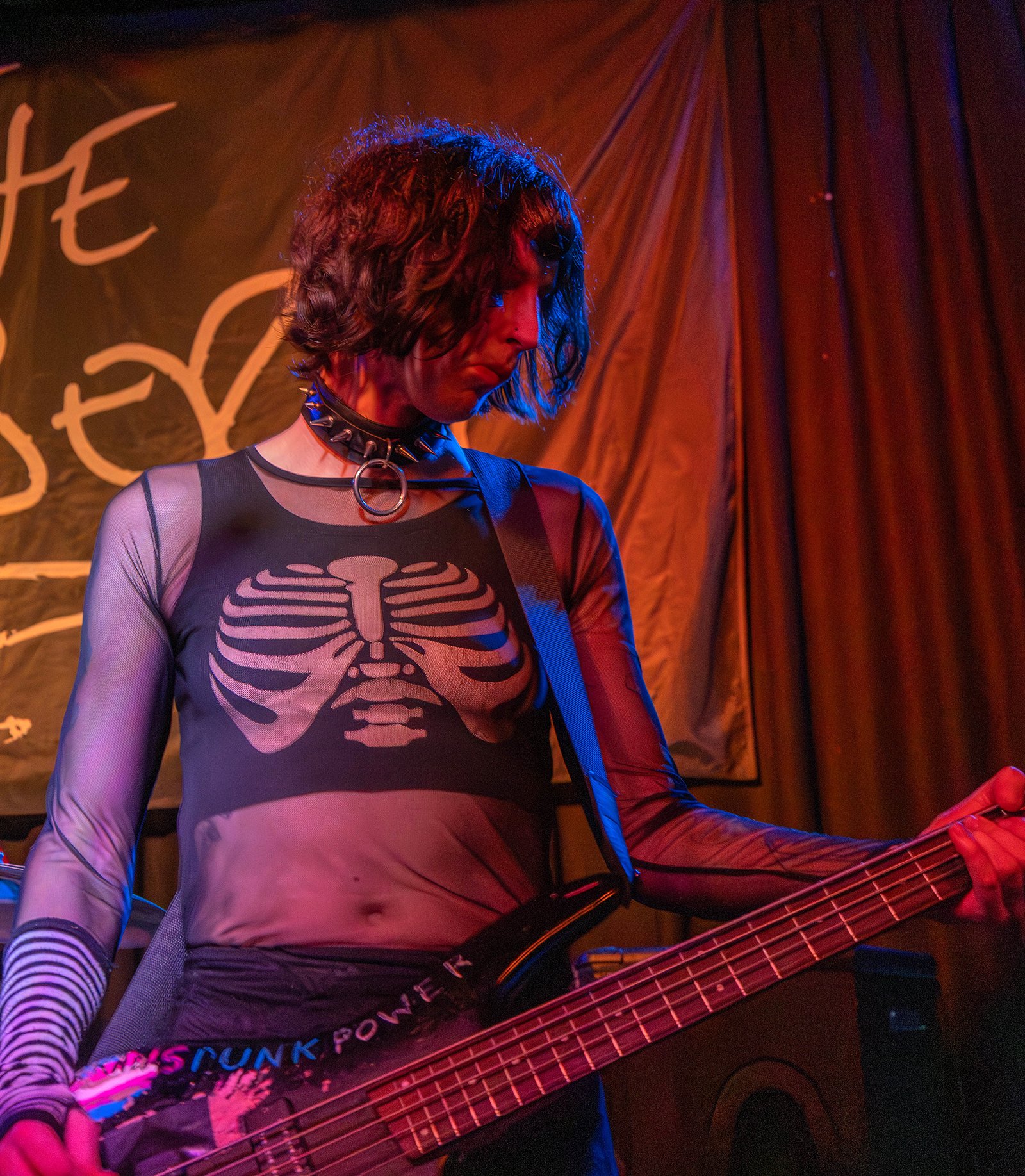
How do you intentionally use, as you've described, grimly theatrical visuals to reclaim space and visibility for the trans and disabled communities on stage?
Luciyan: The blood and jerky “wounded animal” movements that I’ve come to favour on stage have gone from simply being a bit of fun to have a more direct meaning - at least to me personally (there’s something cathartic about covering yourself in blood, throwing yourself around on the floor and screaming). Often trans and disabled people find themselves having to fight for basic rights and respect, and to me my stage performance directly reflects this. We are wounded and bloodied by what we must endure but we will continue to fight for equality and recognition.
Given your Brighton roots, how does the city's specific queer history influence the atmospheric energy you bring to your live performances?
Luciyan: Brighton was one of the first places I actually saw other queer people just living their lives and existing - giving me hope that one day I could too. I hope that through our music we can create a similar relatable experience for other queer people so that they can feel seen and heard.
What is the most significant barrier you’ve encountered in the punk scene as an all-trans band, and how are you using your music to dismantle it?
Luciyan: Prejudice based in transphobia and misogyny can be an issue. We’ve had rooms be completely full for the band before us and then empty for our set (although I can’t speak for all of those people as to exactly why) and I feel that some people judge us based on our identities rather than our art. Online people love to leave hate comments based mostly on how we look and who we are and that can be very frustrating, however we will continue to be loud about the queer/trans experience regardless of whether people want to listen to us or not. Visibility is so important to marginalised communities - if we are allowed to become invisible then not only will we be overlooked, but so will our struggles.
How do you balance the loud and chaotic elements of your set with the need to deliver clear, biting messages about LGBTQ+ rights and disability visibility?
Luciyan: Often we start off a set a little more serious (songs like her, Queermongering) and get more light hearted by the end (songs like T.E.R.D, Gay Bar). Each song has a message regardless of what that may be, and one of the best ways to reach people is through humour and absurdity. Making a song funny is a good way to disarm the listener and discuss heavier topics without people deciding it’s too serious and they’re bored.
Evie: I think it's worth mentioning that if there is something that really needs to be said though, we aren't above stopping a show to say it. The platform our art affords us, no matter how small it may be, is an important one and one we do a disservice to our community if we don't use it. I'll often give short speeches about the state of current trans wellbeing in the UK, and other political issues that need awareness raised. Whilst for the most part the music IS the message, sometimes we need a little extra language to hammer it home.
If you could hand-pick a dream tour lineup from your influences, like Petrol Girls or The Oozes, how would Creeping Embers stand out in that mix?
Luciyan: Oh man that’s a tough question. Some bands I would love to work with are Lambrini Girls, Cheap Perfume, The Oozes (again), and Destroy Boys - what a tour that would be. I’d feel so at home amongst other queer artists that share similar values to us <3
There’s a uniquely visceral and chaotic energy with Creeping Embers and I think that (alongside the blood) would help us to stand out.
Looking back on your first year, what is the one moment where that "accidentally ending up on stage" energy felt the most rewarding for the band?
Luciyan: This one’s a little harder to answer. I’ve made a few good entrances when we’ve played “I Went Out On The Piss” live, bursting out of the toilets, falling down the stairs onto the stage, there’s too much to choose from. Honestly though, I love when people move to our music, shout along with us and relate to my lyrics.
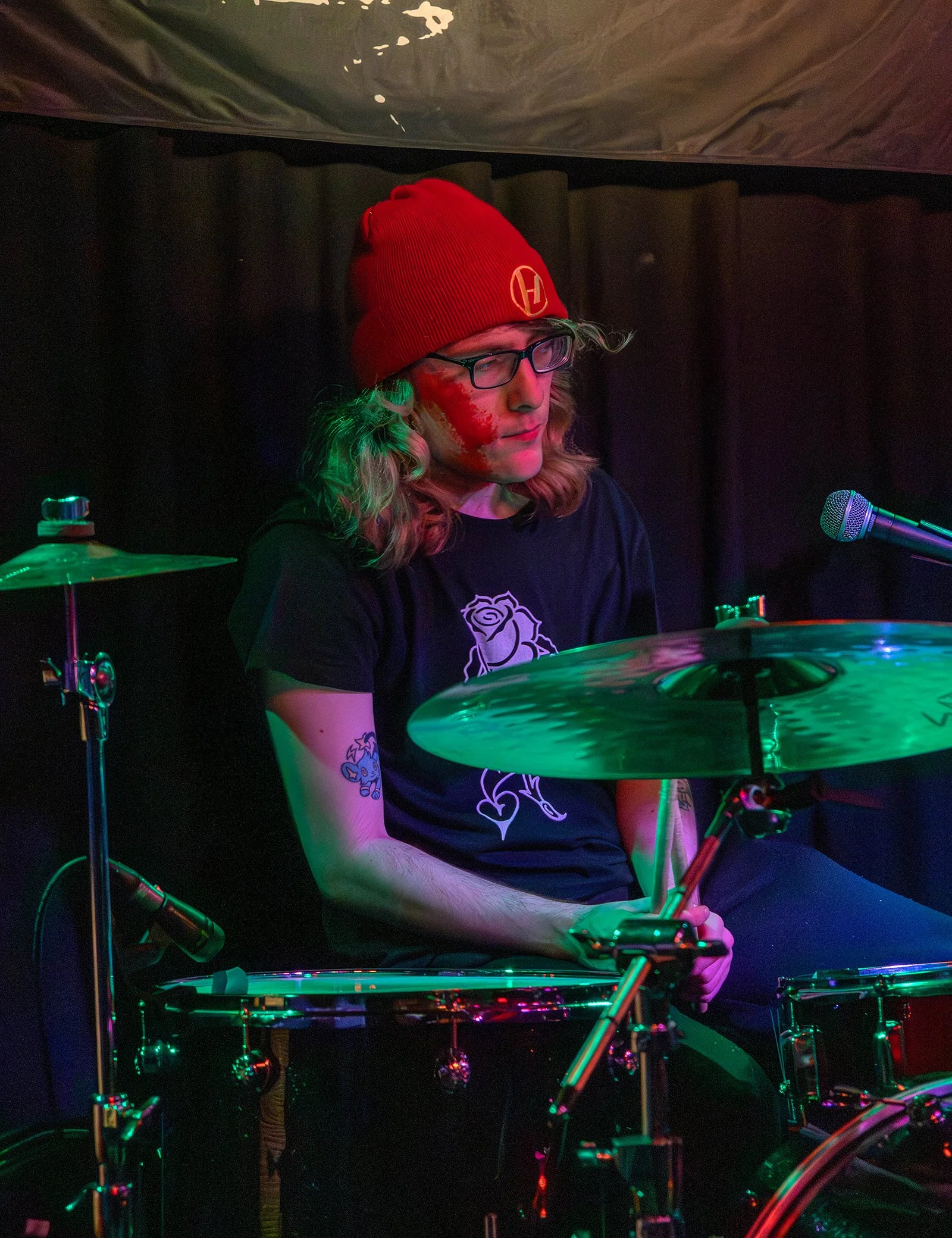
Charlie: most rewarding moment for me I think has been my own personal journey from the start the band to now. I joined the band having to ask other bands to share breakables during shows, kinda just stuck myself behind the kit and that being that for a time. Over time I got my own equipment, started getting into backing vocals, even writing some lyrics that eventually turned into songs that we occasionally play live with myself on lead vocals. Being a part of Creeping Embers has ultimately made me more myself, I’m more confident on stage and doing things I never imagined myself being able to do.
Evie: most rewarding moments for me have been having people singing our lyrics back to us, particularly "you're not a terf you’re just a terd” as its not just a lyric but a statement of defiance against bigotry.
Anyone you'd like to thank?
Luciyan: My bandmates! Evie and Charlie are genuinely the most lovely, talented musicians I have worked with. Creeping Embers has become not just a band, but something so much more personal and it’s really beautiful that I get to do what I love with my best friends <3
Additional thanks would go out to the many, many, many small queer bands that I spent my early teens listening to, without them I wouldn’t have had the confidence to go and be visible as both a transgender person and a musician. Finally, huge thanks to everyone who has supported us so far, we appreciate y’all so much <3
Charlie: Luciyan and Evie for being the best bandmates and friends, love u 4ever
Huge thanks as well to anyone who comes down to a show and all the venues and promoters that platform us.
Evie: well I guess now I have to thank Charlie and Luciyan, nah fr love you guys. I'd also like to thank Laura Jane Grace and ANOHNI for making me realise the value that could be found in being an openly transgender musician and my dad for instilling a love of diverse music in me from a young age.