

By Staff | November 2, 2026
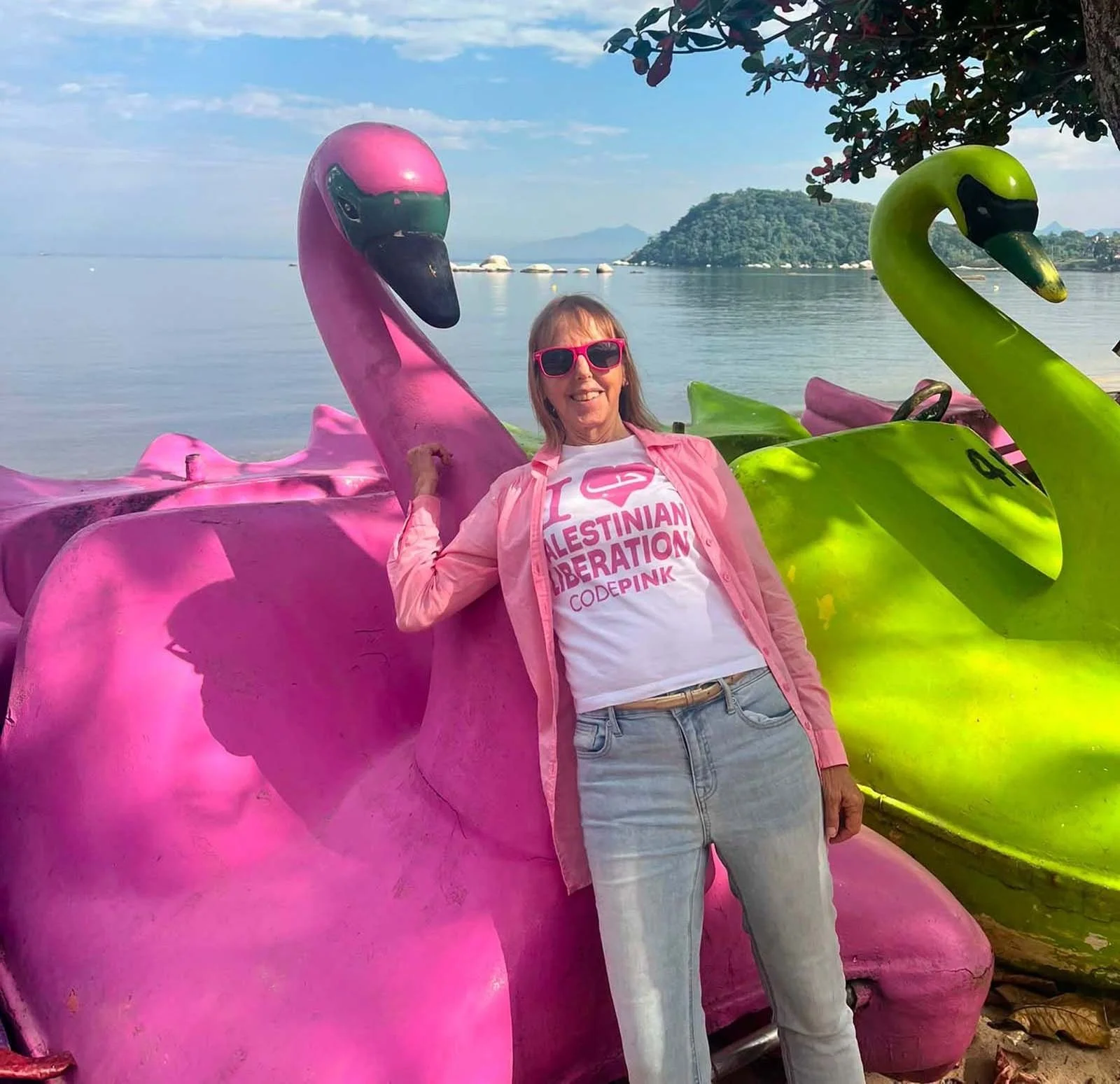
All photos courtesy of Medea Benjamin
We interview a lot of punk musicians, which (as a punk magazine) is probably not surprising. And we make no secret about our politics - the bands and artists we interview speak out about imperialism, genocide, racism, homophobia and transphobia. Often pretty loudly.
But there’s a difference in scale between screaming into a microphone in a small club on the Lower East Side and interrupting a speech by the President of the United States to call him out on drone strikes that are killing children halfway around the world.
Punk has always been about challenging authority, speaking up for what you believe in, and not backing down in the face of oppression. Medea Benjamin has checked those boxes for longer than many of us have been alive. Anti-war activist, human rights advocate, grassroots organizer, fierce critic of imperialism - she has spent decades making powerful people uncomfortable, and she doesn’t seem particularly interested in stopping.
When they finally get around to opening a Punk Hall of Fame, we’re nominating Medea for inclusion.
After more than 50 years of fighting against war and injustice, do you feel more optimistic or pessimistic about the future than you were when you first started?
I'm actually more optimistic, and that might surprise people, given the terrible state of the world today.
What gives me hope is how dramatically public opinion has shifted. When we opposed the U.S. invasion of Iraq, we were often vilified as traitors, accused of being unpatriotic and not supporting our troops. There was enormous pressure to fall in line behind the president and the military. Today, despite all the government propaganda, a majority of Americans oppose the war in Iran. In fact, recent polls show that roughly two-thirds believe the war hasn't been worth fighting.
And look at the transformation around Israel and Palestine. It’s astounding. Decades ago, when we criticized Israel's treatment of Palestinians, we were treated like pariahs. We even lost a lot of CODEPINK members. And when we protested at the AIPAC Summits year after year, CODEPINK was the only group out outside (and inside) their conventions.
Today, especially among young people, support for Palestinian rights has become mainstream. The images coming out of Gaza have shattered the narrative that Israel is a democracy or that the US should support Israel. Now a majority of Americans have an unfavorable opinion of Israel.
So while our political leaders remain deeply entrenched in the militarism of the past, the American public is moving in a very different direction. The gap between the people and the politicians is enormous, but that's also where I find hope. With the public so opposed to war, those in power will eventually have to change.
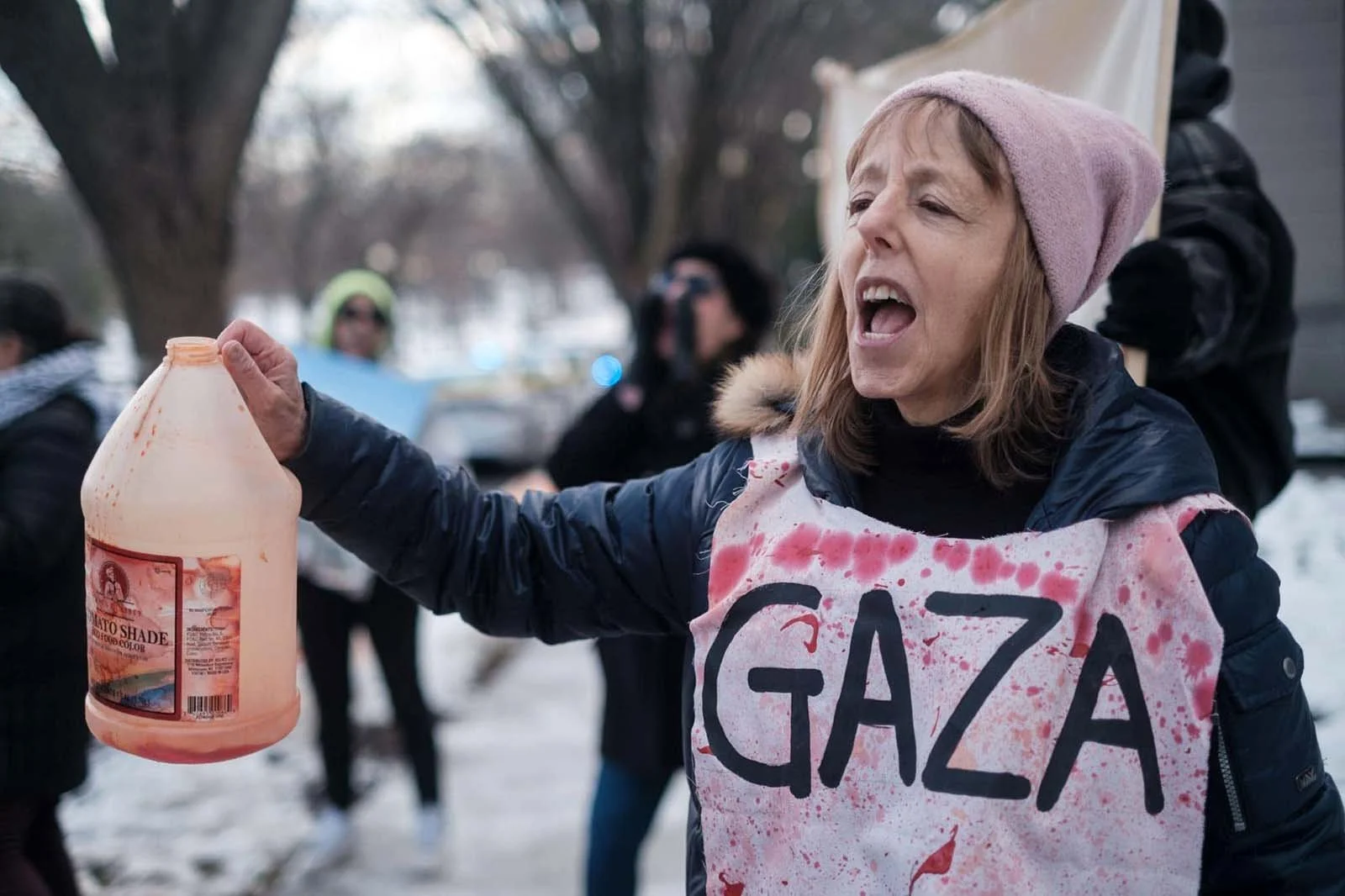
Having experienced all the cultural shifts during your life, do you think Americans are any more willing to challenge their government today than they were during the Vietnam era?
Actually, I think the opposite is true. During the 1960s and 1970s, there was a much greater willingness to challenge not just the government, but the entire economic, political and cultural system.
We were the "peace, love and rock 'n' roll" generation, the Woodstock generation. We weren't just protesting a war. We were questioning consumerism, capitalism, racism, traditional gender roles, and the whole notion of what constituted a successful life. Young people were experimenting with communes, collective farms, cooperative businesses and all kinds of alternative ways of living. There was a real sense that another world was possible, and we wanted to start creating it ourselves.
And the political movements were extraordinary. There were massive anti-Vietnam War demonstrations on college campuses and in the streets. Students for a Democratic Society (SDS) had chapters all over the country. There were the Black Panthers, the Young Lords, the women's liberation movement, the gay liberation movement, the farmworkers' movement. These movements weren't just asking politicians to make a few changes. Many were challenging the fundamental distribution of wealth and power in this country.
It was also a time of exciting revolutionary change around the world–from Cuba to Mozambique. The Non-Aligned Movement reached its height in the 1960s and 1970s, when newly independent countries across Africa, Asia and Latin America came together to challenge colonialism and demand a more just and equitable international order.
Of course, that era had plenty of contradictions and shortcomings on both the domestic and international fronts. But there was an extraordinary spirit of rebellion, collective action and experimentation that I don't think we see on the same scale today.
Today, young people are often very progressive in their views, especially on issues like Palestine, climate change and racial justice. But translating those views into sustained, organized movements has been much harder. We have more ways than ever to express dissent, but fewer powerful organizations through which to exercise collective power.
What's the most outrageous thing you've ever done—or seen—during a protest, and what was the reaction?
I've done so many outrageous things that it's hard to choose! But two moments stand out because they illustrate how a single act of protest can reach millions of people.
The first was in 2002, in the lead-up to the U.S. invasion of Iraq. Donald Rumsfeld, then Secretary of Defense, was testifying before Congress in a room packed with military brass. It was an intimidating setting, but we weren't going to let him promote a disastrous war without being challenged. I, along with activist Diane Wilson, interrupted the hearing to protest the drive toward war, waving banners right behind Rumsfeld’s head firing our own questions at him.
We caught everyone by surprise, and it took the Capitol Police forever to pull us out. Footage and photographs of our protest appeared in media around the world. At a time when the Bush administration was trying to justify a war on Iraq, those images let people around the world know that there were Americans who opposed this invasion and were willing to put their bodies on the line to say so.
The second was in 2013, when President Obama was delivering a major national security speech at the National Defense University, another room filled with military officials. I interrupted him to challenge his policies on drone warfare, indefinite detention and Guantánamo.
What made that moment so remarkable was that Obama actually engaged with me. Instead of simply having me dragged out, he acknowledged that the issues I was raising deserved attention. For a brief moment, we had a genuine exchange between the president of the United States and an anti-war activist, right in the middle of his national security speech.
The interruption went viral, and suddenly I was being invited onto major television news programs to talk about drone killings and Guantánamo—issues that rarely received that kind of attention.
These experiences taught me something important: Sometimes an interruption of a few minutes can break through the carefully choreographed world of the warmakers and spark a critical national conversation about alternatives to war. But of course, building a sustained movement is much more important than these kinds of individual actions.
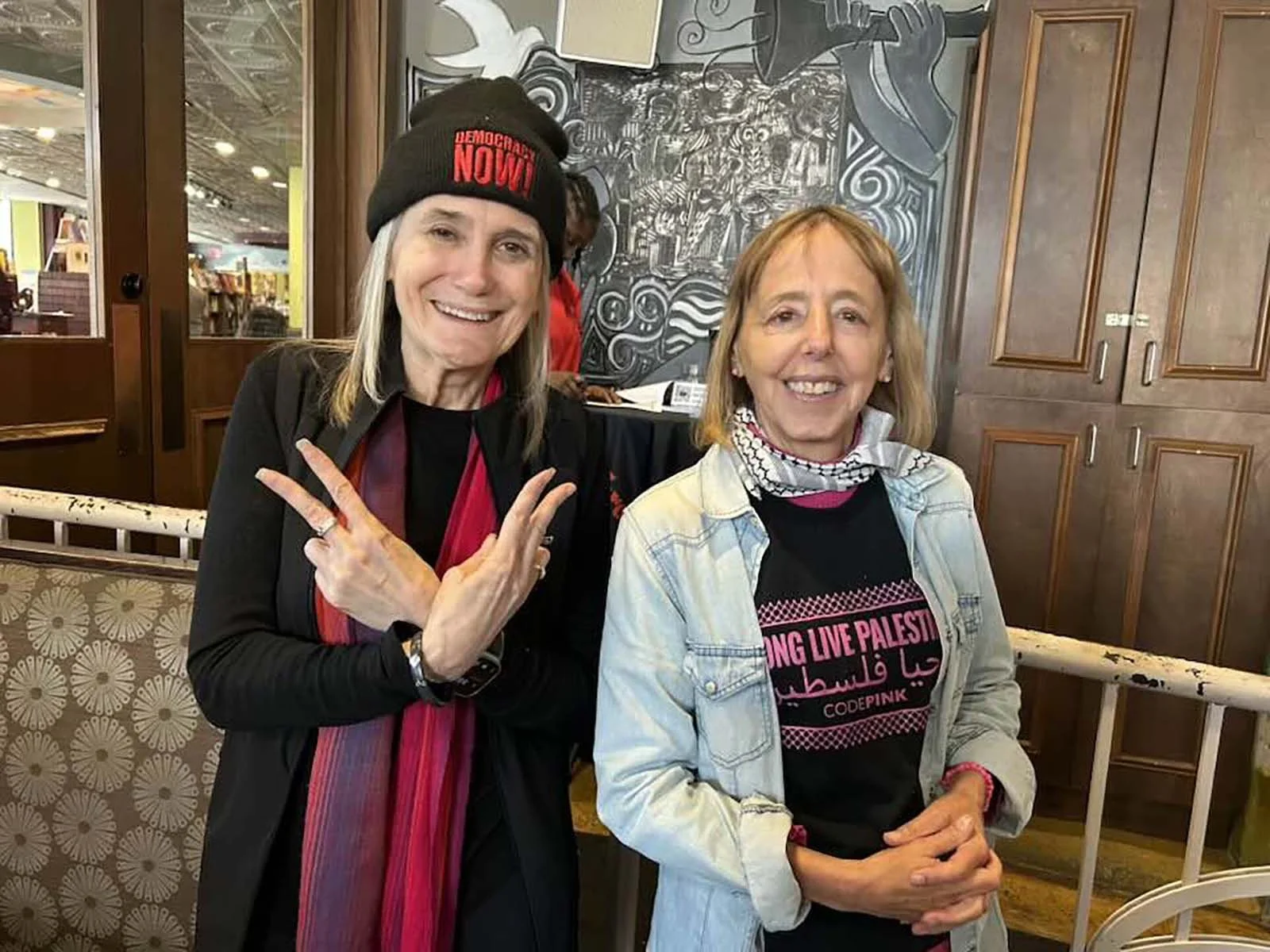
With Amy Goodman of Democracy Now!
As feckless as Democratic leadership has been recently, have you found Democrats more receptive to the anti-war movement than Republicans?
In general, yes, but that's setting a pretty low bar!
We have to remember that the genocide in Gaza began under President Biden, who continued sending enormous quantities of weapons to Israel despite the slaughter of Palestinians. Democrats have also overwhelmingly supported military aid to Ukraine rather than prioritizing diplomacy and a negotiated settlement. And most Democrats continue to vote for enormous Pentagon budgets, even as our communities struggle to fund housing, healthcare and education.
So the Democratic Party is certainly not an anti-war party. The leadership of both parties is deeply tied to the military-industrial complex.
That said, there are significant differences, especially among progressives in Congress. Overall, there are a few dozen really progressive Democrats. Thankfully, that number will increase with some of the newly elected progressives.
Some, like Rashida Tlaib, have been stalwart leaders against Israel’s genocide. And there has been a remarkable shift on Israel among many Democratic members. In July 2026, 103 House Democrats voted for an amendment to eliminate $3.3 billion in military assistance to Israel. That vote would have been unthinkable just a few years ago.
Democrats have also been more willing to challenge Trump's war in Iran.
Republicans, meanwhile, have been reluctant to challenge Trump on foreign policy, even those who once claimed to oppose endless wars. Tom Massie has been one of the few exceptions, and Massie lost his seat in Congress after relentless attacks by Trump and his allies.
Do you feel the American left has struggled to build a lasting movement outside electoral politics, and if so, why?
Absolutely, and I think it's one of the greatest weaknesses of the American left.
Look at what's happening in Europe. In France, students have been mobilizing enormous demonstrations against school conditions. In Italy, dockworkers have been organizing strikes to stop weapons shipments and protest the war machine. In Britain, we've seen massive pro-Palestinian marches month after month. And these aren't simply rallies organized around elections. They're movements that are disrupting business as usual.
Why don't we see that kind of sustained mobilization in the United States?
Part of the problem is that whenever a promising movement starts to develop, it tends to get sucked into electoral politics, particularly into the orbit of the Democratic Party. The energy that could be building independent grassroots power gets channeled into campaigning for candidates who, once elected, often disappoint us.
Another problem is the NGO-industrial complex. So much of our activism has become professionalized, with organizations dependent on foundation grants, paid staff and institutional funding. There are great people doing important work in nonprofits, and activists do need incomes, but the structure discourages the kind of disruptive, militant organizing that challenges the powerful.
And then there's the labor movement. Other countries have much stronger traditions of militant unionism, where workers see strikes and mass mobilization as legitimate tools for political change. In the United States, decades of attacks on unions have weakened that tradition.
I also think Americans have become more complacent and isolated. We're a very individualistic society, and too often people think political participation means voting every few years, signing an online petition or posting something on social media.
Of course, there are exceptions. The Black Lives Matter uprisings were extraordinary, and the student encampments for Palestine showed tremendous courage and creativity. But we haven't been able to sustain that energy.
What we desperately need is a broad, militant movement that doesn't disappear after an election and doesn't depend on the Democratic Party for its direction.
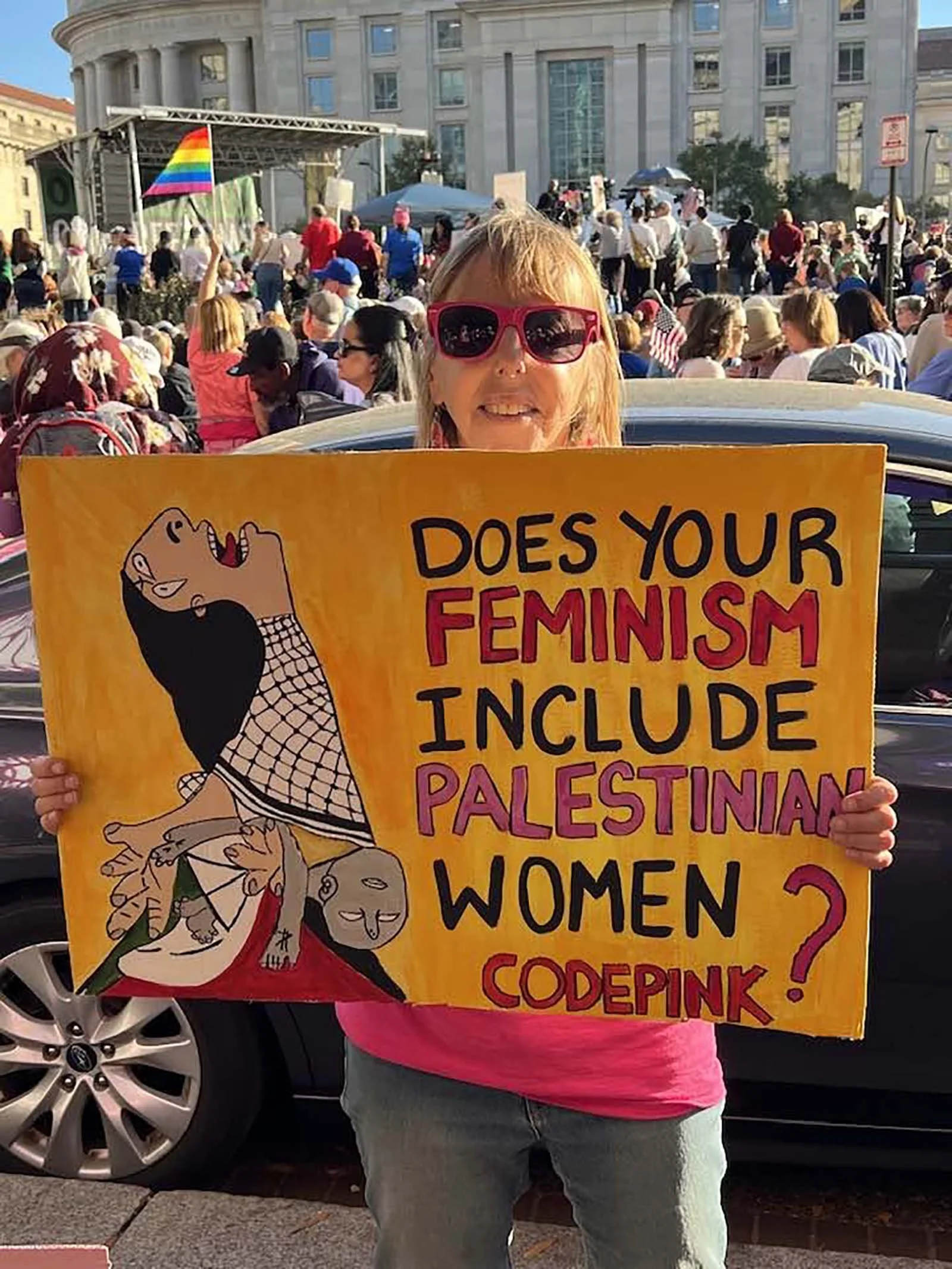
How has the backlash against your activism over Gaza differed from what you experienced opposing the wars in Iraq and Afghanistan?
Whenever you challenge a war, you're accused of being unpatriotic, of supporting the enemy, or of somehow betraying your country. We experienced that during Iraq and Afghanistan.
Today, we are ridiculously accused of being pawns of the Chinese Communist Party, as well as Hamas supporters. We, like so many others who criticize Israel, are also accused of anti-semitism. The machinery of this anti-semitism backlash is more extensive and more deeply institutionalized than what we faced during Iraq and Afghanistan.
But there's also a remarkable difference on the other side: with so many people, especially the younger generation, disgusted by Israel’s policies, we are getting more support than ever before.
Have you ever seriously considered giving up activism, particularly after being arrested, detained and even physically attacked?
I've never seriously considered giving up, but I did imagine that as I got older, I would slow down a little!
I used to tell myself that when I reached 70, I'd start stepping back, travel more for pleasure, spend more time with my family and grandchildren, and let the younger generation take the lead. And in some ways, I've done that. I've helped turn over the reins of CODEPINK to an amazing younger generation of activists who bring new energy, creativity and perspectives to the organization.
But then came Gaza. When I saw the scale of the destruction and the suffering, and watched my own government continue to supply Israel with the weapons, I felt compelled to do more, not less.
And now, with Trump's war on Iran, his increasingly authoritarian policies, ICE attacks on immigrants, assaults on civil liberties and continued militarism abroad, this hardly feels like the moment to step back.
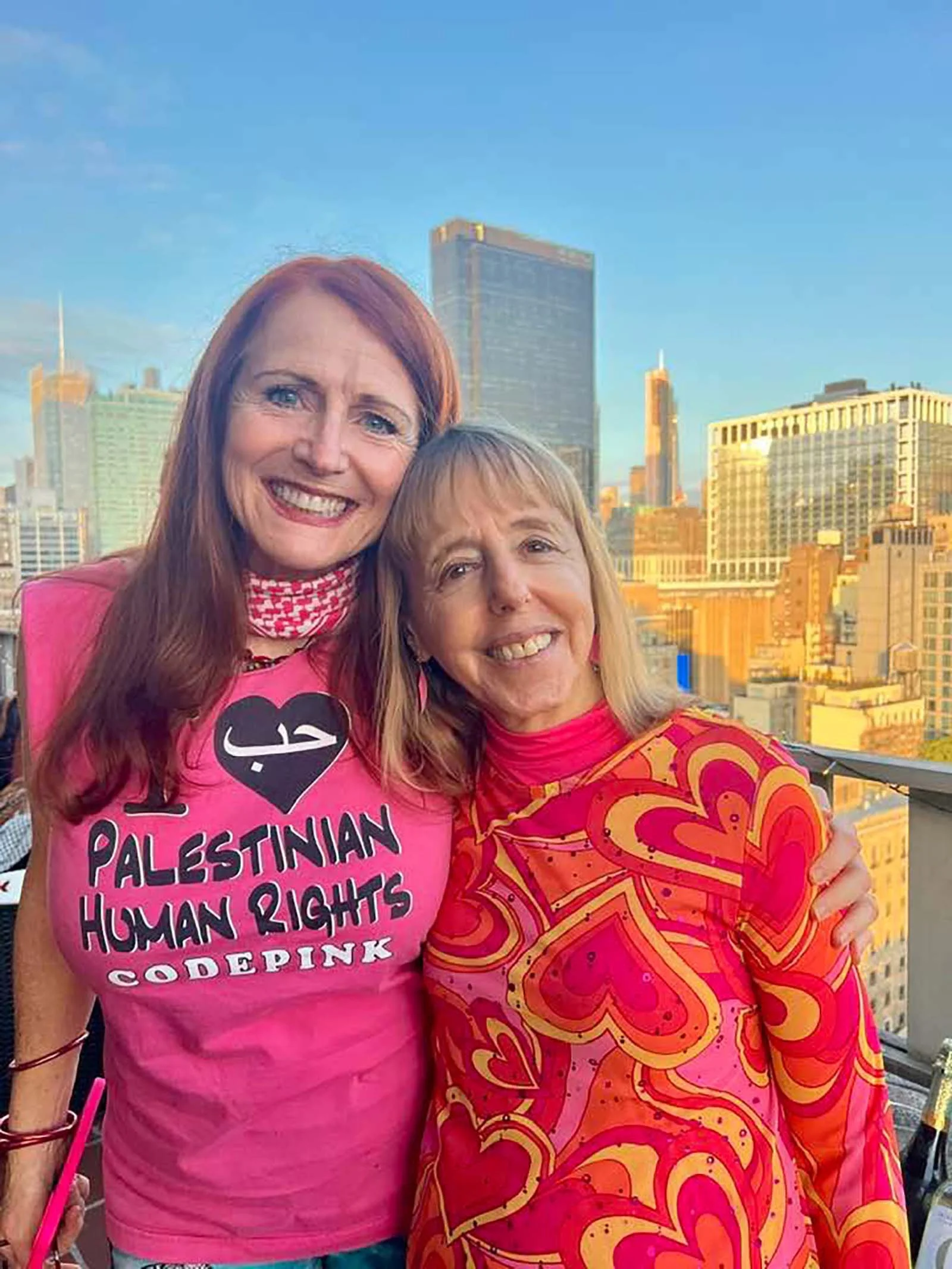
With co-founder Jodie Evans
Do you feel that social media has made political organizing more effective, or has it simply convinced everyone that posting their opinions counts as activism?
It's definitely a mixed bag. On the positive side, social media has given activists the ability to reach enormous audiences without having to go through the gatekeepers of the mainstream media. That's a tremendous change from when I first started organizing, when we were lucky if a newspaper printed a photo and a few sentences about our protests.
Today, we can livestream actions, share firsthand accounts from people living under bombardment, and mobilize supporters almost instantly. In the case of Gaza, social media has been enormously important in showing the world what Palestinians are experiencing, bypassing mainstream media narratives.
But let’s recognize that these platforms are controlled by giant corporations whose interests are very different from ours. Activists speaking out for Palestine have been kicked off their platforms, or had their posts censored or shadowbanned, where their posts suddenly stop reaching people. I've experienced that myself. I used to get hundreds of thousands of views on a TikTok post; now I barely get a few thousand.
Second, social media creates ideological bubbles. We think we're reaching the world, but often we're just talking to each other. It's very easy to confuse getting thousands of likes with actually changing people's minds.
And third, there's the question of passivity. People can spend hours every day scrolling through horrifying images, reposting outraged commentary and arguing with strangers online, without ever attending a meeting, joining a protest or taking action in the real world. In many ways, social media has become a substitute for activism rather than a tool for it.
I sometimes think about how we organized before the internet, when we had to call people on the phone, pass out flyers and actually talk to one another. It was slower, but it created real relationships and a sense of community and accountability. Of course, I'm not suggesting we abandon social media. I use it all the time! But we have to remember that social media is a tool for organizing, not organizing itself. A thousand likes can't replace a thousand people in the streets, and a viral video can't replace a sustained movement.
Anyone you'd like to thank for their support?
There are so many people I could thank, because one of the beautiful things about spending a lifetime in activism is the extraordinary community of people you meet along the way.
But two people stand out.
The first is my dear friend and CODEPINK cofounder, Jodie Evans. Jodie and I have been through so much together since we started CODEPINK in 2002. We've traveled together to dangerous conflict zones, gotten arrested, laughed, cried, and dreamed together. Jodie is a remarkable force of nature, with boundless creativity, determination and an ability to turn bold ideas into reality. I can't imagine what these past two decades would have been like without her.
And then there's my partner, Tighe Barry. Tighe is not just my life partner but my partner in activism. He's been beside me through countless demonstrations, congressional hearings, arrests and adventures around the world. He's fearless, funny, incredibly generous and always ready to jump into action. When the world feels overwhelming, he helps me keep my sense of humor and perspective.
I also can’t imagine going through these years of the Israeli genocide without the people who have joined me in walking the halls of congress, day after day, week after week.
One of the great gifts of activism is that you find people who become your chosen family. You develop bonds that come from sharing your outrage, taking action together and sharing a vision of a better world.
Visit the official website, sign up for updates and more at https://www.codepink.org