

High Altitude Punk: An Interview With Bolivia’s Kimsacharani
By Staff | March 25, 2026
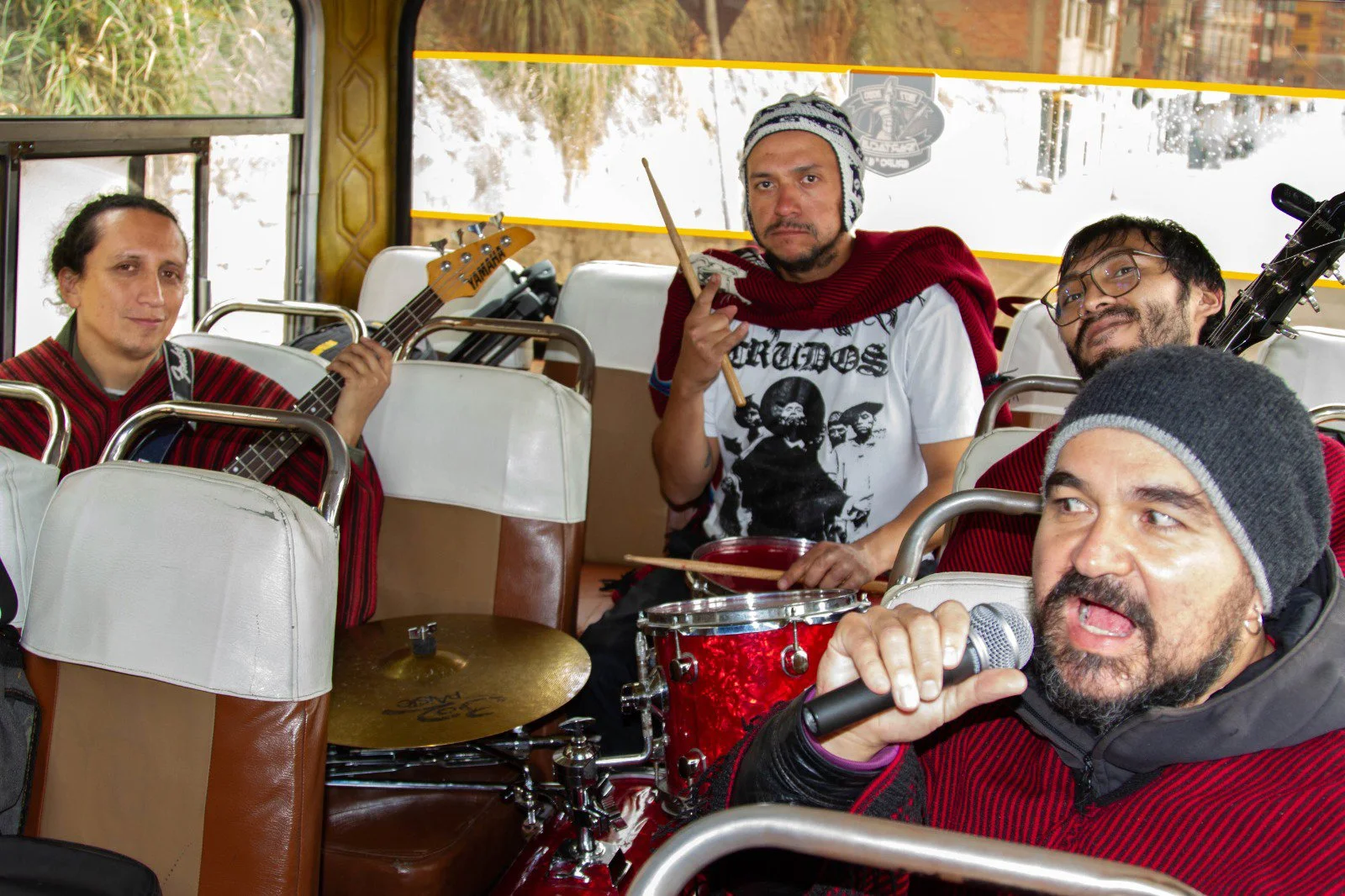
Photo credit: Andrés "Sapín" Ramirez
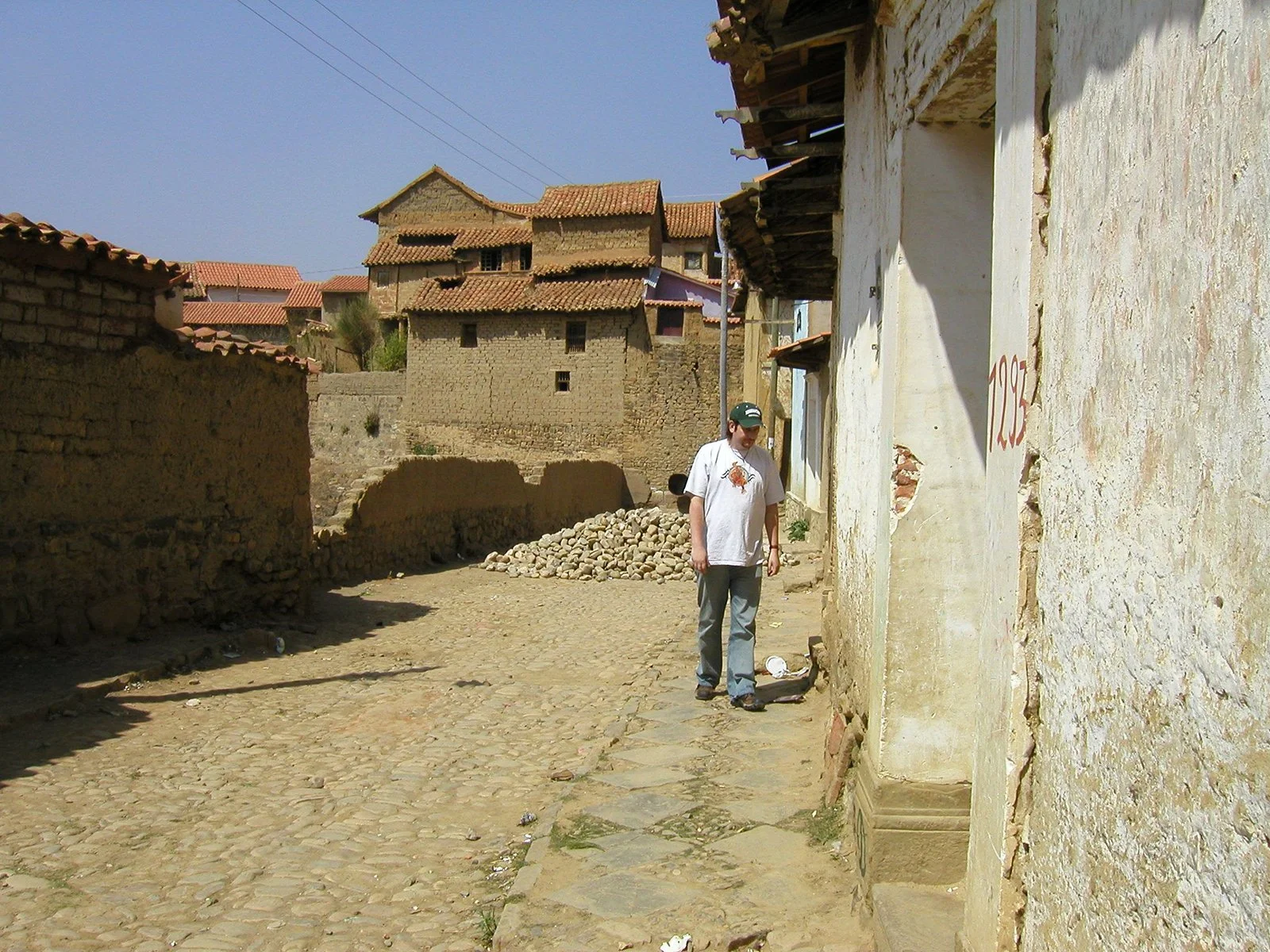
Ask many Americans what they know about Bolivia, and the answers may vary. You may get “is that a city in Africa?” or perhaps “oh, that’s that laundry detergent they have at the Dollar Store”. Bolivia is in fact a South American country laden with culture and history - exquisite beauty next to crushing poverty; community, coca leaves, sopa de maní, and DIY steering wheel rigs. I was there in the mid-2000’s when protests broke out in support of the citizens being able to own their own national resources. There were people - men, women and children - marching the streets banging pots and pans all day and night, which helped lead to the election of the country’s first indigenous President. Now, if you ask one of those abuelas on the street to name a Ramones song, they probably couldn’t. But what I saw in those streets was as punk as anything I’d seen in a lifetime living in New York.
Out of this environment comes the punk band Kimsacharani, a high-energy outfit that echoes the revolutionary spirit of the country - standing up to hate, injustice, intolerance and Western imperialism. As you’ll read, they are outspoken, committed to their values, and aren’t backing down. We had a chance to catch up with them, and are happy to present this interview.
The Kimsacharani is traditionally a tool for community discipline. How does it feel to invert that symbolism, using a three-pronged whip not on children, but as a metaphorical whip against the state and the political class?
Choro, bass: The Kimsacharani is a three-pronged whip used by the Aymara and Quechua cultures in the Andes to educate children and teach them the three main laws of Aymara and Quechua cultures: 1. Ama Suwa, do not steal. 2. Ama Llulla, do not lie. 3. Ama Khella, do not be lazy. We use this idea to teach politicians that they are all thieves, liars, and lazy. That's how the three principles are taught with a single lash.
Reversing the symbolism is very interesting, because most people generally think that children should only be "educated" not to lie, not to steal, and not to be lazy, but many adults (and especially politicians) are the ones who lie, steal, and are lazy the most.
David, vocals: May Kimsacharani also reach religious fanatics, the military, the police, hypocrites, and all kinds of fascists.
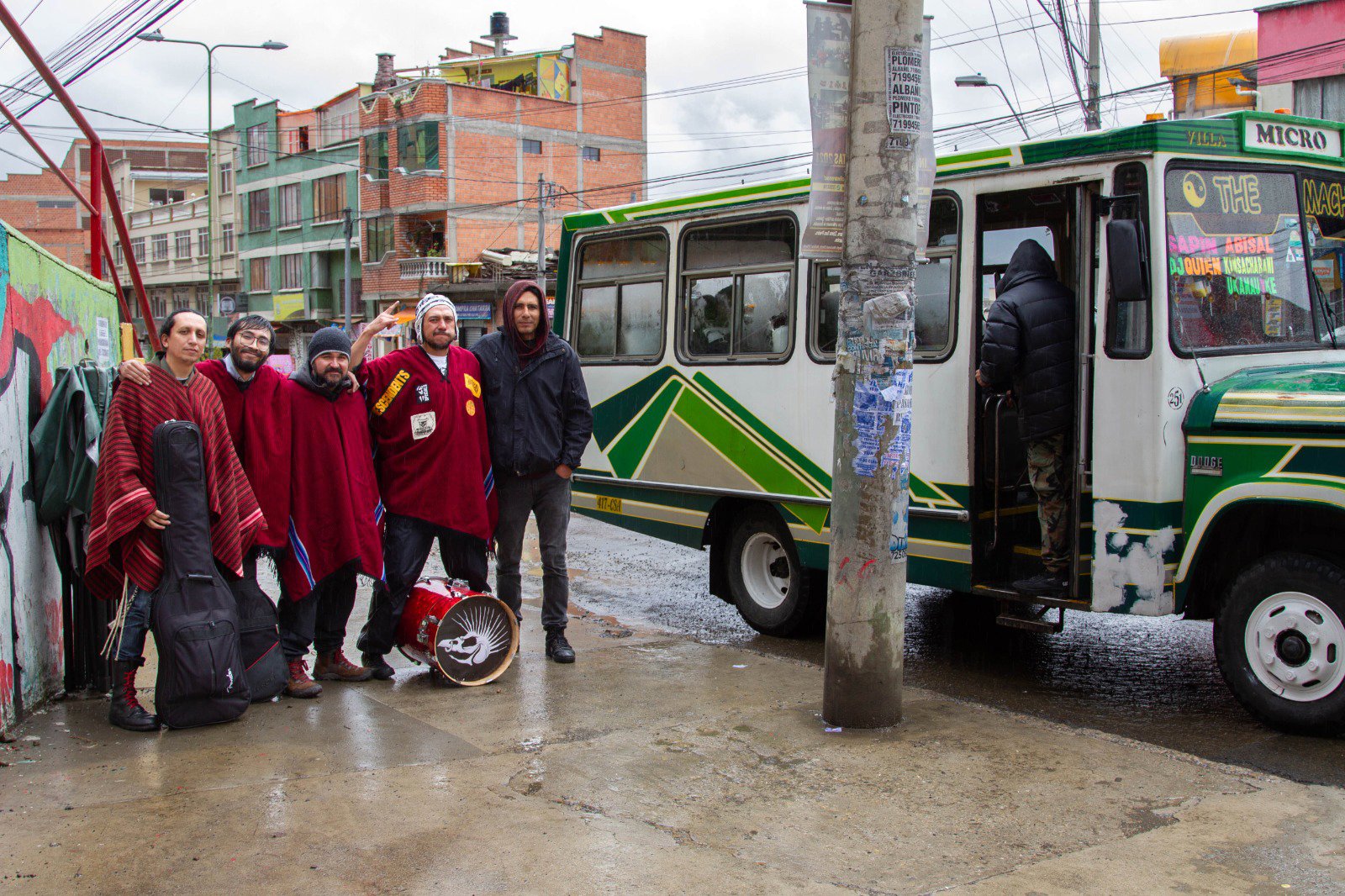
Photo credit: Andrés "Sapín" Ramirez
With members from Bolivia, Chile, and Colombia, you represent Pan-Andean Unity through a radical perspective. How do your different national histories with imperial violence (Operation Condor as an example, or CIA brutality in Chile in 1973) influence your songwriting?
Choro: Of course, our songs are influenced by the social and political reality we have historically experienced in our countries, called "Third World" by the global North. In the southern part of the continent, we experienced Operation Condor as a Yankee policy of political repression, coups d'état, torture, assassinations, and disappearances through US military intervention. We even have a song called “Where Are They? (The Disappeared)” that describes the coups carried out by Operation Condor in Bolivia, Chile, Argentina, Uruguay, Paraguay, and Brazil.
Nacho, drums: It's important that our songs speak of the memory of our countries. We need to constantly remember our past so that the liberal governments that come to power from time to time don't try to cover up the past that has shaped us as artists of resistance. In Chile and Bolivia, we've experienced coups d'état, and in Colombia, a war that has left more civilian victims than many dictatorships. Latin America is, was, and will be a constant laboratory where the United States has tested its political and economic doctrines with fire and blood.
David: Human beings boast of technological evolution, yet they have always been ruthless killers, and that doesn't change in the upper echelons of state and military power. We South Americans have lived through a miserable history of violence and death, just like in Africa, Asia, and other regions of the world. In the end, we all live in the same place, regardless of borders; we are under the historical yoke of murderous power. Our songs are memory and resistance; they are a cry from all those who have been silenced.
Punk, ska, and rap are often considered Western exports, while Andean rhythms are ancestral. How do you balance them without one colonizing the other? In your eyes, are the flute or the charango as punk as a distorted guitar?
Choro: Generally, we compose our songs trying to fuse indigenous rhythms like the Andean Huayño or the Tinku, and we've also used the Quena, an Andean wind instrument similar to a flute, for a while. The foundation is always the Western instruments of rock (guitar, bass, and drums), but we add Andean rhythms and instruments, along with lyrics that have their own identity, reflecting our reality and our Indigenous cultures. Any instrument (Andean or Western) can be used for protest, because the sound is secondary; the main thing is the message and the content of the lyrics.
Nacho: As Secuencia Progresiva, one of the first punk bands from La Paz, said, “Punk is the people’s damnation.” For us, punk has to come from the bottom up; it has to be played first with the gut and the heart, and only lastly with the mind. When we listen to huaynos from an Andean community, they convey a rejection of the entire established order, and that’s what we want to reclaim and add to our music. We also draw inspiration from the Bolivian garage beat bands of the 60s and 70s. It’s a style we share in our countries.
You celebrate the anarcho-syndicalist unions of 1930s Bolivia. Why? What lessons do those early workers' movements offer for the modern anti-fascist? Is there a struggle in La Paz today?
Choro: In our song “Libertarian Artisans,” we champion the anarcho-syndicalist unions of the 1930s because we believe they were autonomous, self-managed, independent union organizations, free from state intervention, free from religion, and free from strongmen and leaders. They were simply artisans, laborers, flower vendors, and cooks, and they were the ones who fought against racism and discrimination. Thanks to those struggles, marches, protests, strikes, and demonstrations, we now have an 8-hour workday in Bolivia and laws that protect workers.
Nacho: In Bolivia, there is a significant history of workers' struggle, not only from the anarcho-syndicalists, but also from the miners, laborers, and students who confronted the dictatorships in the 1970s. Today, there is no common struggle; sectors are becoming increasingly individualistic, responding to the times of current capitalism.
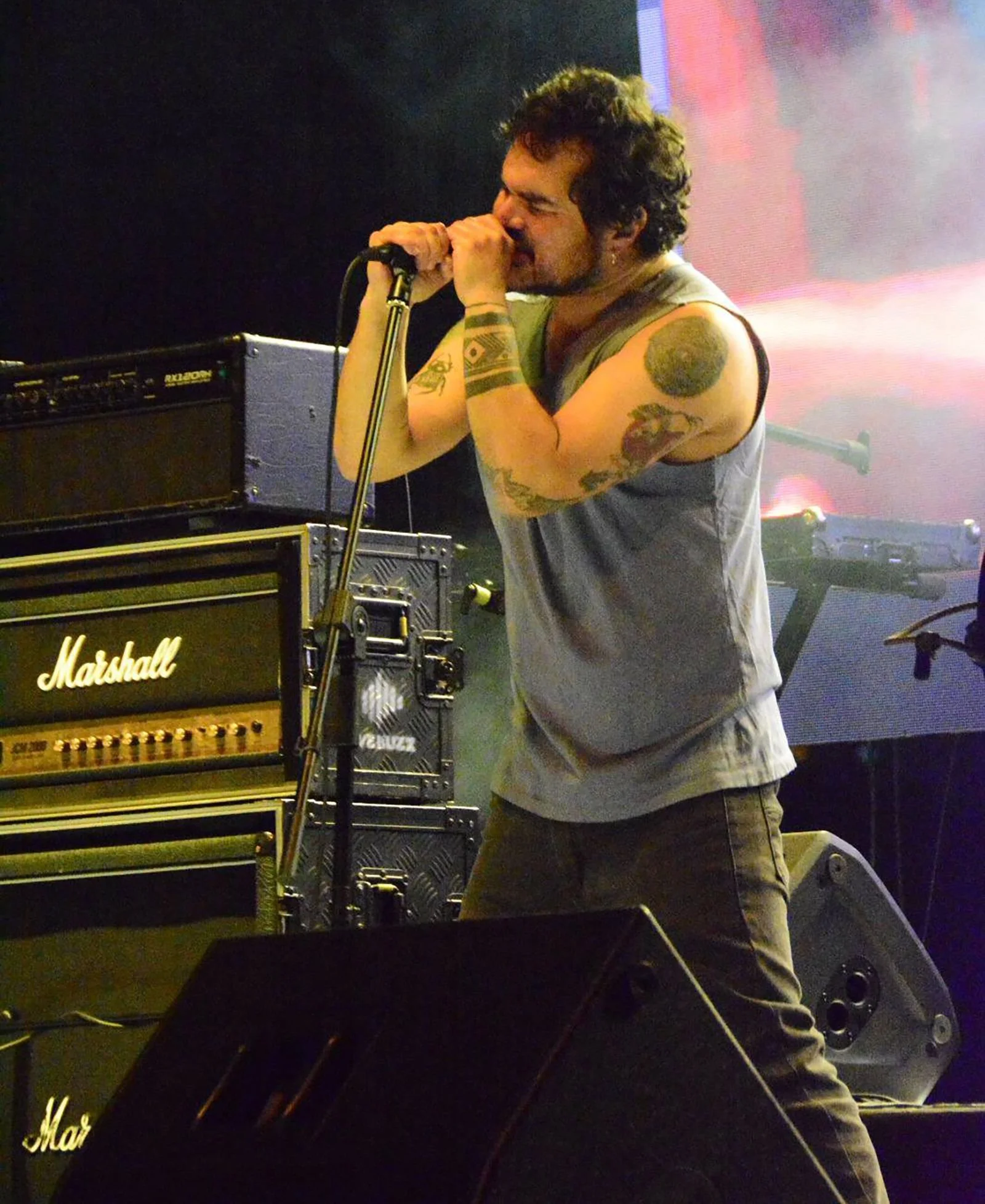
Photo credit: Michael Maldonado (Malducas)
Your lyrics bridge the gap between Indigenous struggles in the Andes and the liberation of Palestine. Why is it vital for a Bolivian punk band to be explicitly anti-Zionist and anti-imperialist in 2026?
Choro: Imperialism has affected Bolivia and all of South America since 1492, with the arrival of the Spanish Empire, which colonized and murdered more than 100 million Indigenous people across the continent (AMERICAN HOLOCAUST: Columbus and the Conquest of the New World. David Stannard, 1993). So, for more than 500 years, we have lived and suffered oppression and exploitation, discrimination, racism, the imposition of religion, massacre, and the extermination of our Indigenous cultures and our ancestors. For this reason, we continue to champion the struggles of our ancestors against all forms of imperialism, such as the Yankee empire and Zionism.
Nacho: Being part of a former Spanish Empire and a current North American Empire shapes our proposal, since that's what we face every day. What our ancestors, our countries, our families faced. The economic policies imposed by the United States are the same ones imposed by the Spanish Monarchy; we've been dealing with the same thing for centuries, so it's in our DNA to be against this shitty system.
David: Humanity has been educated to refer to others as distant; our struggles are global. We face the same enemies.
In many Indigenous communities, the police and the military are seen as the main perpetrators of the theft of colonial lands. How does this relate to your position of ACAB? Does it specifically reflect the history of Indigenous massacres in Bolivia?
Choro: The police and the army always fulfill the function of protecting capital and the interests of private businessmen, who are the main thieves of Indigenous lands and territories. Likewise, the government and states appropriate or intervene in and build roads through national parks, protected areas, and Indigenous territories such as the Isiboro Sécure National Park and Indigenous Territory (TIPNIS) and currently the Tariquía National Reserve. We also denounce the massacres carried out by the military in our city of El Alto. In this sense, we repudiate the police and the military and denounce them in songs like "Territory and Dignity," "Standing Up to Fight," and "Senkata Massacre."
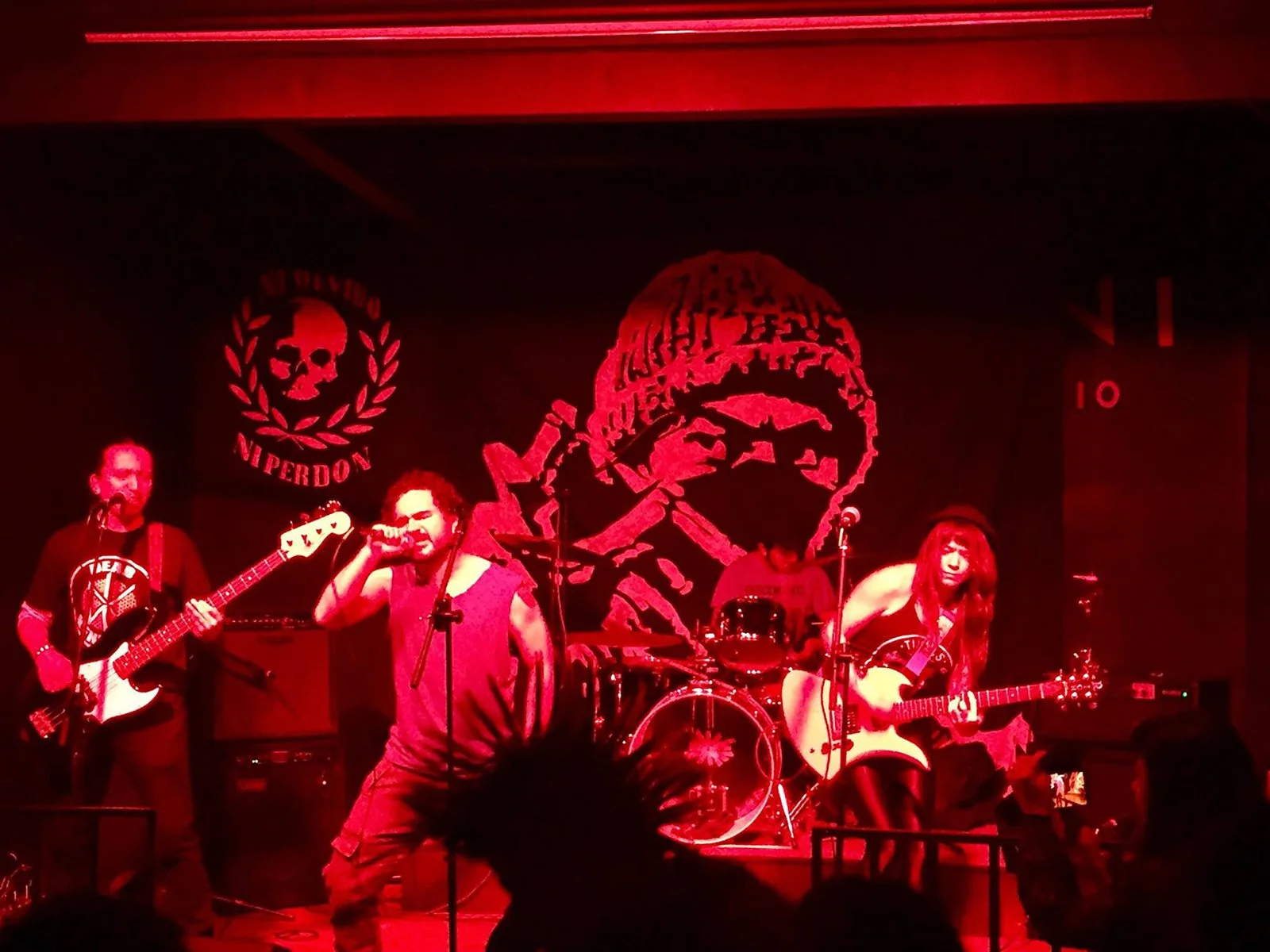
Punk has historically been a boys' club. As a band that supports the feminist movement, how do you incorporate these perspectives into your lyrics and your local environment to challenge machismo?
Choro: We recognize the organizational capacity of the feminist movement in Bolivia and around the world. They are the ones who set the example and the direction for collective organizing and social struggles, while here in Bolivia, men don't currently have a platform-based political organization or an organized collective, but we support their demands. Within the punk movement in Bolivia, we always participate collectively in organizing concerts, talks, and film screenings and discussions, like the "Anarcho-Punk Day" organized by the anarcho-feminist comrades of "Basura Humana" (Human Waste). We have a song called "Latinx Resiste" (Latinx Resists) in which we champion the struggle of the green scarves, feminist organizing, and social struggles throughout the Americas.
Nacho: We understand punk not only as a style of music, but as a much broader political concept. I'm much more interested in a female rapper who talks about feminist struggles or a cumbia group that addresses labor exploitation than in a punk band that only sings about getting drunk. We will always support any artist or band committed to a cause we deem important to defend. The feminist struggle, by the way, is one of them.
David: We were born into a patriarchal society. I suppose we've all gone through a process of self-reflection and reconstruction of the sexist upbringing we received from our own family and social environments. Punk is a political tool to express discontent with injustice, and within this injustice, sexism, which is absurd. Our second guitarist is a woman, Amy, from the United States. The feminist struggle is also our struggle.
You've collaborated on documentaries and feature films. How does your approach change when composing a song for a visual narrative like Ukamau and Ké compared to composing an independent track for the public?
Choro: We didn't compose a song for the documentary "UKAMAU Y KE Presente y Combativo" (Dir. Andrés Ramirez -Sapín-). Actually, we composed the song "Mucho Peligroso" with the rapper "Ukamau y ke" 20 years ago, and after his death (2009), they made a documentary in which they included our song on the tribute album that came out in 2019. Something similar happened with the song "A Prepararse." It was a song composed in 2016, and later, in 2025, a filmmaker (Dir. Felipe Quiroga -Fish-) heard the song and decided to include it in his first feature film, "PIANOMAN."
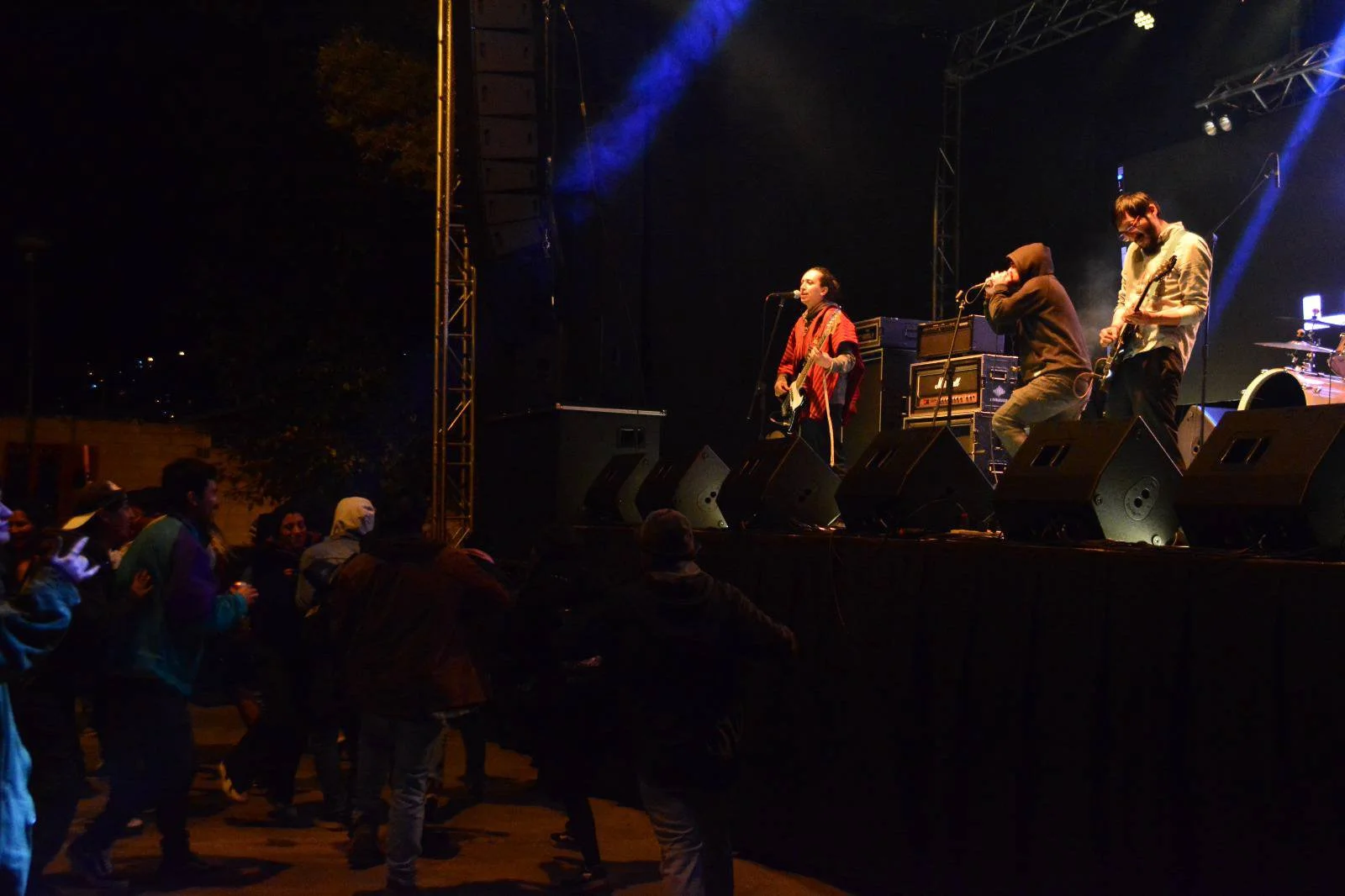
After almost a decade since your formation, you are recording your first full album. What is the general manifesto of these 10 songs? Is there a specific theme that connects them?
Choro: In general, all the songs touch on political and social issues, current events, and the political situation in Bolivia. We champion social movements, protests, street battles, antifascism, antimilitarism, and the specific theme that unites all the songs is social struggles throughout Latin America.
1. Where Are They? (The Disappeared)
2. Get Ready
3. Standing Up for the Fight
4. The Blindfold
5. The Harvest
6. Territory and Dignity
7. Libertarian Artisans
8. Latinx Resists!
9. Senkata Massacre
10. Scar
You are very clear about who is not welcome at your shows (Nazis, ICE, the far right). How do you work to ensure that the underground scene in La Paz remains a safe space for Indigenous and marginalized youth?
Choro: In Bolivia, the underground punk scene is very small and everyone knows each other, and there aren't any explicitly fascist bands. However, in the Bolivian underground metal scene, there are bands and collectives, generally related to soccer, that espouse far-right ideas. At our concerts and events, we always organize with people we trust and make sure not to share the stage with fascist metal bands.
Nacho: Today, fascists don't wear uniforms or use swastikas. Fascists at concerts are easily recognizable because they're violent towards women or try to impose their physical force simply because they've drunk more than everyone else.
David: It's surprising how fascism has become nuanced across all levels of global society. It's disguised; we see that even your aunt can be far-right. It's like it's a current trend—it's awful! You might talk to someone you know one day, and they'll come out with some far-right nonsense. We look out for each other, those of us who are part of this movement.
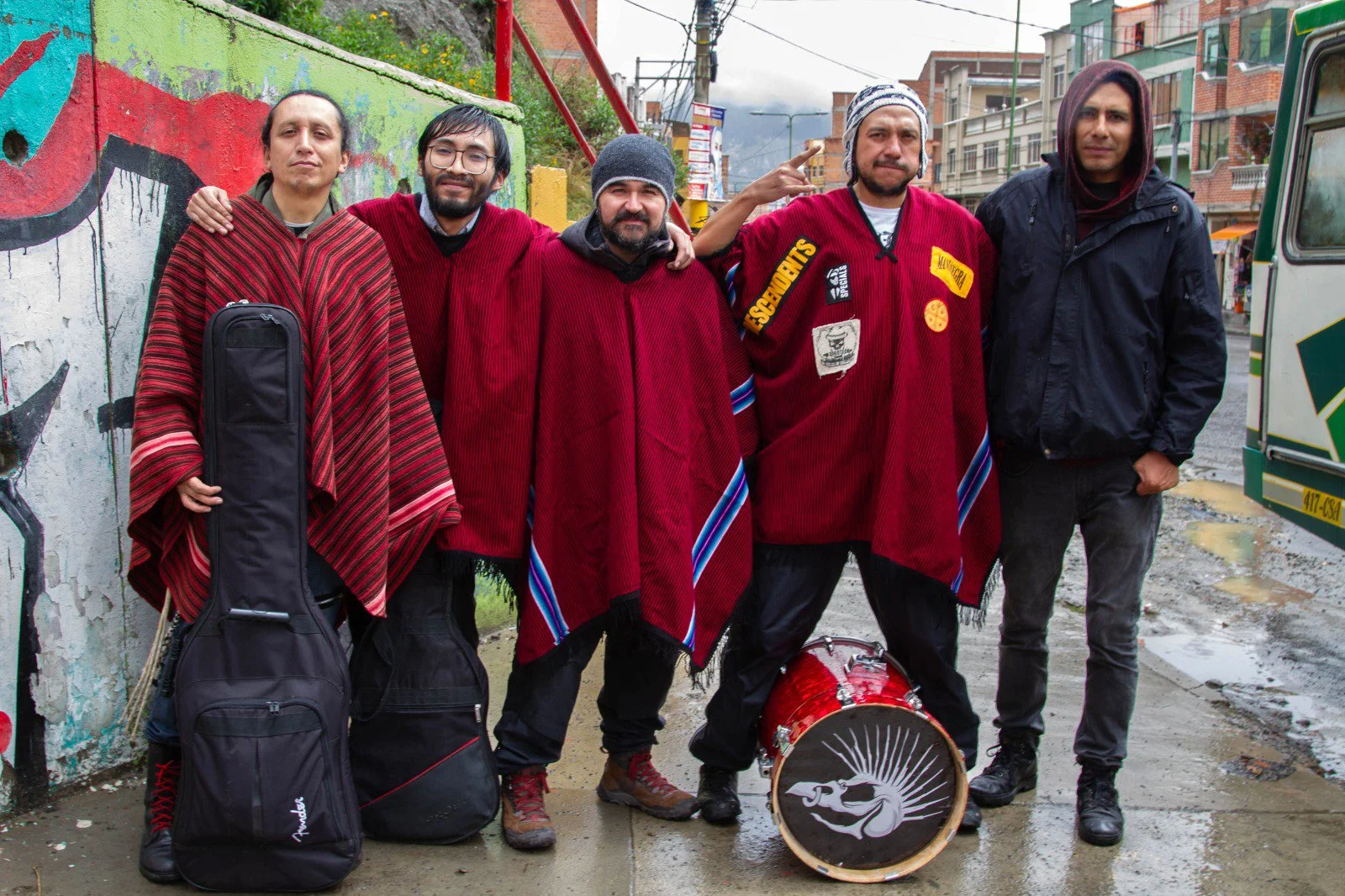
Photo credit: Andrés "Sapín" Ramirez
Would you be willing to do a series of concerts in New York? We have salteñas here.
Choro: Hahahaha, Of course we're willing to do a series of concerts in New York, but we don't want salteñas, we have those here. We want New York-style pizza, and visit the old CBGB, and to secure an invitation so we can get our tourist VISAS and cross our fingers that ICE doesn't raid the concert.
Nacho: Of course! Our last concert would have to be in the street, on Wall Street like RATM, so ICE deports us and we don't care about coming back to the States. It would be great to go to the Bronx and all the places with a South American community.
David: It would be great to go.
Is there anyone out there you'd like to thank for their support?
Choro: We want to thank knifetwister records for the interview, Andrés Sapín Ramirez, director of the Ukamau and Ké documentary, Felipe Quiroga, director of the film PIANOMAN by Londra Films, and Ramiroi from Trono Negro Audiovisual, director of our first music video.
Nacho: To my dad in Chile who put up with the drum noise for so long (hehe) and to all the friends I've played with in this life who have shared a piece of their spirit with me, especially my buddies in Kimsacharani.
David: Thanks to all the people and spaces that support art and culture.

Links
Facebook: https://www.facebook.com/kimsacharaniPunk?locale=es_LA
Instagram: https://www.instagram.com/kimsacharani_punk/
Video clip: https://www.youtube.com/watch?v=Yn_4O7BaQQ0
Bandcamp: https://kimsacharani-punk.bandcamp.com/
David Dougherty our first guitarist from USA: https://www.facebook.com/share/1WLA9BHmKj/
Amy Kennemore our second female guitarist from California: https://www.instagram.com/amykaymee/
Andrés Ramirez Director Ukamau y ké Documentary https://www.instagram.com/andres.sapin.ramirez/
Trono negro Audiovisual videoclip https://www.instagram.com/eltrononegroaudiovisual/
Felipe Quiroga Director PIANOMAN Movie https://www.instagram.com/fisho44/
The interviewer in Totora, Bolivia