

A Direct Reflection Of Our Times: An Interview With Micah Schnabel and Vanessa Jean Speckman
By Staff | March 9, 2026
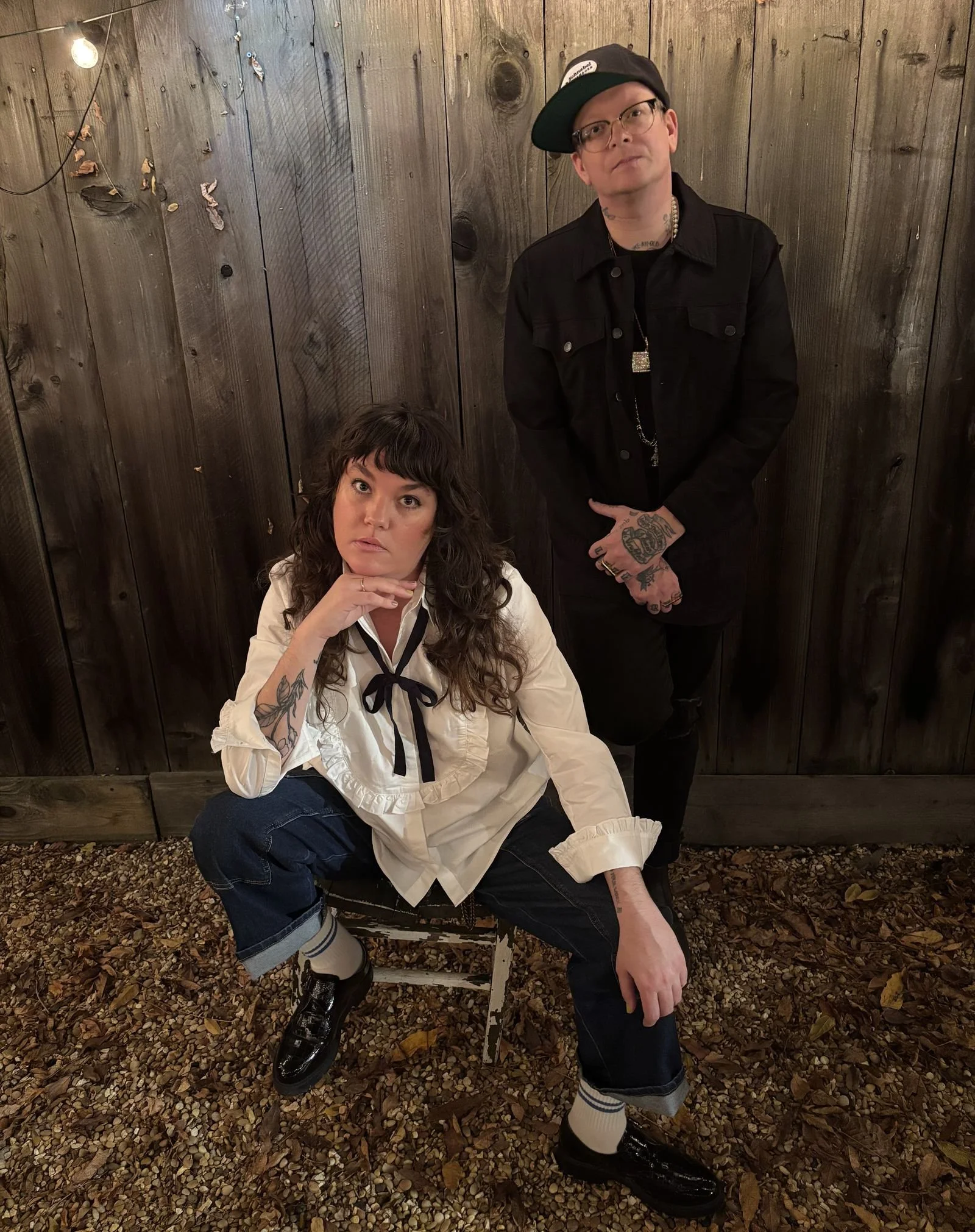
Photo credit: Cecelia Jean Grilli Speckman
Micah Schnabel and Vanessa Jean Speckman’s latest collaborative effort, The Great Degradation, serves as a raw, journalistic dispatch from the intersection of economic instability and artistic defiance. After thirteen years in their Columbus neighborhood, the duo synthesized the chaos of a sudden displacement into a record defined by its here and now urgency. While their previous work in Call Me Rita saw them in more traditional band roles, this project leans into a hip-hop-inspired vocal trade-off, allowing Schnabel’s structured musical visions to clash and harmonize with Speckman’s poetic, visual-art-driven perspective. And as you’ll read, all of this is fueled by some serious “fuck it all, let’s get weird” energy.
Welcome! Let's get to it. You recorded this album in under 3 days across two basements, right as your life in Columbus was being packed into a Chevy Suburban. How did that ticking clock and the walls closing in affect the journalistic feel of the songs?
Vanessa Jean Speckman: So much of both of our work is influenced by what we observed in our neighborhood in Columbus for 13 years. A second story apartment gives you a pretty unique point of view to the world. It kind of felt like a final bearing of witness to our people and block of the city. A fair amount of the work was also written in our last weeks there. I could hear Micah working out “Enemy of the State” from the other end of the apartment and I thought to myself, “surely he isn't writing a new song a week before we record”. But he was and he did. I wrote my verse to that song the night before we recorded, which was also 4 days before we had to hand the keys back to the landlord. The entire record and its creation is a reflection of the chaos and time constraints not only we were under, but many other folks are feeling and experiencing throughout America right now. We always want to bring people with us, not exclude folks.
Micah Schnabel: It’s a journalist reporting from the eye of a hurricane. Our lives were being blown down to the beams and we only had this one chance to explain ourselves to the world around us. We didn’t (and still don’t) have the luxury of excess time. Jason Winner recorded all of his drum takes in less than 3 hours. We all kept our eyes sharply focused on the immediate task at hand. It’s not a great way to work. Nor a good way to work. But it kept the journalistic eye sharp on what matters most to us.
Micah, you’ve been at this for 25 years, and Vanessa, your background is heavily rooted in visual art and poetry. How did your individual languages merge for this specific record compared to your previous work together in Call Me Rita?
VJS: I think we approached this record in a more Beastie Boys fashion. A back and forth vocally. Micah approached me about his idea of wanting to make a record together under our names and establish more of what we are trying to accomplish as a duo. For me, that took a lot of pressure off of having lyrics completed and ready for Micah, who would then musically translate it and get ready to present it to the Call Me Rita guys. Micah was the conductor and team cheer leader with a clear vision of wanting to present this body of work under “The Great Degradation". He had full musical demos developed and the layout of the story telling of how he saw this play. I really enjoyed coloring in my parts and not being concerned if they matched what he was going for. Like In Omaha (Villian), he’s the bad guy and I’m the one asking for an ounce of humanity.
MS: Hip Hop was my first musical love. I was always attracted to how the storytelling is almost always HERE and NOW. It’s taken me a long time to find the confidence to speak on and to the world as I see it. Now that I’ve embraced it I can’t see another way.
With Call Me Rita I’m more of a guitar player, whereas on this record, it’s Vanessa and I handing these lyrical thoughts and ideas back and forth to one another.
You've described the album as a report from a lower socioeconomic lens. In an era where music can sometimes feel sanitized or aestheticized, how do you ensure your music remains a rebellious and joyful report from the actual front lines?
VJS: As privileged white folks whose socioeconomic status is by choice, we try to always call it as we see it. We don’t come from family money or positive effects of nepotism in any way. We don’t have an agent, a manager or a label that helps or works with us. That’s not “aw shucks”. Just a fact. We don’t try to hide the ball or glamorize any parts. We love what we do so much. We are our happiest when we are out doing shows together. Subsequently, we move through a lot of different parts of America while on tour at the level we are at and observe the heartbeat of the real America. The loud and quiet parts. Lots of gas stations and hotels make their way into our work, but those are community hubs in Elko, Nevada and Meridian, Mississippi not just a place to fill up, nor romanticize. We had a piece of paper on our kitchen window that read, “ALWAYS WRITE HONEST”. We don’t have time for metaphors. Fascism and poverty don’t allow for that. You can get lost in the beauty of 3 minute human interaction with a late night 7-11 clerk who is making his copper wire jewelry behind the register and ringing up your sparkling water and Cool Ranch Doritos at 2am. We just have to be willing to bear witness to the humanity around us, there’s a lot of beauty and joy in that vulnerability. Humanizing realities make it difficult to dispose, erase or water down. I think we both find urgency in that aspect of our work fighting against sanitized cringe culture conservatism.
MS: Our lower socioeconomic lens forces us to deal with the world as it is. We don’t have the money to build a life around our preferences. One of the few small gifts that lens offers is not having the time or luxury of sanitization.
As far as joy goes, Vanessa and I both keep levity firmly planted throughout the songs. We love this thing we choose to do. It’s difficult, for sure. But it’s also one of the most joyful acts I know of.
The Great Degradation just came out this month. How does the changing physical landscape of America -- the gentrification, rising costs of the basic necessities of life -- inform the sonic landscape of this record?
VJS: Micah always referred to our neighborhood as the pulse of America. An intense crossroads of a reflection of what was happening. For example, a few months into the pandemic, our parking lot got a few new Kia Souls. A reflection of a stimulated working class economy doing a bit better. Also, lots of clubs on the steering wheels. Columbus is the home of the Kia Boys, afterall. The Great Degradation is a record that is right now. A thermometer in the ass crack of America. For better or worse. I’m really proud that we were able to capture defiant joy and spit in the face of conservatism and playing it safe. I don’t know what comes next, but I can be certain Micah and I aren’t waiting around to find out without giving it our all our way.
MS: The record being recorded in such a short period of time due to all of the reasons you’ve mentioned made the raw and ragged-ness a necessity. I used one amplifier for all of my guitar parts. Jay Gasper, our lead guitar player, did the same. The vocal takes are almost all first or second takes.
The immediacy and jaggedness of the recording is a direct reflection of our times.
You've mentioned this record was a way to extend your artistic lives after a massive rent hike caused a quick pivot in your lives. Did that pressure create a sense of desperation in the recording booth, or did it provide a strange kind of freedom because you had nothing left to lose?
VJS: FUCK IT ALL and LET’S GET WEIRD WITH IT became the motto and has been ever since. Which combines both freedom and desperation. Not that there haven't been horribly dark moments and utter collapse, but having a dedicated partner and a committed dedication to our art, makes chipping away to let the light in a lot easier on days when it feels insurmountable.
MS: Both. Losing our apartment was always my greatest fear. I had let Vanessa and myself down with my inability to make money. I feel that shame fully every single morning when I wake up and carry it with me always. But in facing that fear came a mental freedom. We do this because we love it and we believe in one another. Fuck any lingering idea of hope or expectation. Hope has had its hand around my throat since I was eight years old. Once that hand was gone I’ve been able to breathe a little deeper.
Vanessa, you’ve brought nomadic art to everything from dive bars to galleries. Now that you’ve physically left Columbus, has the definition of home shifted for you both? Is home a place, or is it the Suburban and the gear?
VJS: I think of home as two places. The first as a physical one with my family all together. I think being in Ohio for so long and away from my California people, my childhood home really became a solidified and tender space in my mind and art. The second, is split between two places in one day. The first in this sense is at the show. Getting off stage and talking to folks and hearing about their lives and the stories that they want to share with us. What a precious gift! From bus drivers, teachers, social workers, parents … Micah and I are so fortunate to have the kindest and most wonderful folks who come to our shows and help make our community so vivid. For a few hours at the show, it all has played out beautifully and how we dreamt of it. The whole point of driving around is the show. It’s the most important part of our day. The second space in the same day is at the (nice!) hotel after the show. Micah and I both have an affinity to the ephemeralness of a hotel. If all is going right, it’s quiet, it’s clean, you score a late check out, an end of the night snack and sparkling water is cracked and you do your accounting for the day with the white noise of The Golden Girls glowing in the background. That is a sweetly successful space for us. In my grief of losing our apartment, I don’t think I’m ready to reflect back on that home space we built for 13 years right now. Or maybe I just don’t have that luxury. When I’m sad I look at old photos. But I can only imagine home as tangible spaces I can access in the now and work towards building for tomorrow.
MS: Vanessa and I’s apartment was the first time in my life I felt any true sense of home. Of safety and comfort. With that gone, I’m reminded of the importance of adaptability.
I love this small life we’ve built together even with its difficulties. And I think you maybe hit it on the head here. Home is no longer a physical space but like Vanessa said, a (nice!) hotel room with the Golden Girls on in the background while we wind down is as much home as I need.
Micah, with two novels under your belt, and Vanessa, with your background in poetry, how do you decide which ideas become a song and which ones need to stay on the page as prose or visual art?
VJS: I think with our love for Hip Hop as a strong influence, it feels like you can make anything happen with story telling. I think that excitement and challenge keeps us going. When I wanted my words to do more than live on the page, I copied them a bunch and made zines. Then I painted them onto large lace panels. When I wanted more from that, Micah created songscapes for my poems to live in. Then I started writing songs for Call Me Rita. Now we throw it back and forth and I think the male and female alternating POV is exciting right now. I don’t know what comes next, but I am very thankful our work seems to always be evolving.
MS: The writing mostly seems to direct itself and tell me what it wants to be. When the line “Jenny got a Winnie The Pooh tattoo on her 15th birthday” hit me, I knew it was a song lyric. The longer form ideas tend to be a little more subdued. A larger problem that my brain is excited to work out and see where it goes. A song lyric is more like a gunshot.
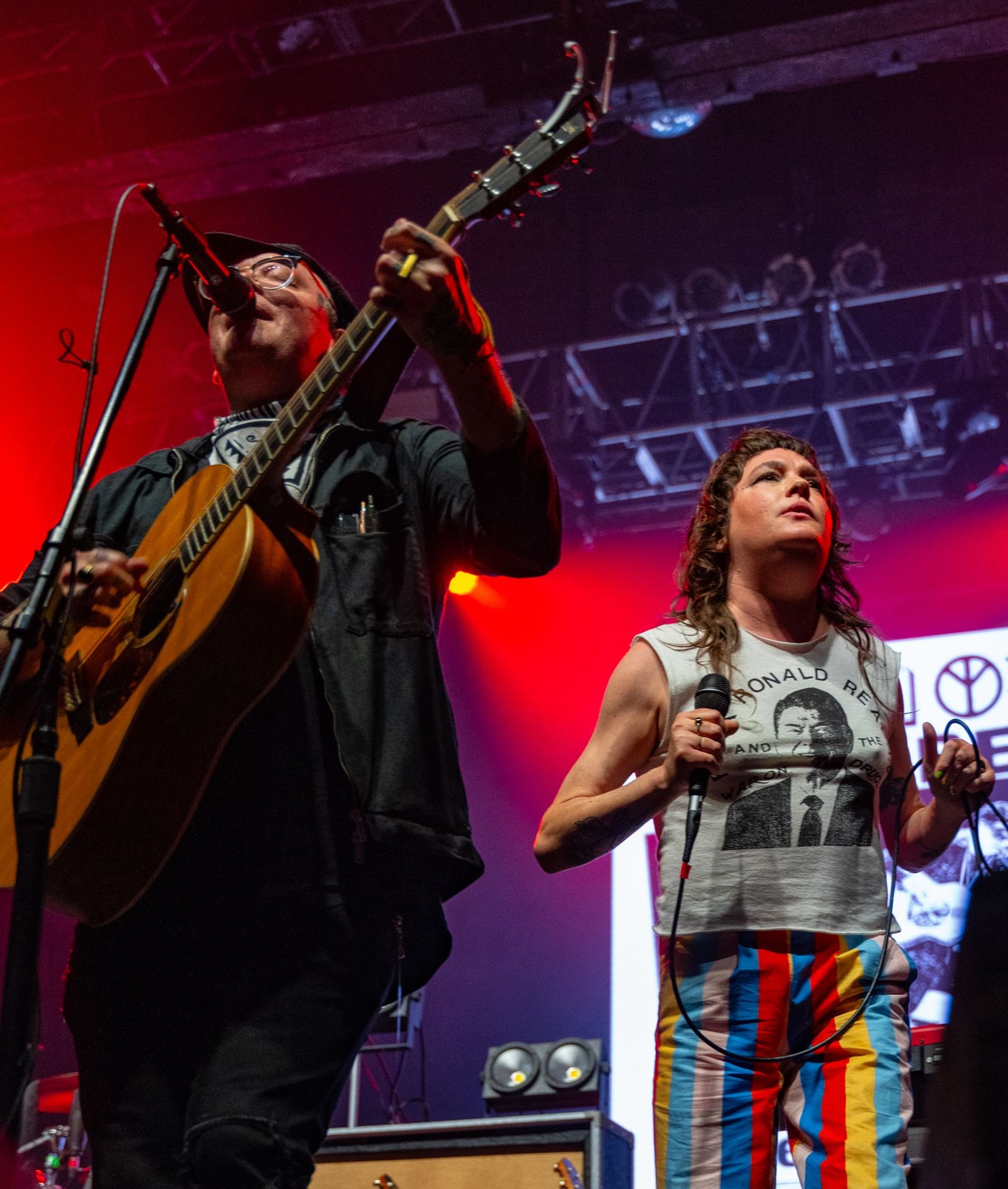
Photo credit: Rich Russo
You’ve toured with some heavy hitters like Frank Turner and Lucero, yet you’re still navigating a fringe and fragile economic existence. How do you keep the joy of the craft alive when the industry itself feels like part of ... well, a great degradation?
VJS: The art and the work and the shows means so much to the both of us. It would take a whole lot to pry that away. And that’s coming from two folks who just gave up their own home space to put out a record. Maybe things will look different in a year's time. Right now is what we have and we are dedicated, invested and focused on. We don’t have the privilege to plan past that. I think that gives us some Fuck You Wiggle Room. I quite like that power.
MS: Relinquishing hope and expectation have done wonders for me artistically and emotionally. I don’t mean this in any “woe is me” kind of way, but being an unpopular artist for 25 years has delivered me to the point where joy and excitement are the only reasons to continue. I love writing and performing just as much, if not more than I did when I started.
Vanessa, since you work in multiple physical mediums, how has the visual aesthetic of this new era been shaped by rapidly changing trends? Are the scraps of this transition showing up in the physical art accompanying the record?
VJS: Joe Maiocco actually created the artwork for the record. He has worked with both Micah and myself quite a bit and has a rhythm and cadence for who and what we are with his own artistic stamp. It’s a very trusting relationship the three of us have with one another. Once we sent Joe the photo for the cover, he pretty much ran with the title and visuals colliding into the beautiful artwork he created for the record.
The Suburban is loaded, the record is made, and Columbus is in the rearview. If The Great Degradation is the report from the front lines of what was lost, what is the first thing you hope to build in the next chapter?
VJS: Accessibility. I want Micah and I to have access to things. I want all of us to have access to things. To resources, opportunities, safety, health care, time to dream and imagine, community support. I want accessibility. Less capitalistic rule creates less competition. Doesn’t that all sound like a dream? (editor’s note: some day. Maybe not in our lifetimes, but some day).
MS: I think we’re building a small camp of true believers. There’s already a better, more caring world happening all around us. Vanessa and I are incredibly fortunate to experience that world damn near every single day. We want to fill rooms and share our time as often as possible with those people. Our people. The Society & Culture Ascension Movement.
And I’d love to be able to afford to fix my teeth.
Anyone out there you'd like to thank for their support?
VJS: Our people. The people who buy our records and shirts and stories and poems. What an honor and privilege to connect with folks all over the place through our art. We know the best people and we get to meet so many interesting folks. They truly keep the lights on and the records spinning.
Our bandmates. Jason Winner, Todd May and Jay Gasper are just as nuts as we are to dedicate their time and talents to two barely making it artists. When I asked them to be in Call Me Rita, I didn’t realize how much of themselves and their art they were truly willing to dedicate to Micah and myself. An intimacy that I don’t take for granted.
Joe Maiocco made all the art and keeps us professionally and artistically sharp as shit. A thoughtful human whom I feel fortunate to create with and to live within his creations.
Frank Turner is not only a dear friend, but someone who I can say genuinely believes in us and is always working and rooting for us. He has spent so much time, care and attention to not only this record, but mostly all of Call Me Rita’s catalog and Micah’s solo record, “The Clown Watches The Clock”. He could have told us to fuck off a long time ago.
MS: D.I.Y. is a misnomer. We couldn’t get any of these projects across the finish line if it wasn’t for the love and care of so many people.
Jason Winner, Jay Gasper, and Todd May for helping this record reach its sonic potential. Alex Douglas for recording and engineering.
Frank Turner has been a wonderful friend and extremely generous with his time and energy helping Vanessa and I get not only this record, but my last solo record “The Clown Watches The Clock” across the finish line. He also played piano, organ, and tambourine all over this record.
Joe Maiocco for creating the visuals, social media images and artwork for the record.
Rich Russo and Noah Belman for sharing their photographs with us.
Sean Hills for creating the praying hands SCAM logo.
The Society & Culture Ascension Movement, which is every single person who donated, bought records, books, t-shirts, or came out to a show.
And to every person who has helped and continues to help us book the next show.
There are so many people to thank and express our love and gratitude to and for, the list could go on forever.
Thank YOU, Raph and knifetwister records for giving Vanessa and I this opportunity to talk about our work.
Social media: https://www.instagram.com/vanessajeanspeckman | https://www.instagram.com/micahschnabel