

Elated: An Interview With Philly’s Yell At God
By Staff | December 28, 2025
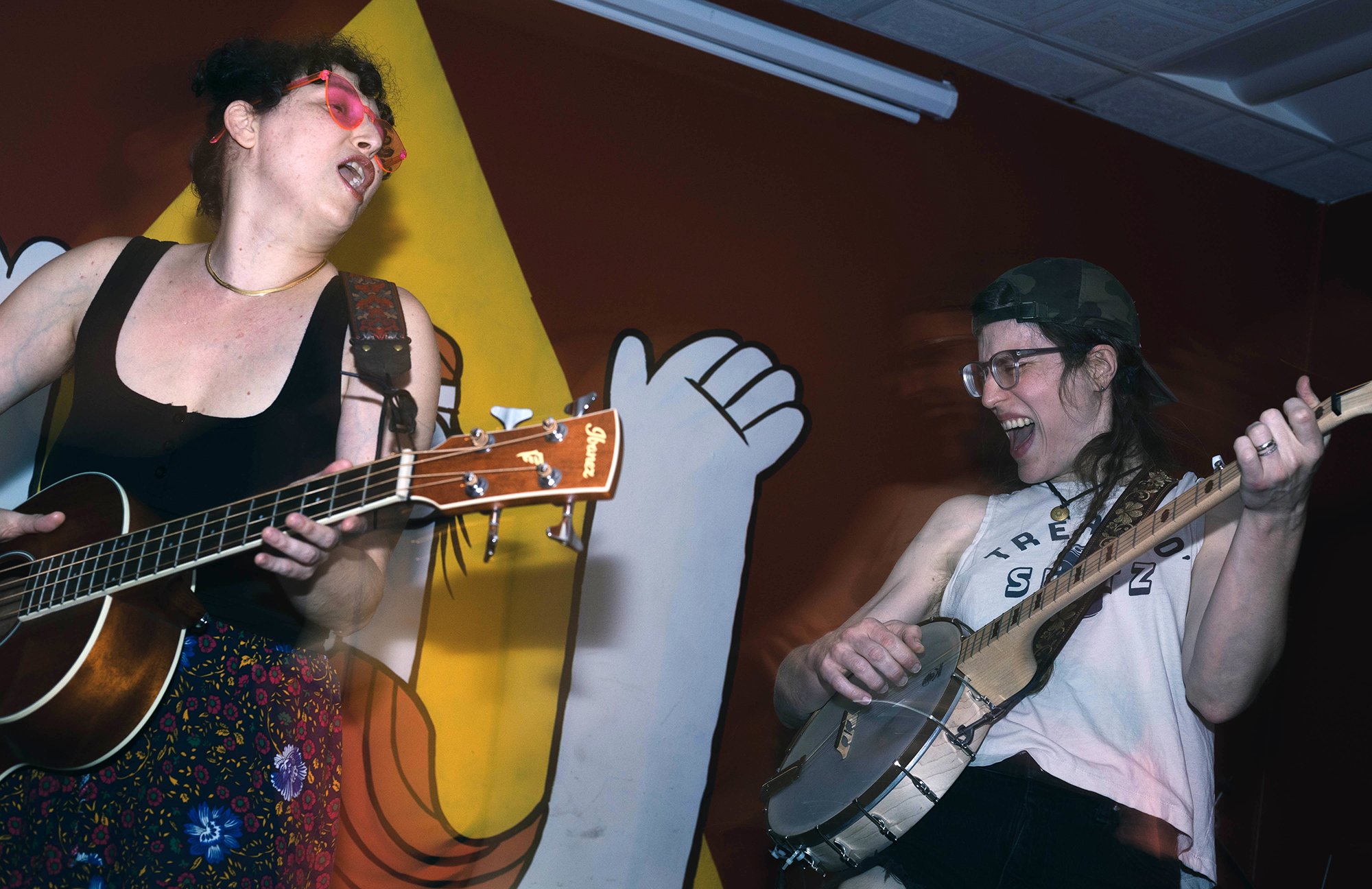
Photo credit: Eta Kon @etakon
Yell at God is a loud, fast, queer, femmegrass folkpunk wives duo from South Philly driving around singing songs about collective joy, the necessity of community, and the radical act of resisting despair in the face of overwhelming grief as the world collapses around them. Their music combines elements of Appalachian and Ashkenazi Jewish source recordings with doom, art pop, classic punk, hardcore, and hyperpop influence, creating a brew of danceable folk punk that makes you feel like a shook up bottle of soda. They’ve just released a new single, Holy Madness, off their next album Dance, Dance, Revolt! which will release in early March 2026.
The name Yell At God is provocative and powerful. What is the intention behind the name? Is it an act of protest, catharsis, vulnerability, or all of the above?
Orah Ruth: All of the above! We wanted to find a name that expresses the voiceless cry that wells up from the bottom of your gut in the middle of a deep crowd or completely by yourself. When the husk of the world falls away and what you’re left with is inarticulate emotion, be it joy or anger or despair or hope or all of them mixed together. That cry is extremely powerful, it’s the impetus behind creating change in the here and now and in that way is deeply magical. We work intensely with that yell in this project in the hopes that others will recognize it in themselves.
"Femmegrass Folkpunk Wives Duo" is a powerful description. Can you break down what each of those elements—femmegrass, folkpunk, and wives duo—brings to your sound and stage presence?
RJ: We play fast, heavy acoustic folk music (primarily banjo and acoustic bass) with influences from punk and metal in a DIY, political social space. Our music and performance of it come directly from our experience as queer femmes, wives, and extremely close collaborative partners.
Your music draws on incredibly diverse influences: Appalachian and Ashkenazi Jewish source recordings, doom, art pop, hardcore, and hyperpop. How do you approach the songwriting process to organically fuse such disparate genres without the result feeling disjointed?
Orah Ruth: We pull our influences from the music we use to soundtrack our lives, so we’ll spend a lot of the period leading up to writing an album talking about what we want the overall composition to feel like, both on recording and as a live performance. What do we want to express about how our own feelings are reflecting the world around us, what feelings do we want to bring into the world? What do we want to offer for other people to weave into the soundtrack of their lives?
Once we have an idea of what kind of music we want to write we spend hours putting together mixes of various songs that catch parts of the overall vibe we’re looking for and let that hang out in the background to sink into our subconscious. After a month or so, we put that away and start writing, letting whatever comes up organically direct the writing process through to recording and figuring out the live set.
We unify disparate elements through composition: same instruments, same production style, same us. That said, we live in a time when everyone is getting pulled apart in a million directions and sometimes it feels like the only way we can express that is by fusing far-flung genres. And if the results are a little unhinged, so are we.
Let's talk about the new single, "Holy Madness." What is the core concept or story behind that track, and how does it set the stage for the themes listeners can expect on the full album, Dance, Dance, Revolt!?
RJ: Holy Madness is about giving in to the feelings of insanity that come from existing in an insane world, rather than fighting them. When you give in and go with what you’re actually feeling, what emerges will feel more sane than the feelings produced by trying to pretend everything is fine.
Dance, Dance, Revolt! is about exploring what happens when those natural, suppressed responses are unleashed collectively. What arises when you stop fighting the sense that the world around you is insane and the things happening in it are simply beyond your comprehension? At that point there’s actually room to see what coalesces when we come together in groups, in social freedom to be our strange, human, angry, kind selves and partake in the ecstatic experience of communal music.
Our friend Tubey Frank described our music as doom-positivity and I think that’s true in that we’re asking the question of what if we allowed ourselves to have fun and let something productive emerge, instead of self-flagellating over things we haven’t yet built the collective power to change? First we need to get together and develop trust in each other.
The combination of traditional Jewish and Appalachian music suggests a conversation between cultural heritage and personal identity. Are there specific musical techniques, scales, or rhythms from these sources that you intentionally incorporate into your songs?
Orah Ruth: Our music springs directly out of who we are and the music of our people is a huge part of that. Both Jewish and Appalachian musics are heavily focused on communal dance. We draw inspiration from the heavy emphasis of the downbeat with driving, often syncopated rhythms that force your body into movement and melodies that inspire communal singing.
You mentioned your sound is "a brew of danceable folk punk that makes you feel like a shook up bottle of soda." What is the key element (perhaps a specific instrument, tempo, or lyrical device) that you believe makes your punk inherently danceable?
RJ: This is a great question, and we’re always trying to find ways to answer it better in our songwriting! If we’re moved to dance while we’re playing, others will be, too.
So many people are tired, experience chronic pain, illness, and/or addiction, and are coming to shows at the end of a long day without much energy. Creating music that people feel moved to dance to is about giving people a boost of energy and uplift they can get lost in for long enough to forget their pain or fatigue and just find themselves moving. We give some and in turn, we get some. We’re all moved to move, sharing that energy back and forth.
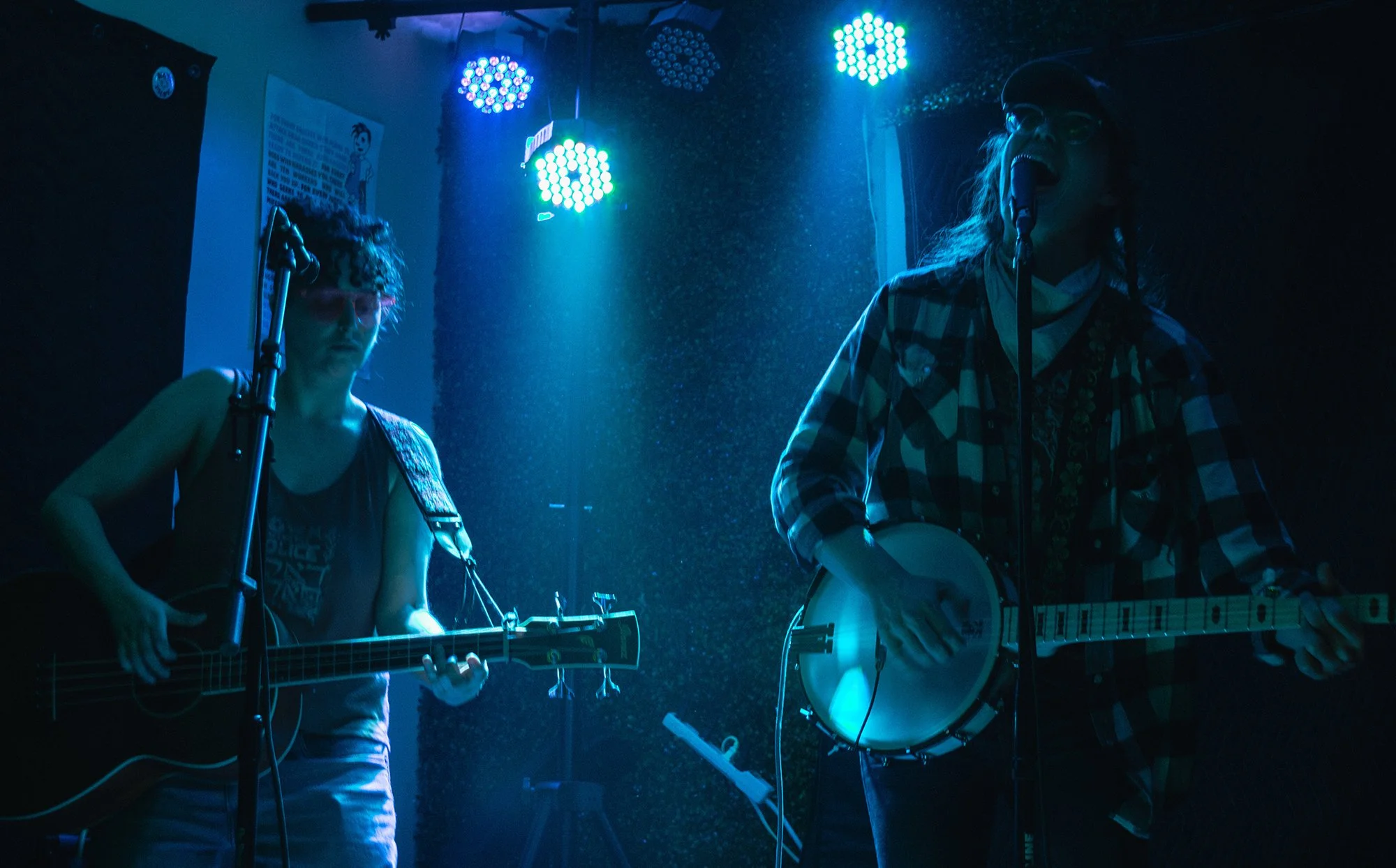
Photo credit: Eta Kon @etakon
Your core lyrical themes are "collective joy, the necessity of community, and the radical act of resisting despair in the face of overwhelming grief." In a world that often feels overwhelmingly heavy, what makes focusing on collective joy an act of revolt for you?
RJ: Feelings of isolation and loneliness are endemic right now, and that’s by design because when we’re together in person and as a collective, we’re stronger. Tech meant to isolate and consume our time and joy combined with the death of free and affordable spaces for people to easily congregate in person creates massive barriers to organizing as well as happiness.
So a lot of our work as a band and as song-writers is to get people who share desires for collective liberation into the same room where they can connect offline, into a space of developing relationships of trust and having fun together.
Part of the intrinsic function of collective joy is that it’s collective, which is in itself an act of revolt because it rejects that atomization. The other part of it, joy, is something we also feel is intrinsically revolutionary, and that’s because joy is a fierce emotion. It’s not happiness, contentment, or pleasure. It’s a ferocious feeling of aggressive positive emotion, which is powerful to experience collectively and in turn engenders collective power and hope.
As a queer duo, how does your shared identity inform the creation of your music and the message you bring to your audience?
RJ: A lot of queer narratives are either about suffering, or they’re saccharine and lack a sense of stakes that let them feel impactful and cathartic. Our creative expression is queer, joyful, and multifaceted. It’s joyful because we understand grief, communal because we understand loneliness, angry because we can see what the world can and should look like. Those dynamics of contrast create the stakes needed for real catharsis.
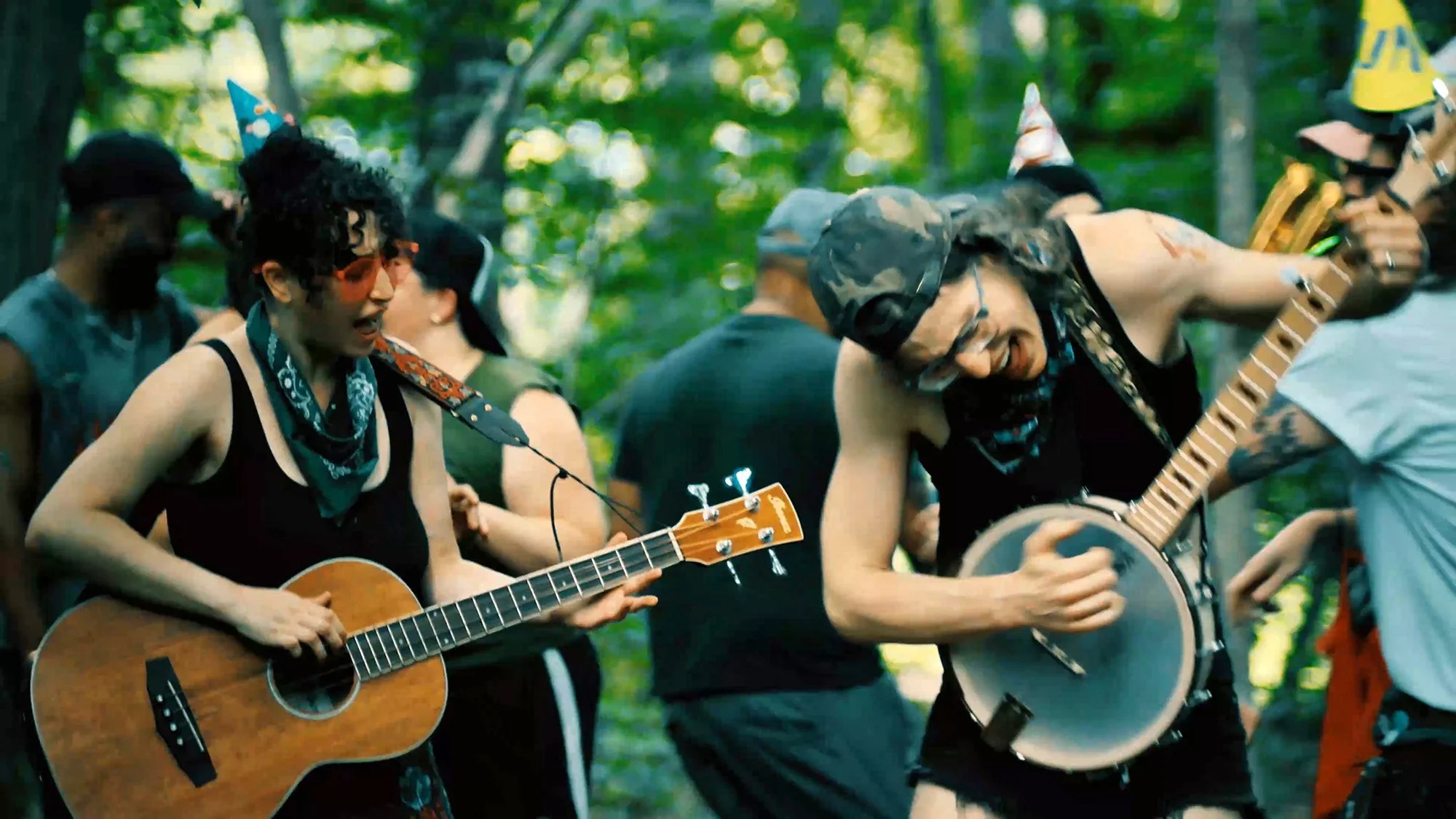
Photo credit: Shadow Studios @madebyshadowstudios
If you could distill the entire message of the upcoming album, Dance, Dance, Revolt!, into a single sentence for someone who has never heard your music, what would that sentence be?
Orah Ruth: The world is insane and has caused everyone to go mad—the only solution is to *DANCE*.
What is the biggest challenge and the biggest joy of performing as a wives duo? Does your shared personal relationship change the dynamic of your creative and business relationship?
RJ: Biggest joy: we’re best friends and we love hanging out, driving around, playing music, and meeting new people together. Biggest challenge: if one of us is lost in the sauce, we usually both are, which can double the size of any problems we encounter.
How do you approach your live shows to ensure the audience feels that sense of community and collective joy that is so central to your music? What is the Yell At God live experience like?
RJ: We do everything we can to hold as many all-ages and donation-based or sliding-scale shows as we can. We work hard to say hey to people we don’t know and make sure they feel like we’re now an anchor person if they need one. We always have at least some free merch so that people have a souvenir to bring home. We try to make sure people have a good time at the events themselves beyond the musical performances.
During performances, we encourage people to sing along and give us any percussion they feel called to, so that shy folks know they can participate too if they like. And when we play, we go all out and have fun. Even if we don’t have a ton of energy that day, playing music is fun for us and we want it to be fun for anyone who took the time to show up, too!
You have a few months before Dance, Dance, Revolt! releases in early March 2026. What are your immediate plans for the time between now and then? Are you performing, shooting videos, or spending time in the studio?
RJ: We’ve got some more recording, mixing, and mastering to do for the album, as well as a music video or two to cook up, but we’ve also got plenty of shows in the Philly area and beyond!
We found out last winter that making sure we have regular shows in a variety of places with a variety of people is really important to our mental health when the days get short and cold. I have no idea how we would have gotten through last winter without the shows we played. And if that’s true for us, it’s probably true for at least a few other people.
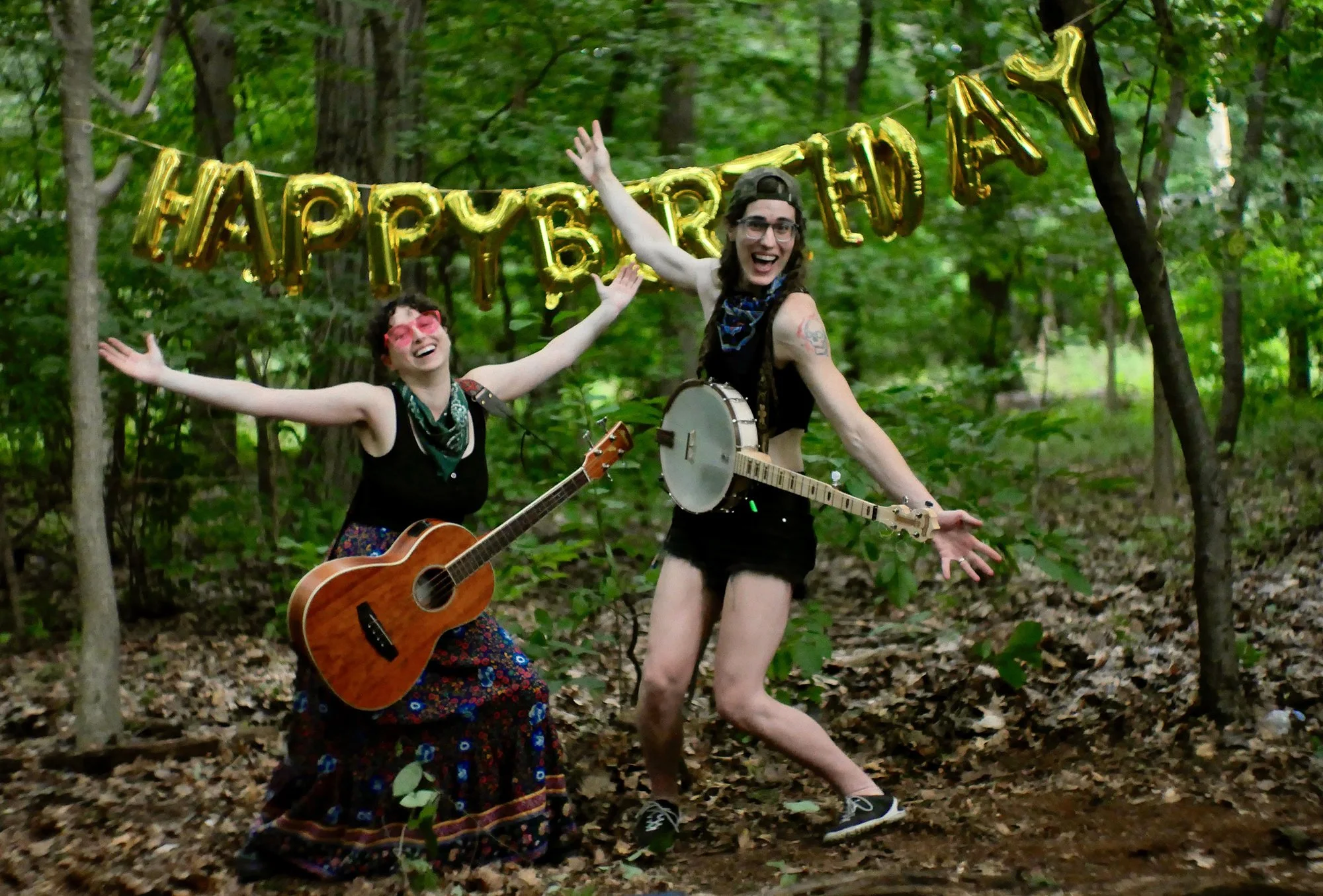
Photo credit: Shadow Studios @madebyshadowstudios
When you're driving around singing songs, what's one thing you've learned about the communities you've played for that has changed your perspective on your own music?
Orah Ruth: We learn more about ourselves and our community by learning more about other people and theirs, and that shapes what we want to bring into the world musically. When people come together to have fun with friends and dance away their troubles, there’s this really transformative energy that can emerge that people take with them afterwards. Our music has grown around the work of supporting and facilitating those types of moments as we’ve gotten to meet people from all sorts of places with all different manner of joys and stressors.
In one word, how do you want listeners to feel when they finish listening to Dance, Dance, Revolt! for the first time?
Orah Ruth: Elated.
Anyone you’d like to thank?
Orah Ruth: Every single person we have gotten the chance to meet and share this project with, especially Bleeding Gums records who has been a tireless supporter of our entire community and is super dope. Also you for interviewing us, thank you so much!
Links
Instagram: https://www.instagram.com/yell_at_god
Spotify: https://open.spotify.com/artist/2NRWKXF1GWWEnyEbsAn0Oy?si=AX7MbS0eQuSy2CMTHpZ91g
Bandcamp: https://yellatgod.bandcamp.com/
Bleeding Gums Records Insta: https://www.instagram.com/bleedinggumsrecords